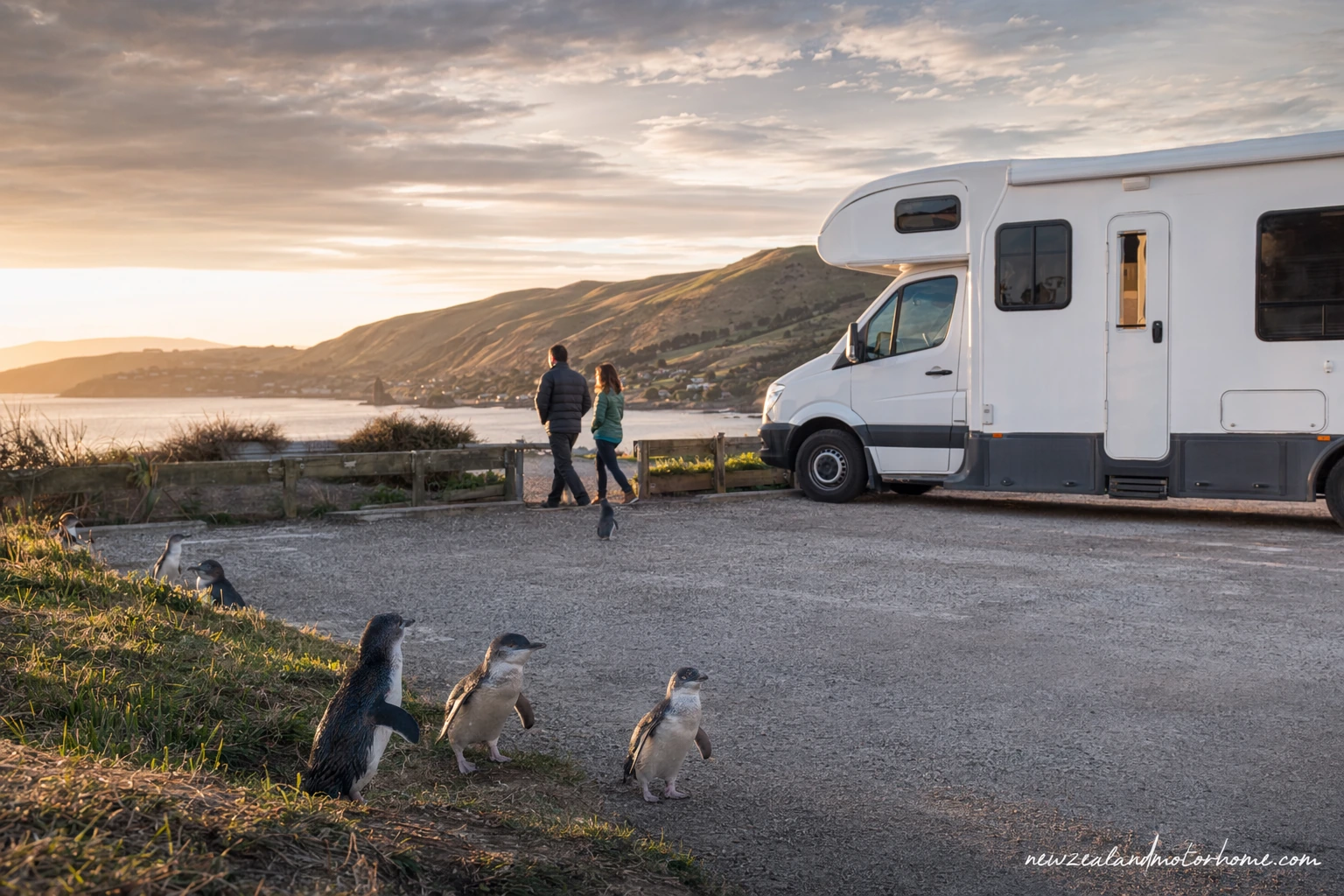
- Allow half to full day
- Best route via Portobello
- Book nearby overnight stay
- No camper servicing at wildlife stops
- Large vans need careful parking
The Otago Peninsula is one of those places where the driving is part of the day: harbour water close on one side, steep paddocks on the other, and wildlife sites tucked at the end of narrow rural roads. Visiting otago peninsula wildlife by campervan is very doable, but it rewards a slower plan than you might use in a car.
This guide is written for self-drive campervan and motorhome travellers: where to park the van, which roads suit larger vehicles, how long to allow, where to sleep nearby, and what to sort before you leave Dunedin. Wildlife is never guaranteed, but good logistics make the day much calmer.
Getting there by road from Dunedin
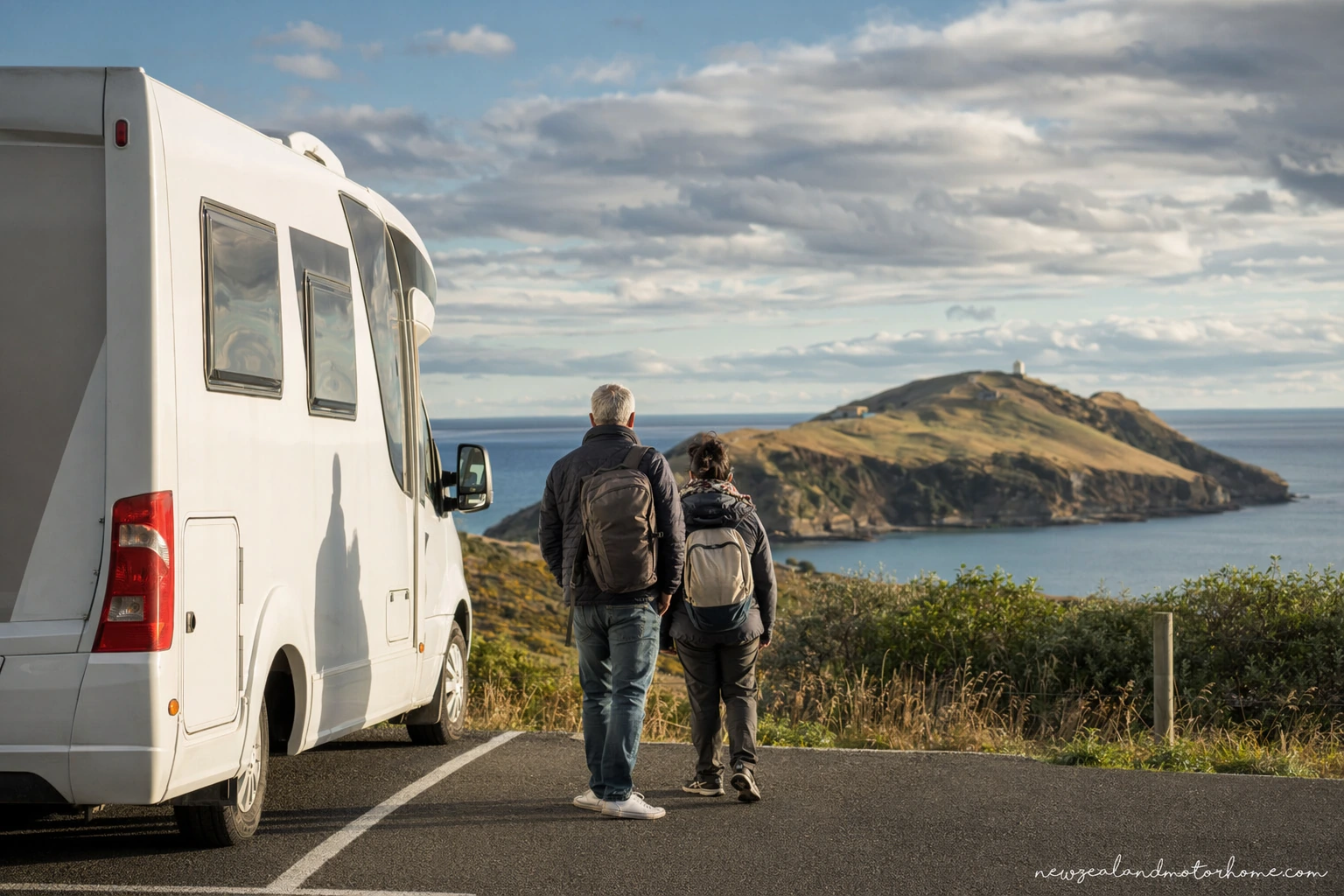
Most campervan travellers approach the peninsula from Dunedin, following the harbour-side road through to Portobello and onward towards Taiaroa Head. If you are wondering how to get to otago peninsula wildlife without adding stress, this lower harbour route is generally the simplest option for bigger vans: scenic, sealed, and easier to read than the steeper hill roads.
Allow more time than the distance suggests. The road narrows in places, cyclists are common, and you will be sharing the route with local traffic, tour vehicles, and other visitors stopping suddenly for views. Drive as if the next bend may have a parked car, a sheep, or a rental camper coming the other way.
- Best approach for most vans: use the harbour-side route via Portobello, especially in a long or high-roof motorhome.
- Use extra care: Highcliff Road and the ridge roads can be steep, exposed, and winding; they are more tiring in wind or poor visibility.
- Fuel and supplies: top up in Dunedin before heading out, as peninsula services are limited compared with town.
- After dark: avoid unnecessary night driving on the narrow rural sections, particularly after an evening penguin viewing.
Campervan parking at the main wildlife stops
Otago peninsula wildlife campervan parking is a mix of proper visitor car parks and small gravel beach-end areas. The larger, formal sites near Taiaroa Head are the easiest for motorhomes, but they still get busy in peak summer and around tour times. Arrive early, avoid blocking turning space, and be prepared to park further back rather than forcing a long van into a tight corner.
For beach and coastal wildlife areas such as Allans Beach, Sandfly Bay, and other rural access points, expect smaller car parks, gravel, uneven edges, and no facilities. These are day-use stops, not overnight places. If your van is long, keep your turning circle in mind before committing to a narrow side road.
- Taiaroa Head area: use signed visitor parking only; it is the most practical stop for albatross and headland views.
- Beach access points: check the surface before driving in, especially after rain, and do not park on verges or dunes.
- Height and length: there are no universal van-friendly bays across the peninsula; read signs on arrival and leave room for cars to pass.
- No overnight assumption: wildlife car parks and beach reserves should be treated as daytime parking unless signs clearly state otherwise.
How long to allow for wildlife without rushing the van
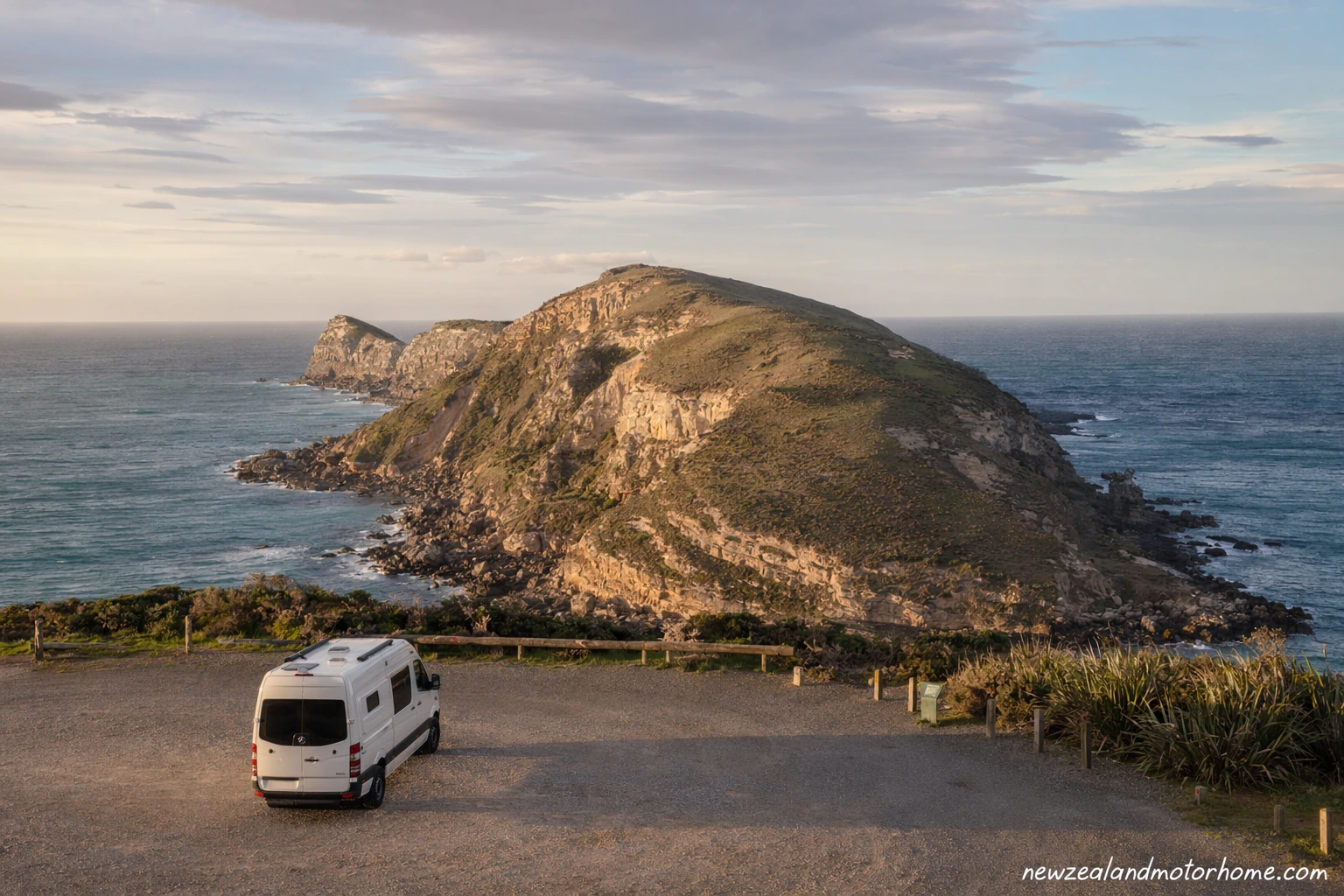
A quick out-and-back from Dunedin to one wildlife stop can take half a day, but a full day is a better fit if you are travelling by campervan. You will want slower driving time, parking time, a meal stop in the van, and space to wait quietly at viewpoints without clock-watching.
If you are combining albatross viewing at Taiaroa Head with a beach walk or an evening penguin experience, plan the day around tides, daylight, and your overnight stop. Wildlife is often most active at the edges of the day, which can leave you driving back after dusk unless you have already booked a nearby campsite.
- Half day: one main wildlife stop plus a harbour drive from Dunedin.
- Full day: Taiaroa Head, Portobello, one beach or reserve walk, and unhurried van breaks.
- Overnight plan: best if you are doing evening wildlife viewing and do not want a tired drive back to the city.
- Weather buffer: add time for wind, low cloud, or rain; exposed headlands can feel very different from central Dunedin.
Where to stay: campsites near the wildlife areas
The easiest campsites near otago peninsula wildlife are either in Dunedin city or around the Portobello side of the peninsula. A city holiday park gives you more choice for powered sites, dump stations, laundry, supermarkets, LPG, and fresh-water fills before or after your wildlife day. A peninsula stay reduces the amount of narrow-road driving, especially useful after evening wildlife tours.
Freedom camping rules around Dunedin and the peninsula are tightly managed, and many coastal reserves are not suitable or permitted for overnight stays even in a certified self-contained vehicle. Always check the current council map and on-site signs before settling in for the night. If in doubt, use a holiday park or designated overnight area rather than risking a fine or disturbing sensitive wildlife habitat.
- Powered sites: choose these if you are running heaters, charging camera batteries, or travelling in colder months.
- Unpowered sites: fine for certified self-contained vans with good batteries, but book ahead in busy holiday periods.
- Dump stations: use official dump points in Dunedin or at your holiday park; do not rely on finding one at wildlife stops.
- Fresh water and LPG: sort these in Dunedin before the peninsula drive, as rural stops are not set up for camper servicing.
Wildlife etiquette from a campervan base
The peninsula is home to sensitive species including albatross, kororā, hoiho, fur seals, sea lions, and shore birds. A campervan makes it easy to carry warm layers, binoculars, food, and a dry change of clothes, but the vehicle should stay in formed parking areas while you explore on foot.
Keep your distance from animals, never block beach access, and avoid using bright lights around penguin areas at dusk. If a sea lion is on the track or beach, give it a wide berth and wait rather than pushing past. The best wildlife encounters here are quiet ones.
- Stay on tracks: dunes and nesting areas are easily damaged.
- Pack layers: headlands can be windy even when Dunedin feels mild.
- Use toilets before remote stops: many beach car parks have limited or no facilities.
- Take rubbish away: keep all food scraps in the van until you reach a proper bin.
A simple campervan route that works well
A relaxed day starts in Dunedin with fuel, water, and groceries sorted, then follows the harbour road towards Portobello. Stop for a coffee or lunch break where parking is legal and easy, continue to Taiaroa Head for the main wildlife focus, then choose one additional walk or viewpoint rather than trying to tick off every bay.
If you are travelling in a larger motorhome, this slower route keeps the day manageable and reduces reversing, tight turning, and late arrivals at small car parks. For help fitting the peninsula into a wider South Island campervan loop, you can also send us your rough dates through /talk-to-us/ and we will sanity-check the driving days.
- Morning: leave Dunedin stocked and use the harbour road to Portobello.
- Midday: visit Taiaroa Head or a booked wildlife experience.
- Afternoon: add one beach or lookout, checking road and parking suitability first.
- Evening: return to a booked campsite or holiday park rather than hunting for a last-minute freedom camping spot.
Keep planning
Holiday parks central otago
Read onFarmers markets central otago
Read onCampervan guide central otago nz
Read onBest time to visit central otago nz
Read onBest campervan stops central otago
Read onVisiting zealandia wellington by campervan
Read onCommon questions
Can I take a large motorhome to Otago Peninsula wildlife sites?
Yes, but choose your roads and stops carefully. The harbour-side route via Portobello is usually the most comfortable for larger vans, while some beach access roads and hill routes are narrow, steep, or have small turning areas.
Is there overnight campervan parking at Taiaroa Head or wildlife car parks?
Treat wildlife car parks as day-use unless signs clearly say otherwise. For overnighting, use a holiday park, designated campsite, or a council-approved freedom camping area that matches your van’s self-containment status.
Do I need a certified self-contained campervan on the peninsula?
You should travel as if you do. Freedom camping rules around Dunedin are restricted, and a certified self-contained vehicle gives you more options, but it does not override local no-camping signs or reserve rules.
Where should I empty the toilet and fill fresh water?
Use official dump stations and fresh-water points in Dunedin or at your holiday park. Do not expect wildlife car parks, beach access points, or headland reserves to have campervan servicing facilities.
When is the best time of day to see wildlife by campervan?
Early morning and late afternoon or evening can be rewarding, but they also affect your driving plan. If you book an evening penguin or wildlife experience, arrange a nearby overnight stop so you are not driving narrow roads while tired.
Have a planner shape this for your dates
Send a short outline — your dates, party size, and the kind of trip you want. A planner replies with a vehicle recommendation, a paced route, and the realistic budget.