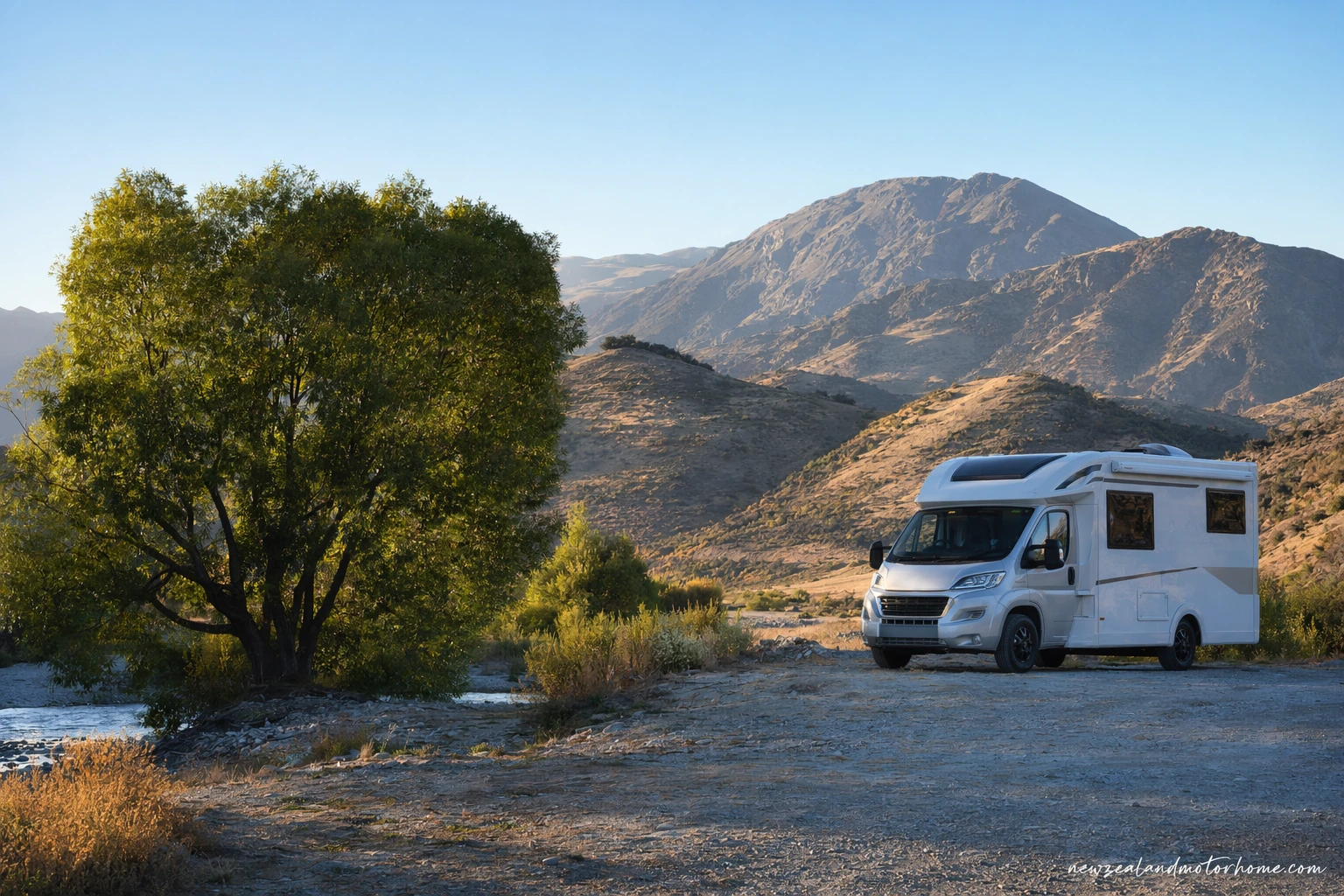
- Best season: March-April
- Allow 3-7 nights
- Hot dry summers
- Winter frost and ice
- Self-contained rules apply
Central Otago is a brilliant self-drive region because the distances are manageable, the skies feel huge, and every season changes the way you use the van. One month you are hunting for shade beside Lake Dunstan; a few months later you are waking to frost on the windscreen in the Maniototo.
This guide is written for travellers sleeping in their own hired campervan or motorhome. It covers when to visit Central Otago, what the weather does by month, how busy powered and unpowered sites get, where to think about water, LPG and dump-station stops, and the road conditions that matter when your bed is travelling with you.
Quick answer: March to April is the sweet spot for most vans
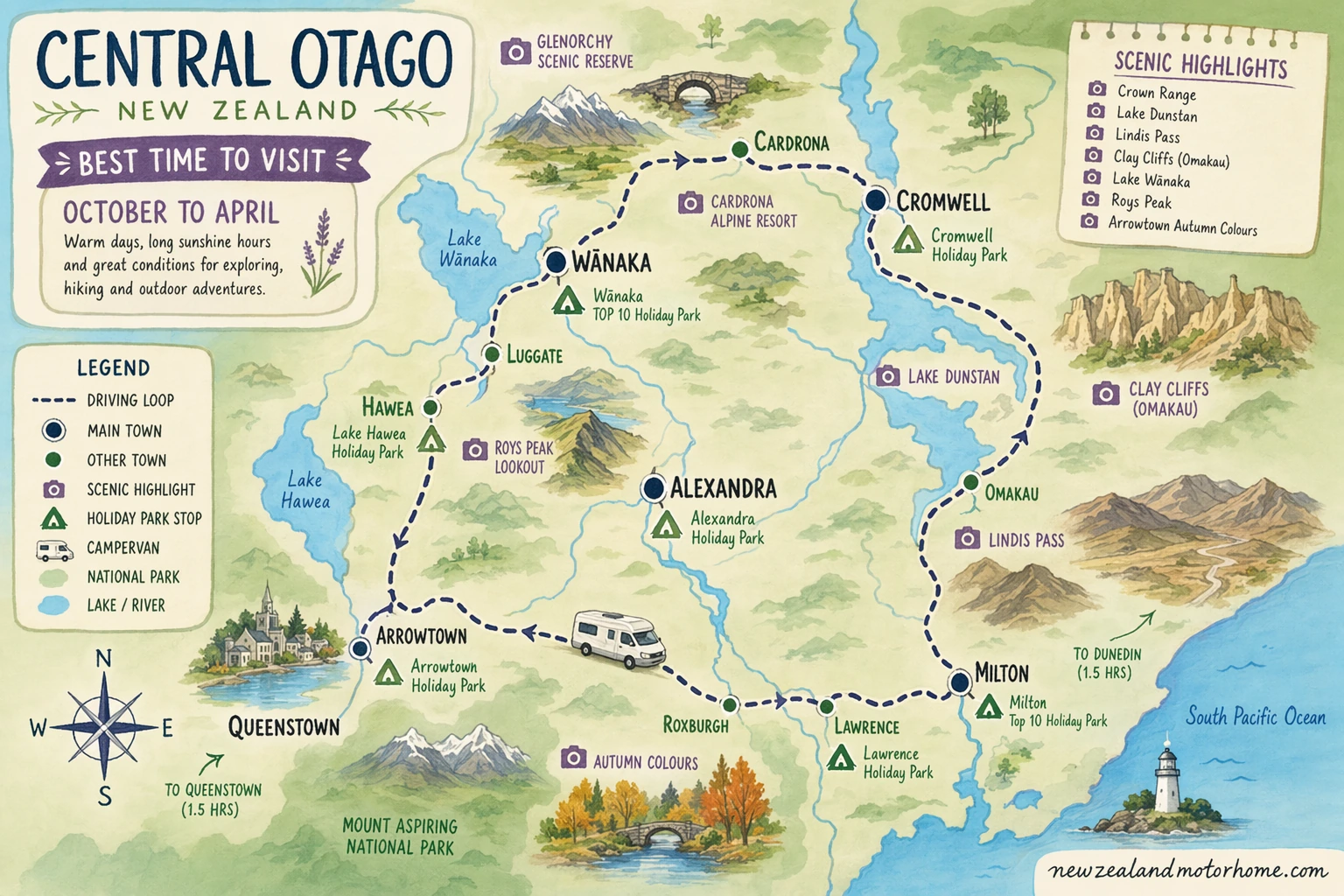
For most campervan travellers, the best time to visit Central Otago NZ is late March through April. The worst of the summer heat has usually eased, the autumn colour around Clyde, Alexandra, Cromwell, Ophir and Naseby is at its best, and you still get enough daylight for relaxed driving, lakeside stops and short walks before settling into your overnight site.
February can also be excellent if you are comfortable with hot afternoons and you book popular powered sites ahead. November and early December suit travellers who want longer days without the deepest summer crowds, though spring wind can make exposed cooking and awnings less pleasant.
- Best all-round campervan months: March and April.
- Best for long daylight: November to February.
- Best for quieter historic towns: May, September and October.
- Best avoided in a large van if you dislike ice: mid-winter back roads and early-morning hill routes.
Central Otago weather by month, from a van-life point of view
Central Otago has one of New Zealand’s more continental climates: hot, dry summers; sharp frosts in winter; and big day-to-night temperature swings in the shoulder seasons. That matters in a motorhome because shade, ventilation, heating, battery use and how early you drive can all change your day.
If you are checking central otago weather by month, focus less on averages and more on extremes. Alexandra and Cromwell can feel very hot in January afternoons, while Ranfurly, Naseby and St Bathans can be properly cold after sunset even when the day has been clear.
- December to February: hot, dry and busy around lakes, cycle trails and holiday parks; carry extra drinking water and choose shaded sites where possible.
- March to April: settled, colourful and comfortable for overnighting, though mornings can be crisp.
- May to August: cold nights, frosts, fog in basins and possible ice; use powered sites if you want reliable heating without draining batteries.
- September to November: blossom, fresh green hills and changeable wind; a good time if you keep your driving plans flexible.
Campsite availability, freedom camping and holiday parks by season
Summer and Easter are when Central Otago’s easygoing feel can tighten up for campervan travellers. Powered sites in Cromwell, Clyde, Alexandra and near Lake Dunstan can fill first, especially when cycle trail riders, families and long-weekend travellers arrive at the same time. If you rely on mains power for heating, cooling, medical gear or easy battery charging, book earlier than you would in quieter months.
Freedom camping rules vary by district and location, and you should only use approved areas that match your vehicle’s certification. A certified self-contained van gives you more options, but it does not mean you can park overnight anywhere beside a river, reserve or trail car park.
- Summer: book powered sites in advance near Cromwell, Clyde and Alexandra; arrive early for designated unpowered areas.
- Autumn: better availability, but Easter and school holidays still need planning.
- Winter: fewer travellers, but check whether smaller campgrounds or facilities are operating before you commit to a remote overnight.
- Spring: generally flexible, with busier pockets around events, blossom weekends and cycle-trail starts.
Road conditions and route choices for motorhomes
Central Otago’s main highways are generally comfortable in a hired campervan, but the region is full of older goldfields roads, open high-country sections and valley routes where wind, ice or gravel can change the feel quickly. A 7-metre motorhome is happiest on the main sealed routes between Cromwell, Clyde, Alexandra, Roxburgh, Ranfurly and Naseby, with shorter side trips chosen carefully.
In winter, start later in the morning if frost or black ice is likely, and be cautious on shaded bends, bridges and higher roads across the Maniototo. If your route in or out uses alpine passes towards Queenstown, Wānaka or the Mackenzie Country, check road conditions before leaving your overnight stop and do not assume a summer-style travel time.
- Good sealed touring routes: SH8 through Cromwell, Clyde, Alexandra and Roxburgh; SH85 through the Maniototo in settled weather.
- Use caution: narrow historic streets, one-lane bridges, exposed plateau roads and frosty morning descents.
- Avoid in standard hire motorhomes: rough back roads, deep-gravel tracks and any road your rental agreement excludes.
- Van-size note: check turning space before pulling into small gold-mining-era settlements or river access tracks.
Practical campervan rhythm: water, waste, LPG and parking
A relaxed Central Otago trip works best when you treat the bigger towns as service anchors. Alexandra, Cromwell, Clyde, Ranfurly and Roxburgh are useful places to plan around for groceries, fuel, potable-water checks, dump-station stops and LPG availability, though facilities can change, so confirm locations on the day before you are low.
Build your driving days around heat and cold. In summer, park the van in shade during the hottest part of the afternoon and use lake or river stops as breaks rather than overnight assumptions. In winter, a powered site every few nights can make drying towels, charging devices and running heating much easier.
- Before a dry-camping night: fill fresh water, empty grey and black waste, and check battery levels.
- Before heading into the Maniototo: top up fuel and water rather than relying on the next small settlement.
- For town stops: use signed parking and avoid taking long bays needed by locals if there is motorhome parking nearby.
- For trip planning help: if you are balancing seasons, site types and van size, you can talk to us before you lock in the route.
How many days to allow in each season
You can cross Central Otago quickly, but it is better by campervan when you slow down. A three-night trip gives you time for Cromwell or Clyde, Alexandra and a Maniototo loop; five to seven nights lets you add Roxburgh, Naseby, St Bathans or a quieter lakeside-style stop without moving the van every morning.
In summer, shorter drives and earlier starts make the heat easier. In winter, allow extra time so you are not forced onto icy roads at dawn or arriving after dark to an unfamiliar campground gate, dump station or freedom-camping area.
- 2 to 3 nights: a compact Clyde, Alexandra and Cromwell loop.
- 4 to 5 nights: add Roxburgh or the Maniototo, with time for slow lunches and short walks.
- 6 to 7 nights: a gentler circuit with Naseby, Ranfurly, St Bathans or extra cycle-trail days.
- Winter timing: keep daily distances modest and plan to park before temperatures drop.
Common questions
What is the best month to visit Central Otago in a campervan?
April is hard to beat for most campervan travellers: autumn colour, cooler nights and more comfortable daytime driving. March is also excellent if you want warmer evenings and settled weather.
Is Central Otago too hot for a motorhome in summer?
It can be very hot in January and February, especially around Alexandra, Cromwell and Clyde. Choose shaded sites, carry plenty of water, ventilate the van well, and avoid long exposed walks or slow campground set-ups in the hottest part of the afternoon.
Can I freedom camp in Central Otago?
Only in places where overnight camping is allowed, and only if your vehicle meets the requirements for that site. A certified self-contained campervan helps, but local bylaws and signs still decide where you can stay.
Do I need powered sites in winter?
You do not always need them, but they are very useful in Central Otago winter. Frosty nights can drain batteries faster if you are using heating, lights and device charging, so mixing freedom camping with powered holiday-park nights is a sensible rhythm.
Are the roads suitable for larger motorhomes?
The main sealed highways and town-to-town routes are usually suitable for larger motorhomes in normal weather. Be more careful on narrow historic streets, gravel side roads, frosty shaded sections and any route excluded by your hire agreement.
When are campsites hardest to get?
Christmas to late January, long weekends and Easter are the tightest periods, especially for powered sites near Cromwell, Clyde, Alexandra and Lake Dunstan. Book ahead if power or a specific town stop matters to your itinerary.
Have a planner shape this for your dates
Send a short outline — your dates, party size, and the kind of trip you want. A planner replies with a vehicle recommendation, a paced route, and the realistic budget.