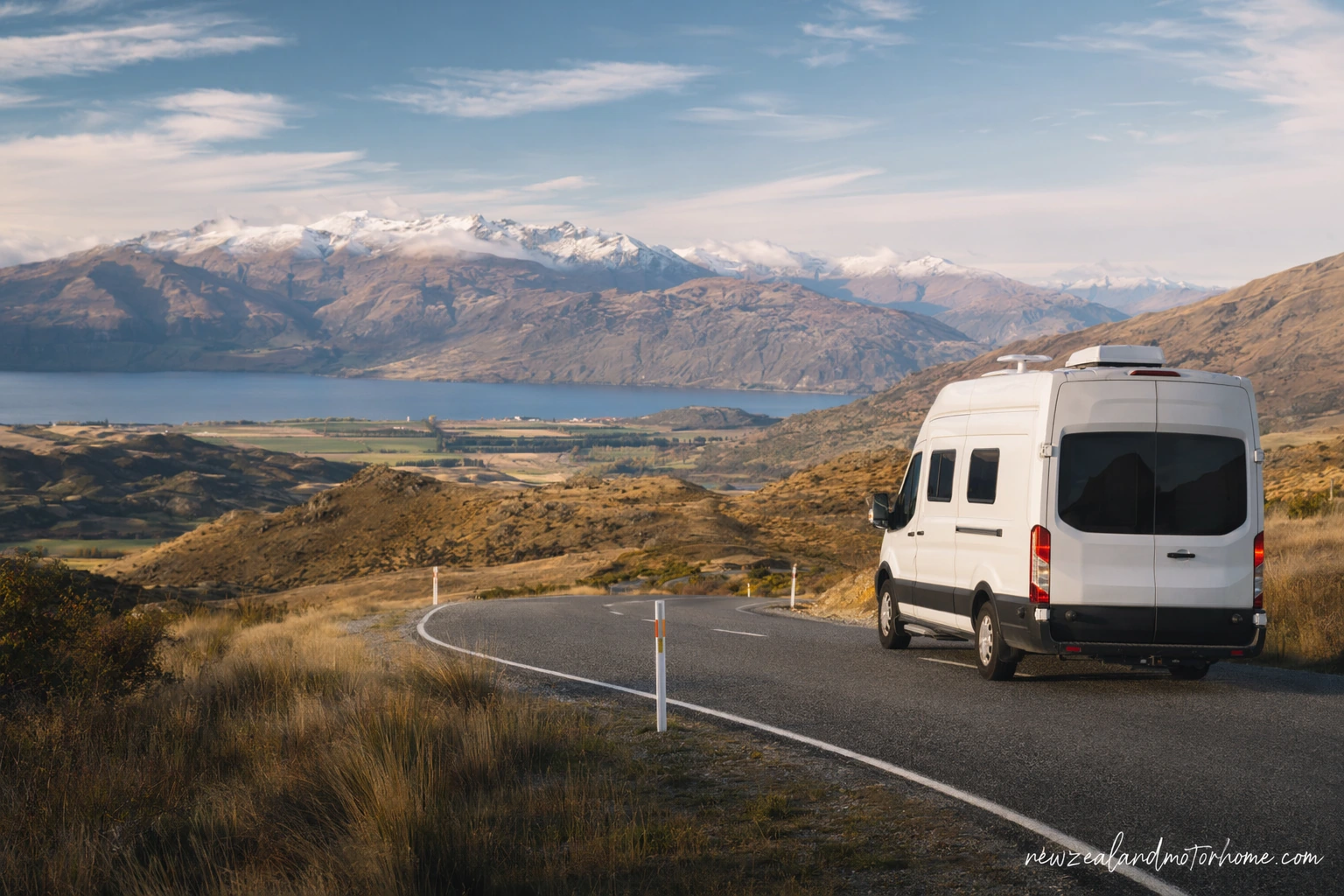
Your campervan guide Central Otago NZ: routes, stays and road notes
- Best with 4–7 days
- Powered sites useful in winter
- Freedom camp only where signed
- Check gravel-road hire rules
- Dump in main towns
Central Otago is big-sky country for a self-drive campervan: dry hills, stone fruit orchards, old gold towns, vineyard valleys and roads that feel wonderfully open without ever being careless. It suits travellers who like unhurried driving days, proper overnight stops, a swim or short walk, and the simple satisfaction of parking the van beside a wide river or under a hard, starry sky.
This campervan guide Central Otago NZ covers the practical side as much as the pretty side: where a motorhome fits comfortably, which roads need respect, how to think about powered versus unpowered nights, and where to reset with fresh water, LPG and dump stations. It is written for people sleeping in their hired van, not just passing through in a car.
Why Central Otago works so well by campervan
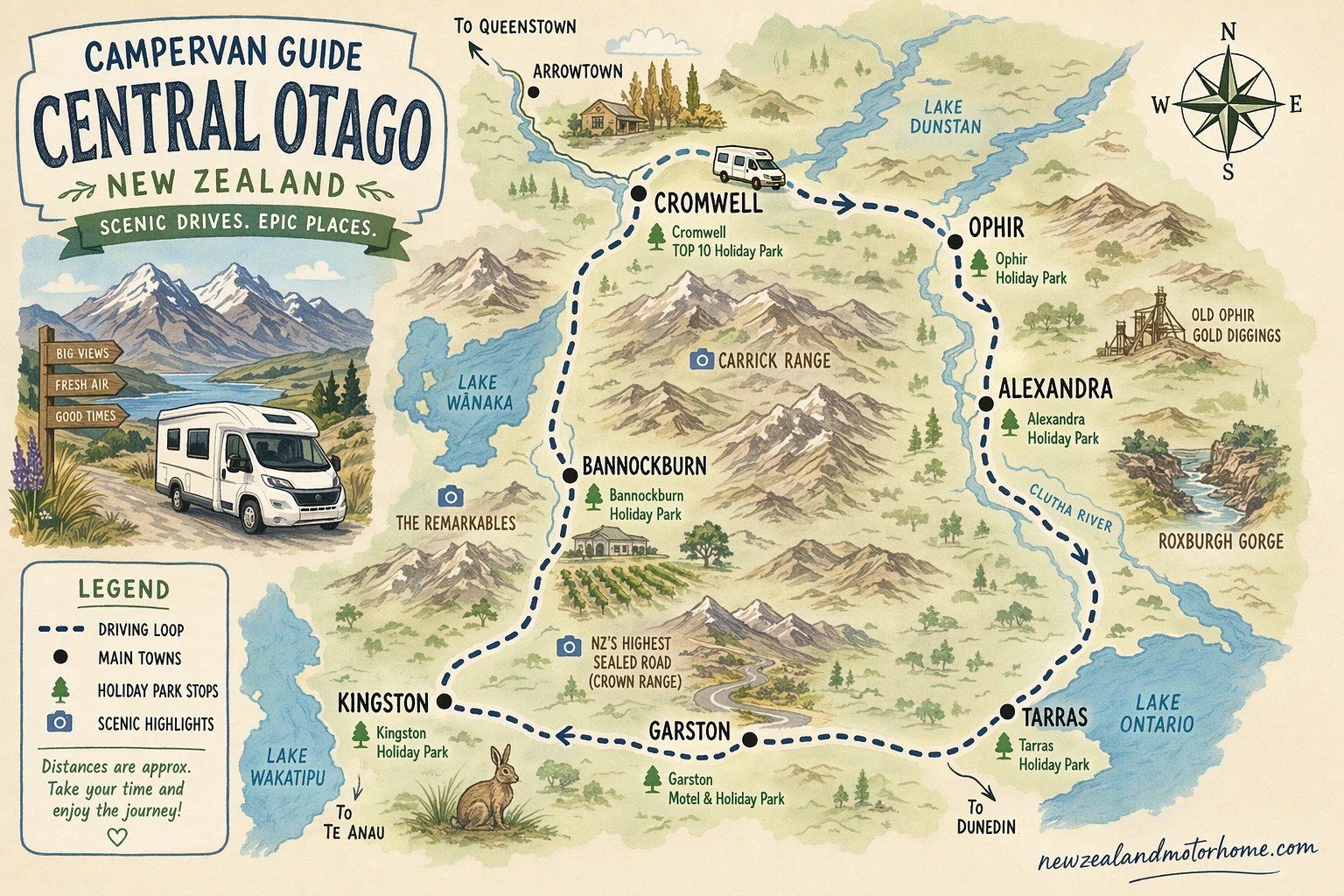
A central otago campervan trip has a different rhythm from the coastal touring routes. Towns are spaced far enough apart to feel remote, but close enough that you can plan sensible driving legs and still reach a proper campground, supermarket, fuel stop or dump station before evening.
The main hubs for vans are Cromwell, Clyde, Alexandra, Roxburgh, Ranfurly, Naseby and, depending on your route, Lawrence or Omarama on the edges. These places give you the practical loop structure: arrive, park the van, walk or cycle from town, then move on without backtracking too much.
- Best for: 4–7 day loops, vineyard stops, cycling, historic towns and clear-night camping.
- Driving style: sealed highways with some long straights, exposed ridges, frosty winter mornings and occasional gravel side roads.
- Van set-up: a certified self-contained motorhome gives more flexibility, but book powered sites every few nights if you rely heavily on heating, fridge power or device charging.
- Trip feel: less crowded than the main Queenstown-to-Milford corridor, but still popular around summer holidays and Otago Central Rail Trail season.
A sensible Central Otago motorhome route
A comfortable motorhome Central Otago loop often runs Cromwell, Clyde, Alexandra, Roxburgh, Naseby or Ranfurly, then back towards Cromwell or onward to Dunedin, Waitaki or Queenstown. You can do it quickly, but the region rewards slower mornings: coffee in an old gold town, a riverside walk, a fruit stall stop, then a short afternoon drive to your overnight site.
For a 3-day taste, base one night around Cromwell or Bannockburn and one around Clyde or Alexandra. With 5–7 days, add Roxburgh Gorge, the Maniototo towns, Naseby Forest and St Bathans. If you are linking from Queenstown or Wānaka, build in extra time for the approaches; they are scenic but can be busy and weather-affected.
- Cromwell to Clyde: easy sealed driving through Lake Dunstan country, with good access to walking, cycling and vineyard areas.
- Clyde to Alexandra: short and simple, ideal when you want a light driving day and time to ride or walk beside the river.
- Alexandra to Roxburgh: follow the Clutha/Mata-Au valley for orchards, river views and quieter overnight options.
- Alexandra to Ranfurly or Naseby: higher, drier country; watch for frost and strong winds in the cooler months.
If you want help turning those pieces into a realistic day-by-day van plan, you can talk to us before you lock in campground nights and ferry-style timing across the rest of your South Island trip.
Where to stay: powered sites, unpowered nights and freedom camping
Central Otago has a useful mix of holiday parks, council-style camping areas, low-key rural campgrounds and tightly controlled freedom camping spots. For most hired campervans, the easiest pattern is two nights self-contained or unpowered, then one night on power to recharge the house battery, use laundry facilities and top up properly.
Holiday parks in towns such as Cromwell, Clyde, Alexandra, Roxburgh, Ranfurly and Naseby are the simplest choice if you want powered sites, showers, dump points or fresh-water fills in one stop. They also suit longer vehicles because access roads, turning areas and site markings are usually clearer than at informal river spots.
Freedom camping rules vary by district and can change around lakes, reserves and township edges. Do not assume that a pretty gravel pull-off beside Lake Dunstan, the Clutha River or an old bridge is legal for the night. Look for council signage, use current camping apps as a cross-check, and only freedom camp where certified self-contained vehicles are permitted.
- Powered sites: best after cold nights, e-bike charging, heavy laptop use or running the heater often.
- Unpowered sites: good in summer if your battery and solar are coping and you have enough fresh water.
- Freedom camping: possible in selected signed areas, usually with night limits and self-containment requirements.
- Longer vans: choose formal campgrounds if you are over 7 metres or towing bikes on the rear, especially near busy lakefronts.
Dump stations, fresh water, fuel and LPG planning
Do not treat Central Otago as remote wilderness, but do plan your van services before you head into the quieter valleys. Cromwell, Alexandra, Clyde, Roxburgh and Ranfurly are the kind of towns where you are more likely to sort fuel, groceries, potable water and dump-station needs; smaller settlements may have limited hours or no suitable turning space for a larger motorhome.
Dump stations are commonly found at holiday parks and in some public service areas, but always check current access before relying on one late in the day. Empty your grey and black water before gravel side trips, and never leave waste beside rural toilets, rivers or picnic areas. In dry Central Otago, water is precious and locals notice poor campervan behaviour quickly.
- Fresh water: fill from marked potable taps only; do not use irrigation taps or cemetery taps unless clearly signed for drinking water.
- LPG: top up in larger towns rather than waiting until your bottle is empty on a cold Maniototo night.
- Fuel: keep the tank above half if you are looping through Naseby, St Bathans or back roads toward the Waitaki.
- Rubbish: carry it to proper transfer stations or campground bins; rural picnic bins are not for full van clean-outs.
Road notes for vans: sealed highways, gravel temptations and winter ice
The main Central Otago roads are generally very van-friendly, with wide sealed highways and plenty of places to pull over safely if you are patient. The watch-outs are not usually tight city traffic; they are sunstrike, fatigue on long straight sections, sudden wind gusts, frosty shaded corners and slow climbs where you should let following traffic pass when safe.
Be careful with scenic-looking gravel roads on maps. Routes such as the Old Dunstan Road, parts of the Nevis, and high-country tracks around the ranges can be unsuitable for many hire motorhomes, especially after rain, snow or during winter closures. Check your rental agreement before taking any unsealed road; some policies allow short access roads to campgrounds but not back-country routes.
The Lindis Pass and the approaches from Queenstown, Wānaka and the Waitaki can all be stunning, but they deserve weather checks in winter and shoulder season. Carry chains if your hire company supplies them and conditions require them, and know how they fit before you are standing on the roadside in sleet.
- Vehicle height: watch tree branches at older reserves, farm gateways and historic-town side streets.
- Vehicle length: avoid squeezing into small heritage-town parks; use larger edge-of-town parking and walk in.
- Passing: pull over only where the shoulder is firm and visible; loose gravel edges can drop away.
- Wind: reduce speed on exposed plateau sections, especially with a high-roof campervan.
Things to do in Central Otago by campervan
The best things to do Central Otago campervan style are the ones that start close to where you can legally park. Clyde and Alexandra are excellent for river trails, old stone buildings and easy food stops without needing to move the van repeatedly. Cromwell and Bannockburn work well for vineyard visits if you have a sober driver, a booked campsite nearby, or bikes and a sensible plan.
The Otago Central Rail Trail and Roxburgh Gorge Trail are natural fits for campervan travel because you can base yourself in a town campground, ride a section, then return to your own bed. Naseby adds forest tracks, curling in winter and a relaxed campground feel, while St Bathans is a memorable side trip if road and weather conditions suit your vehicle.
- Clyde: park once, explore the historic precinct, river paths and trail connections.
- Alexandra: good for supplies, walks, bike access and practical van servicing.
- Cromwell: lake views, orchards, heritage precinct and access to Bannockburn.
- Roxburgh: quieter river country, fruit stops and cycle-trail logistics.
- Naseby and Ranfurly: Maniototo skies, forest, Art Deco streets and cooler overnight temperatures.
Common questions
How many days do I need for a Central Otago campervan trip?
Allow at least 3 days for a quick Cromwell, Clyde and Alexandra loop. Five to seven days is better if you want Roxburgh, Naseby, Ranfurly or St Bathans without turning every day into a drive-and-arrive schedule.
Can I freedom camp in Central Otago with a self-contained motorhome?
Yes, but only in permitted signed areas and usually only if your vehicle is certified self-contained. Rules vary between reserves, lake edges and townships, so check current council information and obey on-site signs rather than relying on old travel notes.
Are Central Otago roads suitable for large campervans?
The main sealed highways are generally suitable for large campervans and motorhomes. Take extra care on gravel side roads, high-country routes, tight heritage-town streets and in winter conditions; some unsealed roads may not be allowed under your hire agreement.
Where should I plan to empty waste and refill water?
Plan around larger towns such as Cromwell, Alexandra, Clyde, Roxburgh and Ranfurly, plus campgrounds with guest facilities. Use proper dump stations only, fill from potable taps, and avoid leaving servicing until late afternoon in smaller settlements.
Is winter a good time to travel Central Otago by campervan?
Winter can be beautiful, with clear skies and snow on the ranges, but nights are cold and frosts are common. Book powered sites more often, check road conditions before passes or plateau routes, and make sure you understand your heater, LPG and battery limits.
Have a planner shape this for your dates
Send a short outline — your dates, party size, and the kind of trip you want. A planner replies with a vehicle recommendation, a paced route, and the realistic budget.