- Best season: spring to autumn
- Allow: 2-4 slow days
- Main bases: Cromwell, Clyde, Alexandra
- Van note: park wide and walk in
- Stay type: powered sites or legal self-contained camping
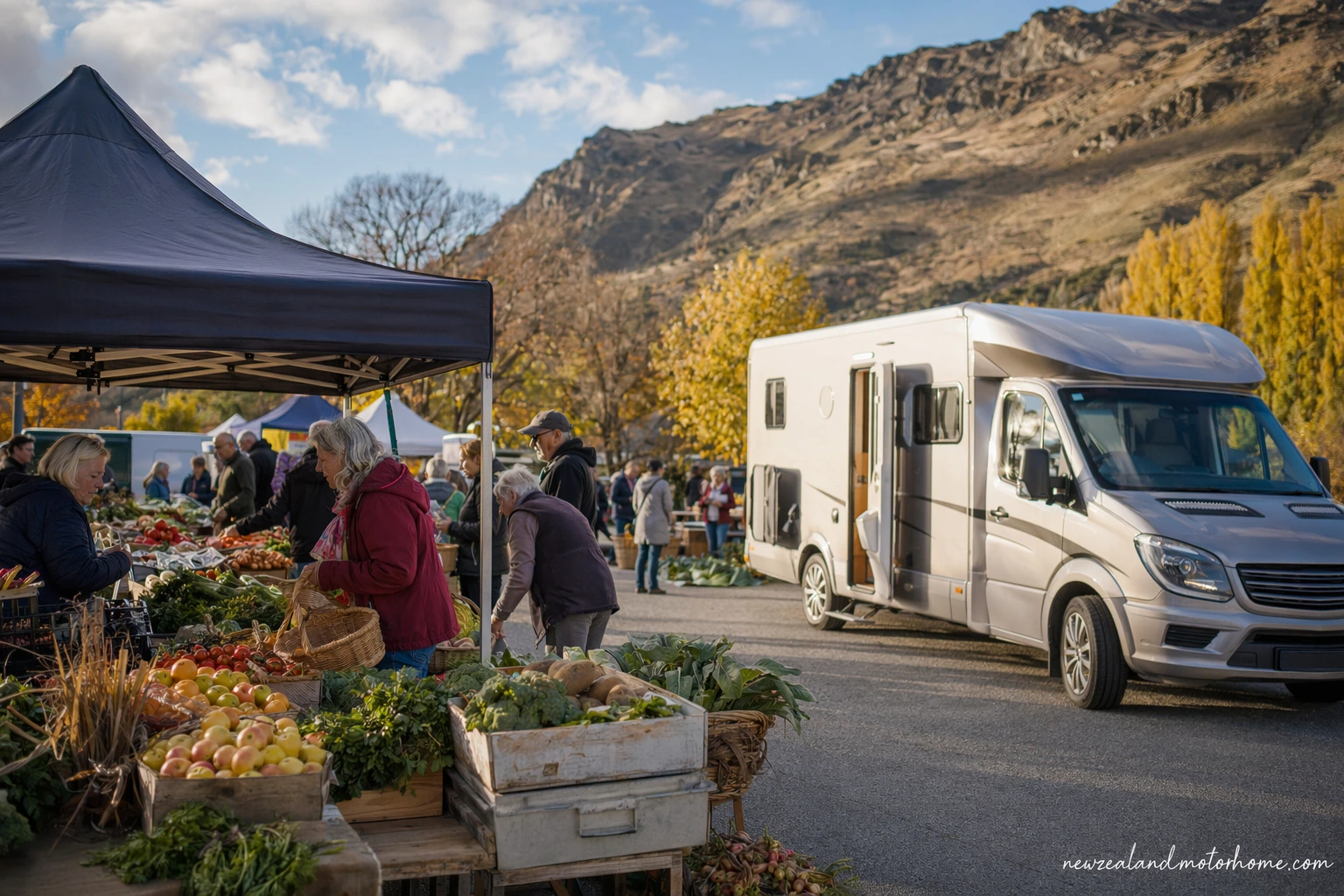
Central Otago is made for slow campervan shopping: dry hills, stonefruit orchards, cellar-door lanes, old gold towns and weekend trestle tables stacked with whatever the season has just ripened. For a motorhome traveller, the trick is less about rushing to one market and more about timing a gentle loop through Cromwell, Clyde, Alexandra and the smaller basin towns.
This guide is written for people driving and sleeping in their hired van. You will find practical notes on market days, where a longer campervan is easiest to park, what fresh produce Central Otago is known for, and how to line up powered sites, fresh-water fills, LPG and dump stations before the cupboards get too full.
When the markets run, and how to plan the loop
The rhythm of farmers markets central otago is strongly seasonal. The busiest stretch is usually spring through autumn, when orchards, berry growers and small food producers have more to bring; winter can still be rewarding, but markets may be smaller, less frequent or tied to local events.
Weekend markets Central Otago style tend to happen in the morning, before the afternoon heat or wind arrives. Cromwell is the most reliable market base for many van travellers, while Alexandra, Clyde, Roxburgh, Omakau and Maniototo towns are worth checking for community market dates, school fairs and seasonal food events before you commit to a driving day.
- Build your route around Saturday and Sunday mornings, then leave the afternoons for short drives, lake stops or a powered site.
- Check current market notices locally; small-town markets can shift for weather, public holidays or harvest timing.
- Avoid arriving with empty fresh-water tanks or a full grey-water tank, as market car parks are rarely service points.
- If your van is over 7 metres, choose town-edge parking and walk in rather than squeezing into historic main-street angle parks.
Cromwell: lake edge parking, stonefruit and the Heritage Precinct
Cromwell is the natural starting point for food markets Central Otago campervan travellers often build around. The Heritage Precinct sits close to Lake Dunstan, with cafés, galleries and seasonal stalls nearby, and it is a pleasant place to browse without needing to move the van between stops.
Parking is easiest if you arrive early and use the wider public parking areas near the lake or precinct edges, rather than trying to nose a high-roof van into the tightest historic spaces. Do not treat market parking as an overnight stop; move on to a legal campsite, holiday park or designated freedom camping area once you have finished shopping.
- Look for cherries, apricots, peaches, nectarines, apples, pears, walnuts, honey, preserves and baking in season.
- Keep an insulated bag or small chilly bin handy; summer fruit softens quickly inside a closed van.
- Use supermarket or town service stops for LPG, groceries and fuel, then use holiday park or public dump station facilities where signed.
- The Kawarau Gorge and SH6 approaches can feel narrow in crosswinds, so give yourself time if driving in from Wānaka or Queenstown.
Alexandra and Clyde: park wide, walk the old streets
Alexandra and Clyde are excellent bases if you want markets, orchard stalls and easy overnight options without a big driving day. The two towns sit close together, so you can park the campervan once, wander on foot, and avoid repeatedly threading through narrow heritage streets.
For longer motorhomes, the best habit is to choose end-row spaces, riverside or town-edge parking where signed, and then walk a few minutes to the market area. Angle parks on compact main streets are not friendly to rear overhangs, bike racks or high-roof vans, especially once the morning crowd arrives.
- Alexandra is a handy servicing stop, with fuel, groceries and usually better access to dump-station or fresh-water facilities than tiny villages.
- Clyde suits a slower overnight, especially if you want a powered site after a hot summer day on the road.
- Keep clear of cycle-trail entrances and boat-ramp areas; they are busy with e-bikes, trailers and locals from early morning.
- If freedom camping, use only signed areas that allow certified self-contained vehicles and respect any maximum-stay limits.
What to buy when you are cooking in the van
The best market haul is the one that fits your campervan kitchen. Central Otago produce is generous but delicate, so think in meals: tomatoes and herbs for a one-pan pasta, stonefruit for breakfast, bread for lakeside lunches, and chutney or honey that will survive a few more days on the road.
Fresh produce Central Otago is most famous for its summer fruit, but autumn brings apples, pears, nuts, pumpkins and preserves that travel well. If your fridge is small, buy ripe fruit for today and firmer fruit for two days' time, then keep it shaded while you drive.
- Carry reusable bags, a lidded produce box and a tea towel to stop peaches or apricots bruising on gravel-road corrugations.
- Ask stallholders what needs chilling; not everything wants to sit beside the van fridge's coldest plate.
- Use market mornings to restock fresh food, then plan a dump-station and fresh-water stop before heading to a remote unpowered site.
- Watch weight and storage if you are buying cases of fruit; keep heavy boxes low and secured before driving.
Overnight stops, services and road notes between markets
Central Otago is straightforward in a campervan, but distances feel slower than they look once you add fruit-stall stops, photo pull-offs and narrow town streets. Plan your overnight base before you shop, especially in the summer holiday period when powered sites in Cromwell, Clyde and Alexandra can fill quickly.
Holiday parks are the easiest choice when you need showers, laundry, fresh water, a dump station or a powered site to cool the fridge properly. Unpowered sites and legal freedom camping areas work well for a night, but only if your vehicle meets the current self-containment rules and the local signage allows overnight stays.
If you would like the market days, overnight stops and service points stitched into a tidy driving loop, you can talk to us before you lock in your hire dates.
- SH8 and SH85 are the main linking roads; allow extra time for wind, slow trucks and photo stops.
- Some orchard or vineyard entrances are gravel, narrow or lined with irrigation gear, so check turning space before committing a large motorhome.
- Top up fresh water before heading into the Maniototo or lakeside areas where services are less frequent.
- Never empty grey water at a market, roadside drain or public toilet; use a signed dump station only.
Common questions
What are the best market days for a campervan trip in Central Otago?
Plan around weekend mornings, especially in the warmer months. Cromwell is often the easiest anchor for a Sunday-style market stop, while Alexandra, Clyde and smaller towns may run seasonal or event-based markets, so check current local listings before you drive.
Can I park a large motorhome at Central Otago markets?
Usually yes, but arrive early and avoid tight main-street angle parks. Use wider public parking areas, town-edge spaces or lakefront parking where permitted, then walk in with bags rather than manoeuvring a long van through busy market streets.
Can I freedom camp near the markets?
Only where local signage allows it, and only if your campervan meets current self-containment requirements. Market car parks are for daytime parking, not overnighting, so move to a designated freedom camping area, DOC-style campsite where permitted, or a holiday park.
What produce is Central Otago known for?
Summer brings cherries, apricots, peaches, nectarines and berries, while autumn is good for apples, pears, walnuts, pumpkins, honey and preserves. Buy with your van fridge space in mind, and keep soft fruit shaded while you drive.
Where should I service the van between market stops?
Cromwell and Alexandra are the most practical towns for fuel, groceries, LPG, fresh water and dump-station planning. Smaller villages may have limited services, so empty grey water and refill fresh water before heading to an unpowered or more remote overnight stop.
Have a planner shape this for your dates
Send a short outline — your dates, party size, and the kind of trip you want. A planner replies with a vehicle recommendation, a paced route, and the realistic budget.