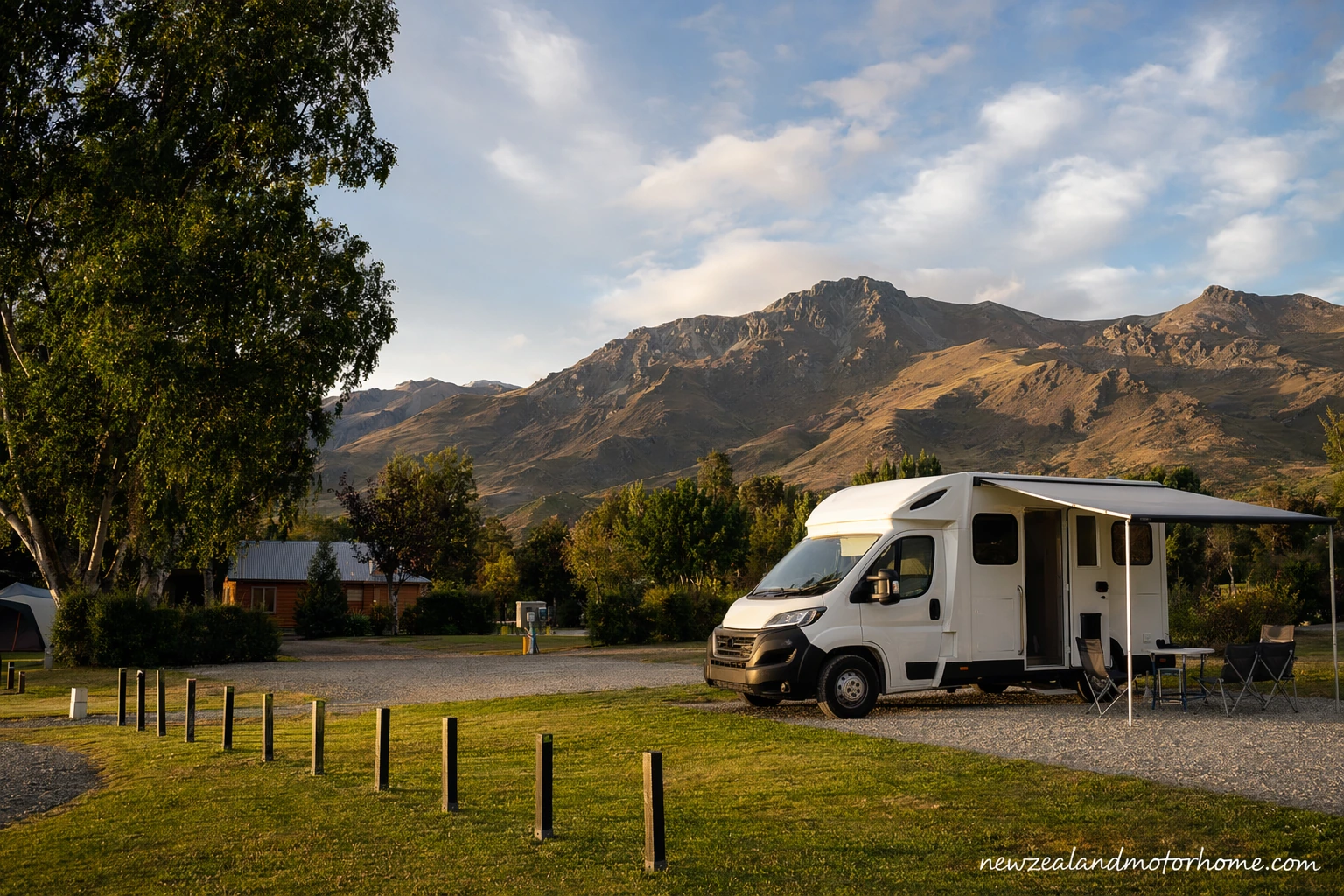
- Best season: spring to autumn; winter needs ice awareness
- Allow 3–6 days for unhurried town-to-town camping
- Powered and unpowered sites available in main bases
- Self-containment required for most legal freedom camping
- Check van length on small-town and reserve sites
Central Otago suits a slower motorhome rhythm: short drives between old gold towns, big dry hills, orchard country and lake edges, with plenty of places to plug in, fill the fresh-water tank and reset the van. The best base is not always the biggest town; it depends on whether you want cycle trails, wineries, high-country roads, river swimming or a quiet powered site after a long haul.
This guide looks at holiday parks Central Otago from a campervan point of view — where the parks tend to sit, how powered and unpowered sites differ, what freedom camping rules mean here, and how to link Alexandra, Clyde, Cromwell, Roxburgh, Ranfurly and Naseby without turning your trip into a packing-and-unpacking exercise.
How Central Otago’s holiday parks are spread out
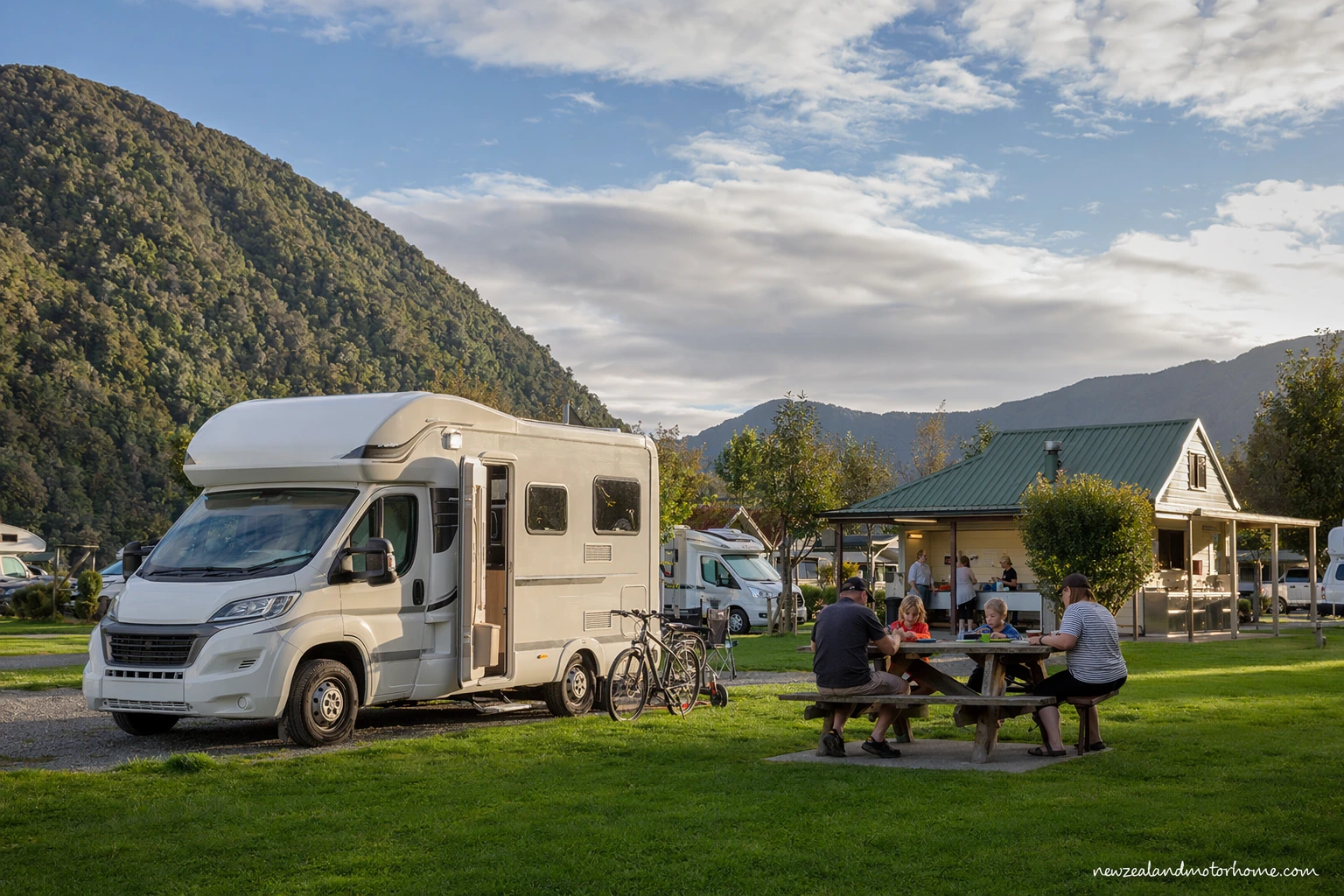
Central Otago is not a single resort strip. Its campgrounds Central Otago style are usually town-edge or riverside bases, often close enough to walk to cafés or trailheads but far enough from the main road to feel settled once the handbrake is on. Alexandra and Clyde work well for the Clutha River/Mata-Au, the Otago Central Rail Trail and easy supplies; Cromwell is the practical base for lake days, Bannockburn and the road towards Wānaka or Queenstown.
Further south and east, Roxburgh suits travellers following the river and fruit-stall route, while Ranfurly, Naseby and the Maniototo give you cooler nights, bigger skies and a quieter camping feel. If you are searching for a top 10 holiday park Central Otago list, use it as a starting point rather than a rulebook — the best stop is the one that fits your van length, route direction and need for facilities that night.
- Alexandra/Clyde: handy for cycling, river walks, groceries, fuel and a mid-trip laundry reset.
- Cromwell: useful for lake access, wineries, LPG and onward travel to the Southern Lakes.
- Roxburgh: a good pause on the orchard-and-river corridor between Central Otago and South Otago.
- Ranfurly/Naseby: quieter inland bases with cooler evenings and easy access to Maniototo landscapes.
Powered sites, unpowered sites and what to book
Powered sites Central Otago are worth booking ahead in summer, during school holidays and around cycle-event weekends. Even if your campervan has solar, a powered night lets you run the fridge confidently, recharge devices, use park facilities and start the next morning with batteries, water and people all topped up.
Unpowered sites can be a good fit if you are self-contained and only need toilets, showers or a safe legal place to sleep. Ask about site surface before you arrive: some parks have firm gravel or sealed pads for heavier motorhomes, while others are more grass-based and can feel soft after rain or irrigation.
- For larger motorhomes: confirm site length, turning room and whether there are low branches near the pitch.
- For hired campervans: check whether your power lead and adaptor match the site requirements before leaving the depot.
- For winter: choose power if you rely on electric heating or want an easy morning start.
- For one-night stops: ask for a site that does not require tight reversing in the dark.
Freedom camping rules and self-containment in the district
Freedom camping in Central Otago is managed by council rules, local signage and site-specific restrictions. Do not assume that a quiet riverbank or lake pull-off is legal for an overnight stay. If your campervan is not certified self-contained, plan to use holiday parks or designated campsites Central Otago with toilets rather than relying on roadside parking.
Rules can change, especially near popular lakes, reserves, trail car parks and town centres. Check the current Central Otago District Council camping information before you park up for the night, then obey the sign on the ground even if an app suggests otherwise. A proper self-containment certificate helps, but it does not override a no-camping sign.
- Arrive in daylight: it is easier to read signs, judge ground conditions and avoid blocking gates or boat ramps.
- Keep access clear: leave room for farm vehicles, emergency vehicles and other vans to turn.
- Use dump stations: never empty grey water on gravel, grass, drains or beside a river.
- Move on respectfully: if a site feels crowded or unclear, choose a holiday park instead.
Dump stations, water, LPG and practical van chores
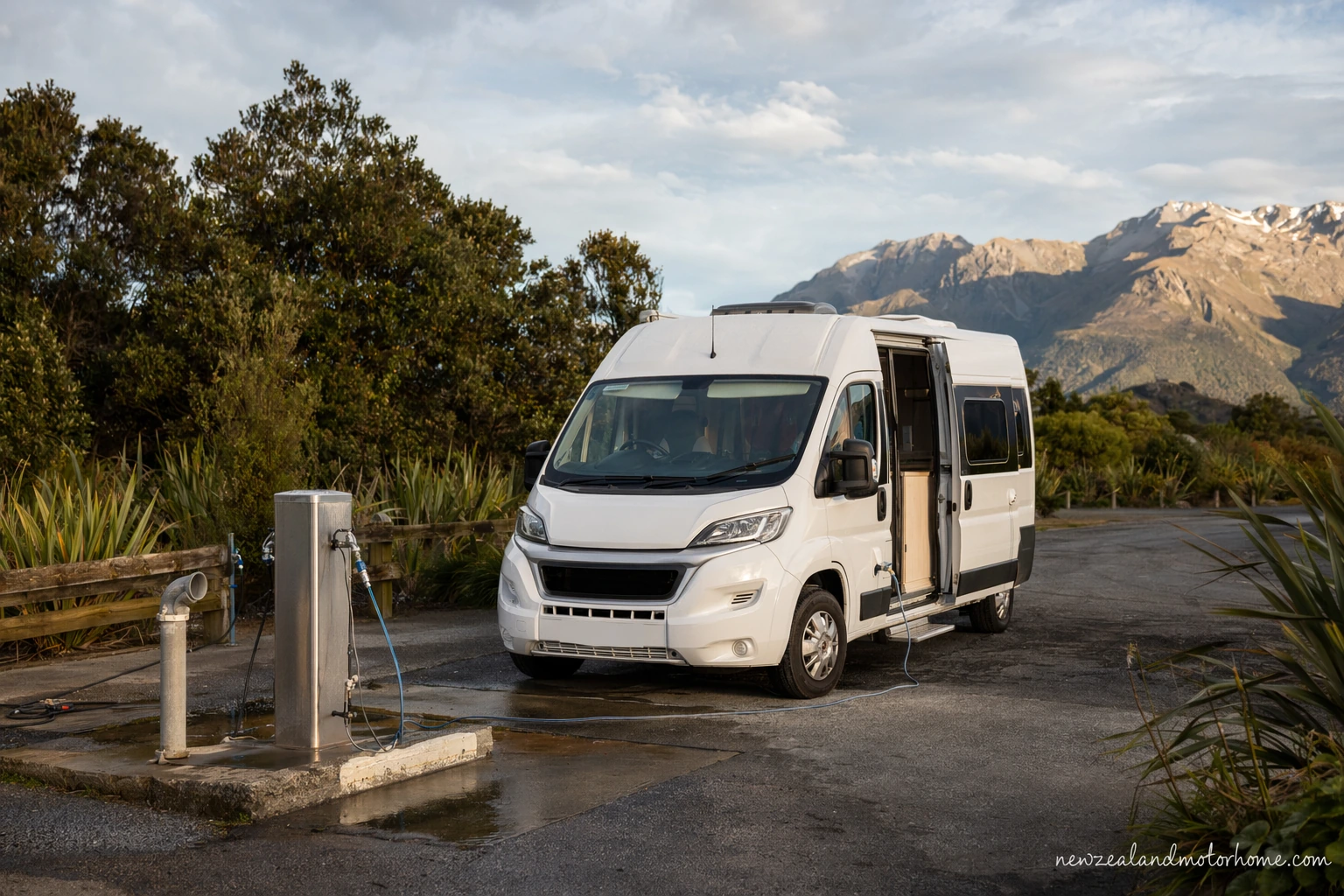
Central Otago is a good region for staying on top of campervan chores because the towns are close enough that you rarely need to push tanks to the limit. Alexandra and Cromwell are the most practical service hubs, with supermarkets, fuel, LPG options and public or park-based dump facilities typically easier to find than in the smaller inland settlements.
Holiday parks are often the simplest place to handle fresh water, rubbish, recycling, laundry and cassette emptying in one stop. If you are moving between smaller campgrounds Central Otago, do the chores before you leave a larger town so you are not arriving late with a full grey-water tank and no obvious dump station.
- Fresh water: refill before heading into the Maniototo or along quieter back roads.
- Grey/black water: dump only at marked dump stations or park facilities.
- LPG: check bottle levels before cold nights; do not wait until you are already away from the service towns.
- Rubbish: use park or council waste points; rural pull-offs are not disposal areas.
Driving between bases without rushing the van
The distances look small on the map, but Central Otago roads deserve attention in a campervan. State highways are generally straightforward, while some side roads to lookouts, vineyards, reserves and old gold-mining areas can be narrow, exposed, gravelled or short on turning space. Take your time on descents, let faster traffic pass at safe pull-offs, and watch for cyclists near trail towns.
Winter brings frosts, fog pockets and occasional ice, especially around the Maniototo and higher inland roads. In summer, heat and glare can be tiring, and popular lake or river parking areas may fill early. If you would like help matching van size, season and overnight stops, you can talk to us before locking in your route.
- Clyde to Alexandra: very short, so you can base in one and visit the other without shifting camp.
- Alexandra to Roxburgh: a scenic river run with orchards and places to pause, but check where a long van can safely pull in.
- Cromwell to Clyde: an easy link for lake, vineyard and cycling days.
- Alexandra/Ranfurly/Naseby: allow more time than the kilometres suggest in winter or windy conditions.
Common questions
Do I need to book holiday parks in Central Otago for a campervan?
In summer, school holidays and during cycling events, booking is a good idea, especially if you need power. Outside peak periods you may have more flexibility, but larger motorhomes should still check site length and access before arriving late.
Are there many powered sites in Central Otago?
Yes, the main towns and established holiday parks usually cater well for campervans needing power. Availability varies by season, so book powered sites Central Otago in advance if you are travelling with a bigger vehicle, using electric heating, or relying on park facilities for a reset.
Can I freedom camp beside the lakes or rivers?
Only where it is legally allowed and suitable for your self-contained campervan. Central Otago has local restrictions around reserves, lake edges, town areas and access points, so check current council information and follow on-site signs.
Which Central Otago base is best for the Otago Central Rail Trail?
Clyde and Alexandra are the most obvious campervan bases for starting or finishing sections of the trail, with services nearby. Ranfurly and the Maniototo also work well if you want a quieter inland base and are planning shorter trail rides from the van.
Where should I empty wastewater in Central Otago?
Use marked dump stations or holiday park dump facilities only. Alexandra and Cromwell are practical service towns, but plan ahead before heading to smaller campsites or rural overnight stops.
Is Central Otago suitable for large motorhomes?
Yes, with sensible planning. Stick to main routes where possible, confirm holiday park site size, watch for low branches in older campgrounds, and be cautious on narrow side roads, gravel access tracks and small reserve car parks.
Have a planner shape this for your dates
Send a short outline — your dates, party size, and the kind of trip you want. A planner replies with a vehicle recommendation, a paced route, and the realistic budget.