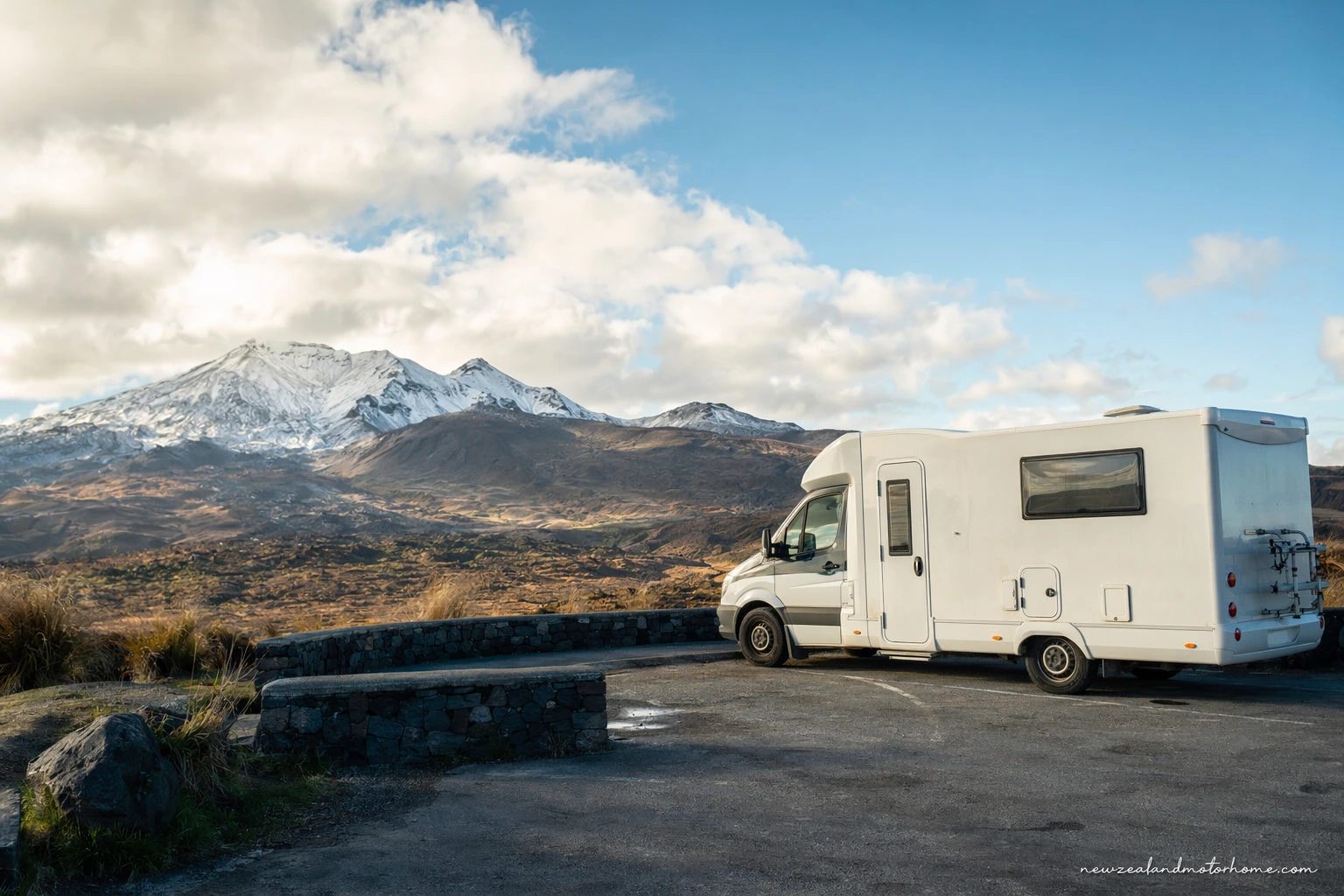
- Best season: spring to autumn
- Allow 2–4 campervan days
- Freedom camping is restricted
- Mountain roads can ice or close
- Use towns for dump and water
Tongariro is brilliant campervan country, but it asks you to slow down and plan properly. The mountain roads are exposed, the best car parks fill early, and many tempting gravel pull-ins are day-use only, not places to sleep in the van.
This guide gathers the best campervan stops Tongariro travellers can realistically use: scenic viewpoints, short-walk car parks, sensible overnight bases, dump-and-water planning, and the freedom camping rules that matter when your bed is on board.
How to string Tongariro together in a campervan
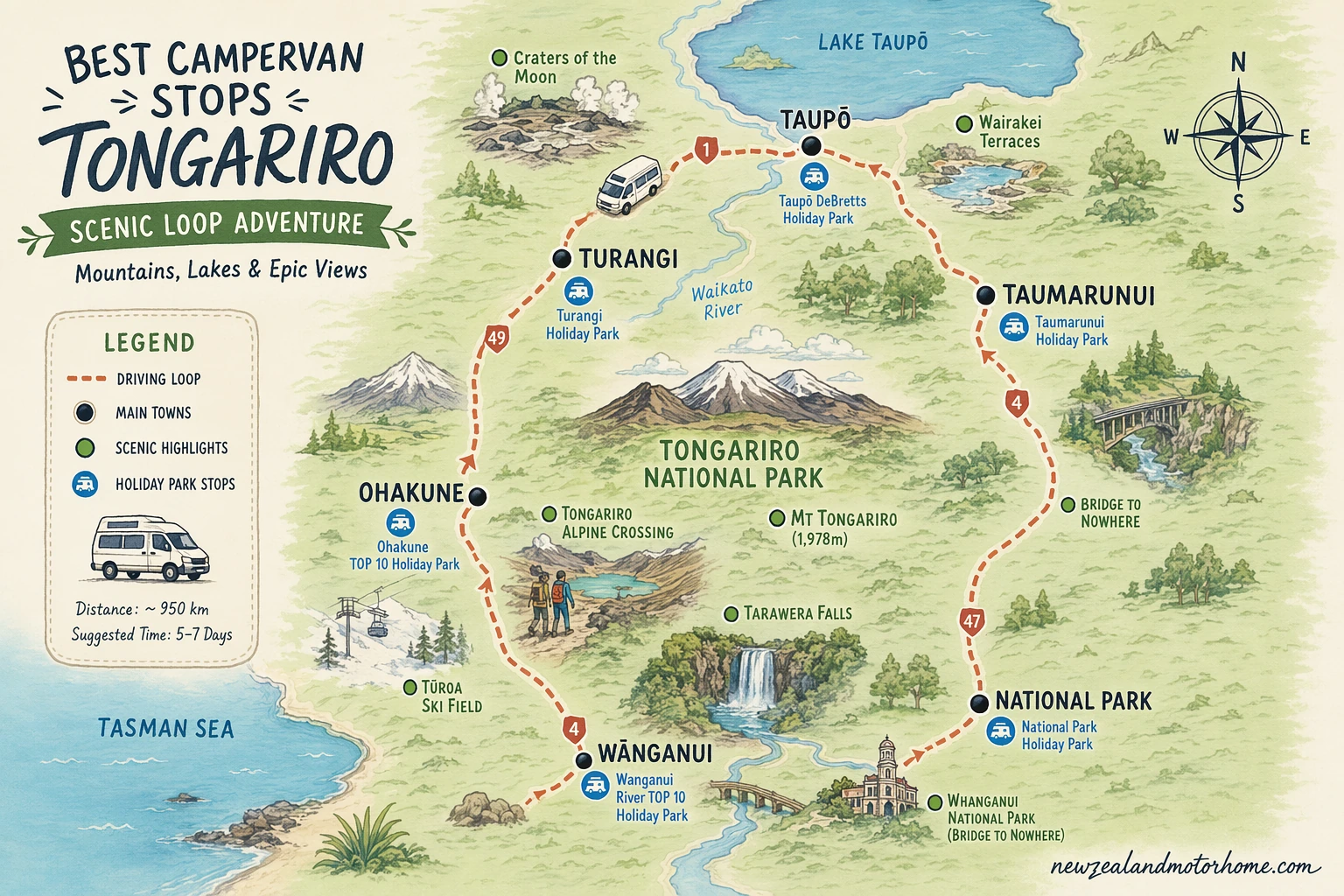
The easiest Tongariro loop for a self-drive campervan is Tūrangi or Taupō in the north, across SH47 to Whakapapa Village, then south-west to National Park Village and Ohakune before returning via SH49, SH4 or the Desert Road. It gives you mountain views from several angles without doubling back too much in a heavier van.
Build the day around weather rather than distance. Cloud can sit hard on Ruapehu and Ngāuruhoe while the roads are still clear, so use flexible overnight stops and keep a lower-altitude backup. If you want help placing nights around walks, dump stations and van size, our plan-your-trip step is a useful way to sanity-check the route.
- Best first base: Tūrangi or National Park Village if you are arriving late and want services close by.
- Best mountain base: Whakapapa Village area for short walks, visitor information and early starts.
- Road note: SH47 and SH48 are sealed and manageable, but wind, ice and low cloud can change the feel quickly.
- Van note: Long motorhomes should avoid last-minute U-turns at small waterfall car parks; commit only when you can see space to turn.
Whakapapa Village, Silica Rapids and Tawhai Falls
Whakapapa Village is the most useful day stop inside the national park. Park the van in the signed public parking areas, use the toilets, check the weather and track alerts, then walk from the village rather than trying to shift the campervan between every small trailhead.
The Silica Rapids walk is a good van-day option because it starts near the village and gives you alpine stream, tussock and mountain views without needing a shuttle. Tawhai Falls is shorter and very popular; the roadside car park is small, so arrive early or skip it if your vehicle is long and the bays are already tight.
- Whakapapa Village: best for toilets, information, day parking and starting short walks.
- Silica Rapids: leave the campervan in the village area and walk from there.
- Tawhai Falls: suitable for compact campervans when quiet; not a place to linger in a large motorhome.
- Overnighting: do not sleep in trailhead or visitor car parks unless signage specifically allows it.
Where to stay in a campervan near Tongariro
If you are working out where to stay campervan Tongariro style, think in layers: a serviced holiday park night for power, showers and laundry; a simpler DOC-style night when you are self-contained and stocked; and a town night before or after big walks for dumping waste and refilling fresh water.
The holiday park at Whakapapa Village is the closest overnight option for the central national park feel, with powered and unpowered site options normally suited to campervans. National Park Village gives more roadside services and a practical base for shuttles, while Tūrangi and Ohakune are better for supermarket top-ups, fuel and dump-station planning.
- Powered sites: choose these after cold, wet days when batteries, heaters and damp gear need attention.
- Unpowered sites: workable for certified self-contained vans with good house batteries and water discipline.
- Dump stations: plan around Tūrangi, Taumarunui, National Park or Ohakune and check current council or NZMCA listings before you arrive.
- Fresh water and LPG: fill in the surrounding towns rather than assuming mountain stops will have what you need.
Ohakune, Mangawhero Falls and the southern mountain road
Ohakune is a handy southern base for campervan travellers because it has town services without losing the mountain feel. From here, Ohakune Mountain Road climbs towards Tūroa and gives big views when the cloud lifts, but it is steeper and more exposed than it looks on a map.
Mangawhero Falls is the classic short stop on this side. The parking area is not huge, so a shorter campervan will have an easier time than a long rear-overhang motorhome. In winter or after fresh snow, check road conditions before driving uphill; chains may be required beyond town, and turning a larger van around on a busy ski-road day is not fun.
- Best stop: Mangawhero Falls for a quick walk and photo without committing to the upper road.
- Best base: Ohakune for powered sites, food supplies, fuel and laundry days.
- Driving note: use lower gears on descents and pull over only where the shoulder is firm and signed.
- Winter note: snow, ice and chain rules can affect plans even when the town is clear.
Desert Road, Lake Rotoaira and freedom camping rules
The Desert Road side of Tongariro is all space and weather: long horizons, tussock, military land boundaries and sudden wind. Use the signed rest areas and viewpoints for photos, but do not treat random gravel edges as campsites. SH1 carries fast traffic and the shoulders can be soft or uneven for a loaded motorhome.
Freedom camping Tongariro needs a careful reading of both national park rules and local council bylaws. Inside Tongariro National Park, sleeping in your vehicle is generally limited to designated camping areas or booked accommodation sites, not scenic car parks. Around the park edges, you still need to follow local signage and have current certified self-containment if a site requires it.
- Desert Road: great for daylight pull-ins and mountain views; poor choice for casual overnighting.
- Lake Rotoaira area: respect private land, iwi land, signage and formed parking only.
- Self-containment: carry proof of certification and use your onboard toilet, waste and grey-water systems correctly.
- Best practice: if signage is unclear, move to a recognised campsite or holiday park rather than risk a fine.
Keep planning
Visiting tongariro alpine crossing by campervan
Read onHoliday parks tongariro crossing
Read onHoliday parks tongariro
Read onFarmers markets tongariro
Read onTongariro crossing campervan guide
Read onCampervan guide tongariro nz
Read onCommon questions
Can I freedom camp in Tongariro National Park in my campervan?
Not in ordinary car parks or trailheads. Freedom camping Tongariro is tightly controlled, and within the national park you should only stay overnight where camping or campervan stays are clearly designated and permitted.
Where should I stay before doing the Tongariro Alpine Crossing?
Most campervan travellers base themselves at National Park Village, Tūrangi, Whakapapa or another legal campsite nearby, then use an approved shuttle arrangement. Do not plan to sleep at the Mangatepopo or Ketetahi trailhead car parks.
Are Tongariro roads suitable for large motorhomes?
The main state highways are sealed and regularly used by larger vehicles, but weather is the deciding factor. Waterfall car parks, mountain roads and busy ski-season areas can be tight, so avoid small pull-ins if you cannot see a safe turn-around.
Where can I empty the toilet and refill fresh water?
Plan dump and water stops in the surrounding service towns such as Tūrangi, National Park, Taumarunui or Ohakune, checking current listings before you travel. Do not rely on scenic stops or trailhead car parks for campervan servicing.
Do I need a powered site near Tongariro?
You do not need one every night if your van is well set up, but a powered site is useful after cold weather, heavy heater use or wet hiking gear. In winter and shoulder seasons, alternating unpowered nights with a powered reset is a comfortable rhythm.
Have a planner shape this for your dates
Send a short outline — your dates, party size, and the kind of trip you want. A planner replies with a vehicle recommendation, a paced route, and the realistic budget.