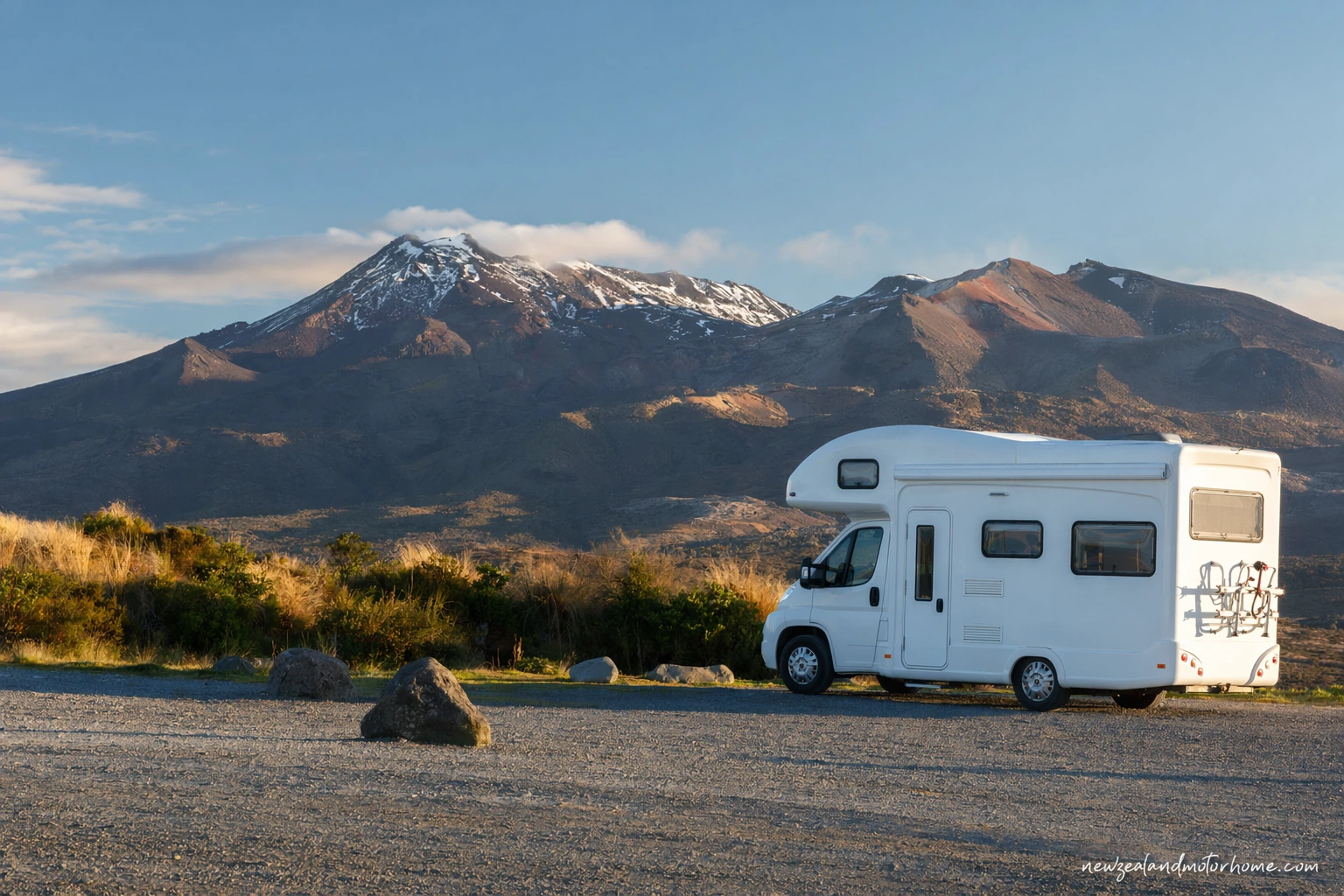
- Best with 2 nights nearby
- Use shuttles, not trailhead parking
- Powered sites useful in cold weather
- Check self-containment rules
- Plan dump, water and LPG ahead
Choosing between holiday parks Tongariro Crossing travellers use is really about one thing: making the walking day simple for your van. You want somewhere level to sleep, a shuttle that suits your start time, and a clear plan for where the campervan stays while you are on the track.
The Tongariro Alpine Crossing is not a drive-up-and-wander sort of day in a motorhome. Trailhead parking is limited and seasonal restrictions apply, so most self-drive travellers base themselves in National Park Village, Whakapapa, Tūrangi, Ohakune or nearby settlements, then use a shuttle. This guide covers the surroundings angle: roads in, overnight stops, powered and unpowered sites, dump stations, water, LPG, and what to do if the weather closes in.
Best campervan bases around the Crossing
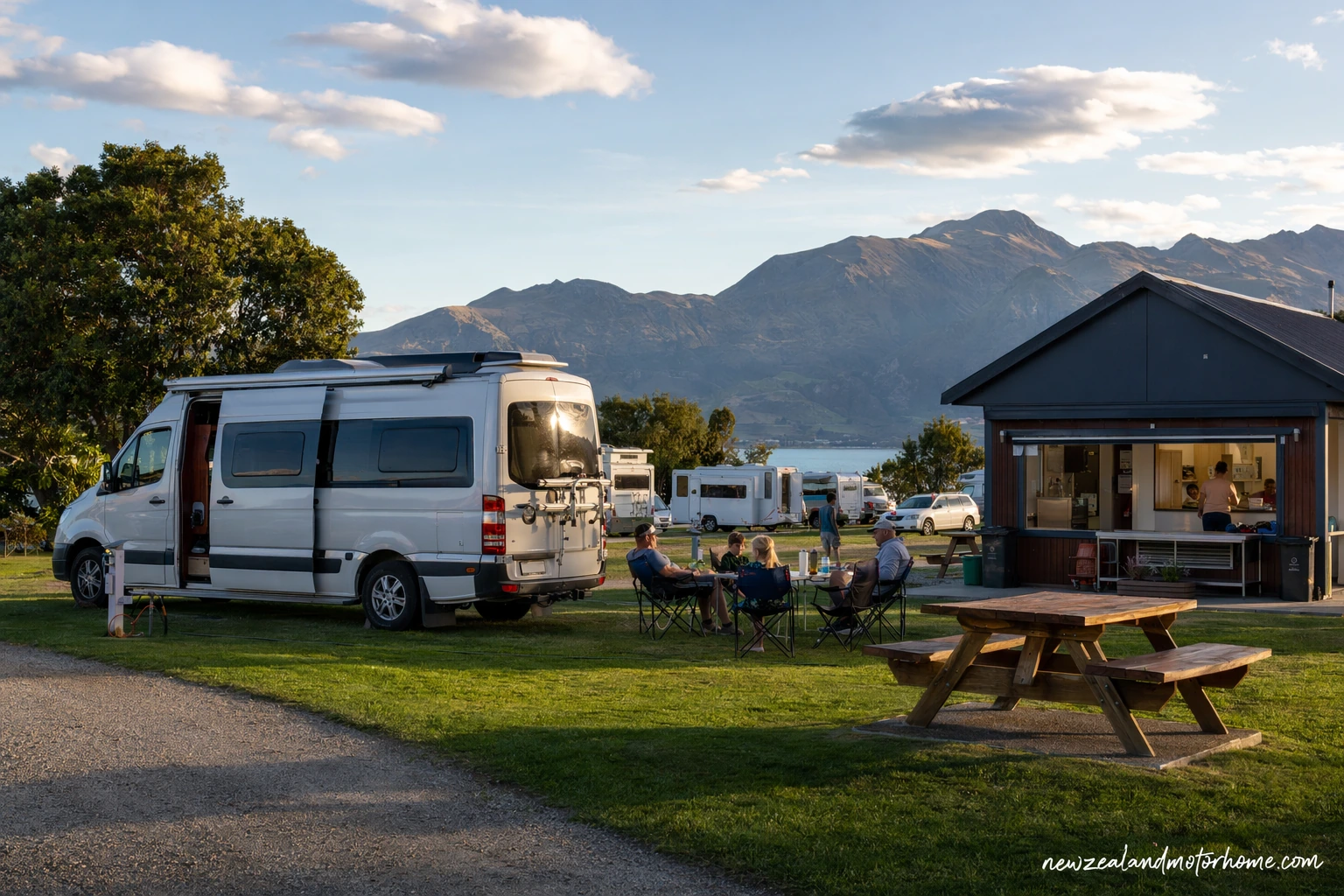
The closest holiday-park style bases sit around National Park Village and Whakapapa on the western side, with Tūrangi handy for walkers coming from Lake Taupō or heading south on State Highway 1. Ohakune works well if you want a longer stay with cafés, bike trails and easier supermarket access before or after the hike.
If you are comparing a Tongariro Crossing Top 10 holiday park style stay with smaller independent campgrounds, look beyond the logo and check the practical bits: can your van fit the site, is there an early shuttle pick-up, and can you leave the vehicle parked safely for the day?
- National Park Village: practical for western shuttle pick-ups and a straightforward drive in on SH4/SH47.
- Whakapapa area: closest to short national-park walks, but camping rules are tighter inside the park boundary.
- Tūrangi: good for fuel, groceries, dump-station planning and Lake Taupō add-ons.
- Ohakune: a comfortable two-night base if you also want the Old Coach Road or mountain views from the southern side.
Where to park a campervan for the Tongariro Crossing
If you are wondering where to park campervan Tongariro Crossing day plans usually come down to this: leave it at your holiday park, campground or shuttle base, not at the trailhead for the whole day. The popular walking direction is from Mangatepopo to Ketetahi, and parking rules at Mangatepopo are commonly restricted during the main season.
Book or arrange your shuttle before you commit to an overnight site. Ask whether the shuttle collects from the holiday park gate, a nearby village stop, or a separate car park you will need to drive to in the dark. With a longer motorhome, it is worth checking turning space and whether the pick-up area is suitable for your vehicle length.
- Do not assume you can freedom camp at Mangatepopo, Ketetahi or roadside pull-offs near the track.
- Keep your van keys, valuables and loose gear secure before leaving for the day.
- Allow extra time in the morning for frosty windscreens, headlamps and finding the correct shuttle stop.
- After the walk, avoid driving tired if you can; a second night nearby is often the calmer option.
Powered sites, unpowered sites and self-containment
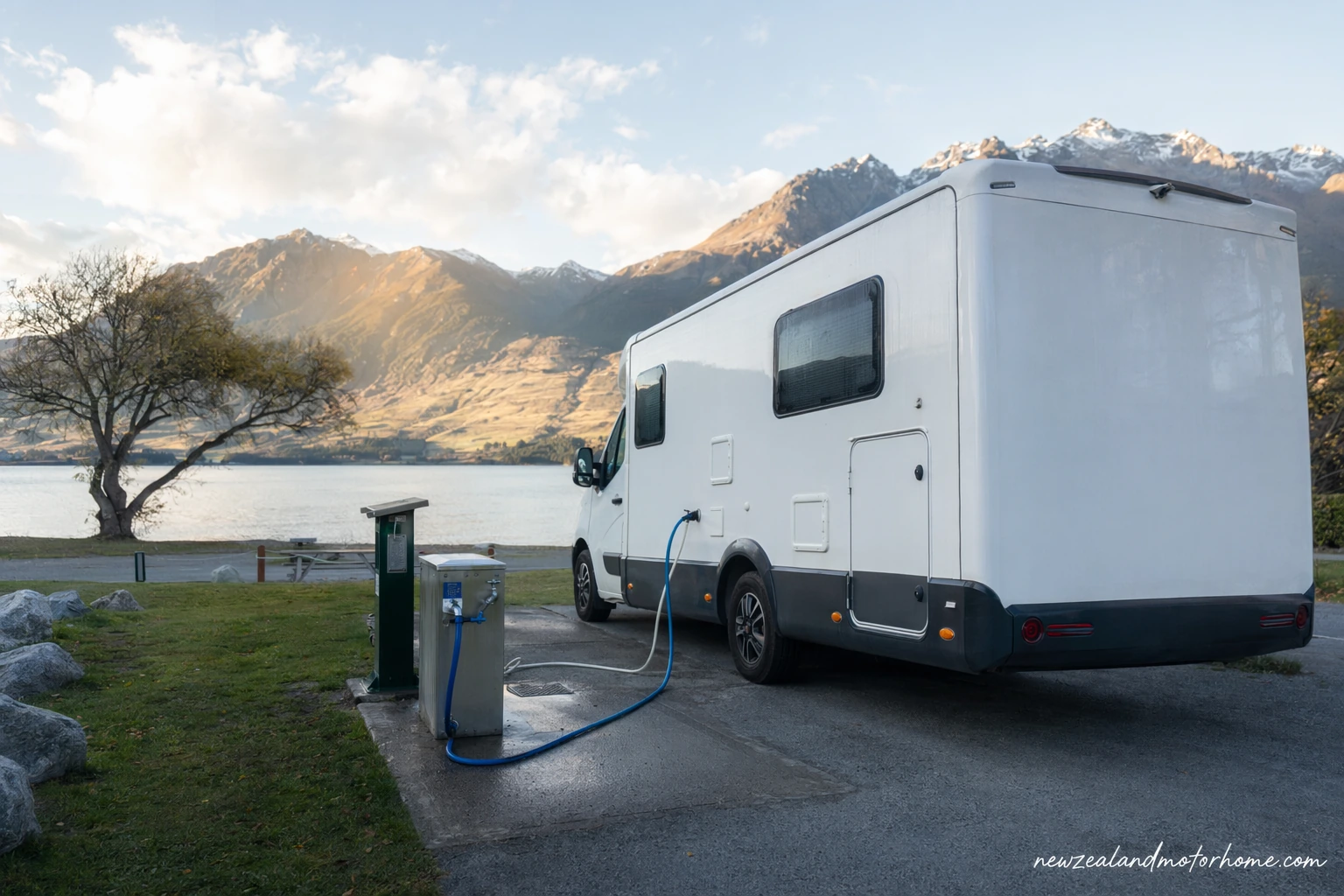
Camping Tongariro Crossing is much easier when you decide how self-sufficient you want to be. Powered sites are useful on cold Central Plateau nights, especially if your hire van relies on mains power for heating, battery top-ups or running a fridge overnight. Unpowered sites suit fully self-contained vans, but check how your house battery copes with low temperatures.
Many holiday parks in the area offer shared kitchens, hot showers, laundry and a dump point or directions to the nearest public dump station. Facilities vary, so confirm before arrival rather than arriving late with a full grey-water tank and no plan.
- Powered site: best for winter, shoulder seasons and two-night stays before a big walk.
- Unpowered site: fine for certified self-contained vans with good battery capacity and water on board.
- Dump station: use your holiday park’s facility where available, or plan a stop in service towns such as Tūrangi, Taupō or Ohakune.
- Fresh water and LPG: easier to sort in larger towns than right beside the national park.
Driving in by van: roads, weather and vehicle size
The Central Plateau looks open on the map, but the roads can feel exposed in a high-sided campervan. SH47, SH48, SH46 and the Desert Road can all be affected by wind, ice, fog or snow in the colder months. In bad weather, slow down early and avoid pulling onto soft verges for photos.
Most sealed routes to the main villages are manageable for standard hire campervans and motorhomes, but height, width and rear overhang still matter in tight campground lanes and smaller car parks. If you are driving a larger six-berth, ring ahead or message the holiday park to confirm site length, hardstand availability and whether low branches are an issue.
- Fill fuel before you head into the smaller villages, especially if arriving late.
- Keep an eye on road and weather updates before crossing the Desert Road.
- Use low gear on long descents and give faster traffic safe opportunities to pass.
- In winter, choose a holiday park with easy access rather than a remote unsealed detour.
Things to do near Tongariro Crossing when you are not walking it
Weather can close or delay the Crossing, so it pays to have a flexible campervan plan. The good news is that things to do near Tongariro Crossing are not just backup options; some are gentler ways to enjoy the volcanic landscape without committing to a full alpine day.
From a holiday park base, consider shorter walks such as Taranaki Falls, Tawhai Falls or the Silica Rapids Track, depending on conditions and your fitness. Tūrangi adds river walks and hot-pool time nearby, while Ohakune is handy for the Old Coach Road and a relaxed village afternoon.
- One spare day: ideal if the shuttle operator recommends waiting for a safer weather window.
- Rest-day driving: keep it short after the Crossing; tired legs and mountain roads are not a great mix.
- Van chores: use the non-walking day for laundry, dumping grey water, filling fresh water and topping up groceries.
- Planning help: if you want your overnight stops and shuttle timing mapped into a wider route, use the soft planning step at /talk-to-us/.
Keep planning
Visiting tongariro alpine crossing by campervan
Read onTongariro crossing campervan guide
Read onHoliday parks tongariro
Read onFarmers markets tongariro
Read onCampervan guide tongariro nz
Read onBest time to visit tongariro nz
Read onCommon questions
Can I sleep in my campervan at the Tongariro Crossing car parks?
No, you should not plan to sleep at the Crossing trailhead car parks. Overnight camping is restricted around the national park and track access areas, so use a holiday park, campground or an approved self-contained site outside restricted zones.
Is it better to stay in National Park Village or Tūrangi for the Crossing?
National Park Village is often more convenient for western-side shuttle logistics, while Tūrangi is useful if you are travelling the Lake Taupō to Wellington route. Both can work in a campervan; choose based on your shuttle pick-up, site availability and where you need fuel, groceries or a dump station.
Do holiday parks near Tongariro have dump stations?
Some holiday parks have dump stations or can point you to the nearest public facility, but do not assume every campground has one. Arrive with enough toilet and grey-water capacity for the night, and plan a service stop in larger towns if needed.
Should I book a powered site before walking the Tongariro Crossing?
A powered site is a good idea in cooler months or if you want batteries fully charged before an early start. Unpowered sites can be fine for certified self-contained vans, but the plateau can be cold overnight and batteries drain faster than many first-time hirers expect.
Can large motorhomes use the shuttle parking areas?
Some shuttle meeting points are easier for larger vans than others. Before booking, ask where you leave the vehicle, whether there is turning room, and whether a long or high motorhome is suitable for that car park.
Have a planner shape this for your dates
Send a short outline — your dates, party size, and the kind of trip you want. A planner replies with a vehicle recommendation, a paced route, and the realistic budget.