- Best bet: Saturday morning in Taupō
- Allow half a day plus driving time
- Check seasonal village market dates
- Large vans: park one block back
- Use certified self-contained sites only
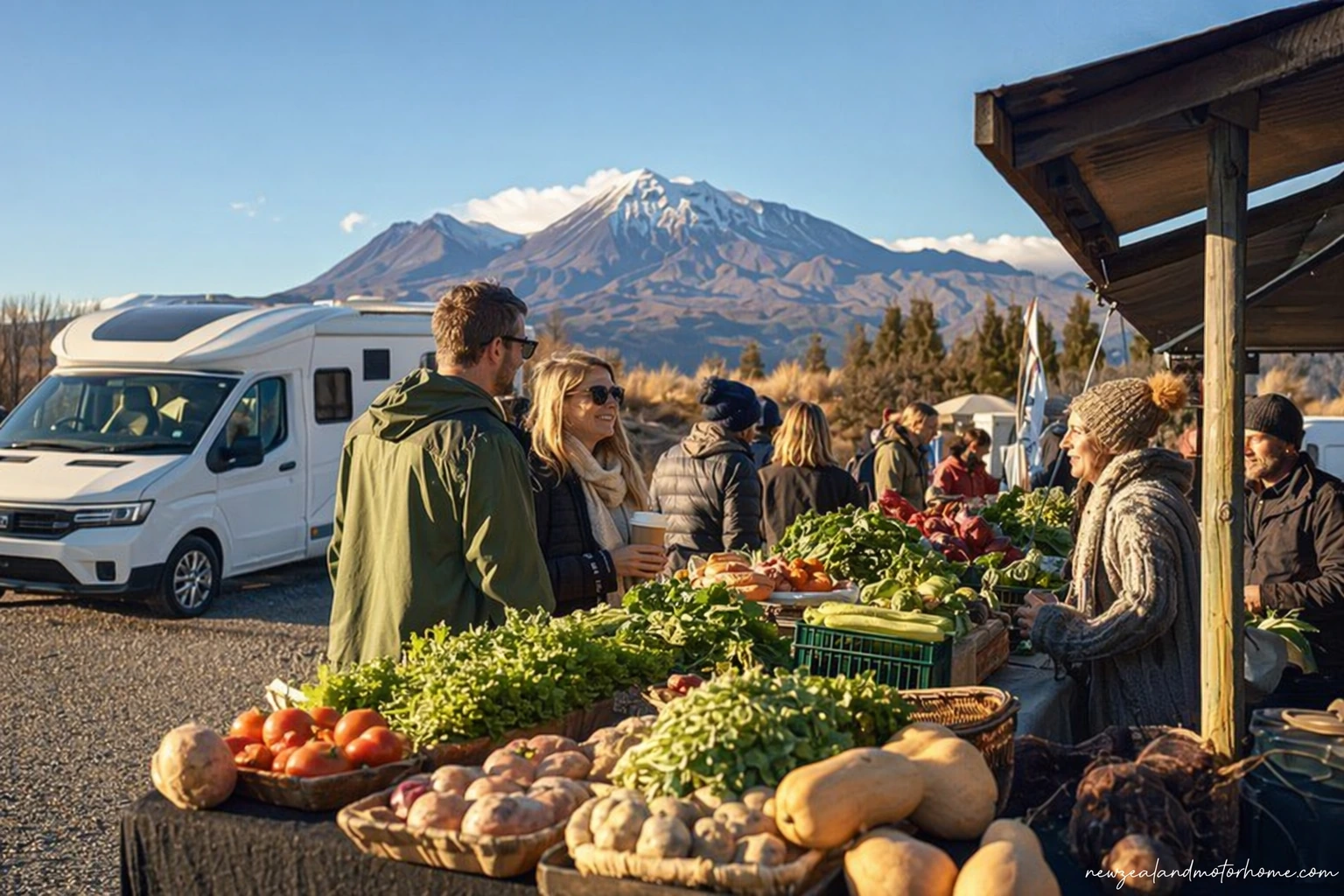
Farmers markets Tongariro-style are less about one big covered hall and more about catching the right village on the right morning. For campervan travellers, that is part of the pleasure: park the van early, fill a chilly bin with greens, eggs, bread and preserves, then roll on towards the lake, the river or the volcanoes.
This guide looks at the Central Plateau with a self-drive lens: where the food markets are most likely to fit your route, how to handle parking a larger motorhome, what fresh produce Tongariro travellers can realistically expect, and where to sleep nearby without guessing at dusk.
How the Tongariro market scene works
The Tongariro National Park villages are small, so the most dependable market stops usually sit on the edges of the plateau rather than at the ski-field turn-offs. Taupō is the strongest bet for a regular Saturday-morning browse, while Tūrangi, Ohakune, Raetihi and National Park Village tend to have smaller weekend or seasonal markets, especially around holidays, events and summer visitor weeks.
Treat weekend markets Tongariro-wide as a route bonus, not the only place you will buy food. Opening days can shift with weather, school holidays and stallholder numbers, so check the current local noticeboard or visitor information before you commit a long detour in the van.
- Taupō: best for a wider food-market range and easier supermarket top-up afterwards.
- Tūrangi: useful if you are driving between Taupō, the Tongariro River and SH47.
- Ohakune and Raetihi: good when you are looping the western side of Ruapehu, especially in warmer months.
- National Park Village: more likely to be pop-up or event-based than a guaranteed weekly grocery stop.
Parking the van without blocking the village
Market mornings are easiest if you arrive before the peak coffee queue. In Taupō, avoid squeezing a long camper into tight town-centre angle parks; look instead for longer kerbside spaces around the lakefront, Tongariro North Domain side streets, or larger public parking areas where signs allow your vehicle length. Keep clear of bus stops, boat ramps, cycle lanes and any marked no-camping areas.
In Tūrangi, Ohakune and Raetihi, the parking is usually simpler but the streets can be narrow, with locals doing Saturday errands at the same time. If you are in a 7-metre-plus motorhome, it is often better to park one block back and walk in with a backpack than to nose into a short space and leave the rear overhanging the carriageway.
- Fold mirrors only after you have parked; rural main streets still carry trucks and stock vehicles.
- Use a soft-sided chilly bag so produce is not sliding around the galley while you drive.
- Do not set up chairs, awnings or a breakfast table in market car parks.
- Check parking signs separately from freedom-camping signs; daytime parking does not mean overnight permission.
What to buy for a motorhome galley
The best market haul for a van is food that cooks quickly, stores neatly and does not need half the kitchen bench. Around the plateau you may see volcanic-soil potatoes, carrots, leafy greens, berries in season, apples or stone fruit from nearby growing districts, local honey, free-range eggs, baking, preserves and sourdough. In winter, expect the range to lean more towards pantry goods, root vegetables and hot food stalls.
Food markets Tongariro campervan travellers enjoy most are the ones that solve dinner as well as breakfast. A loaf of bread, a jar of relish, salad greens and a tray of eggs can cover two meals without hunting for a restaurant after a wet walk or a long drive over the Desert Road.
- Buy heavy items last, then return straight to the van to keep the fridge closed and cold.
- Carry a couple of reusable produce bags; stallholders may have limited packaging.
- Choose compact vegetables if your fridge is small, and cook bulky greens the same day.
- Top up drinking water before market day so you are not trying to wash produce with your reserve tank nearly empty.
Easy market loops by campervan
A practical north-to-south loop is Taupō for the Saturday market, then SH1 to Tūrangi, with an overnight beside the lake or in town before you continue towards Whakapapa, National Park Village or Ohakune. If the weather over the Desert Road looks poor, stay flexible: SH1 can close in snow, ice, high wind or crashes, and a stocked van makes waiting far less stressful.
From the west, Ohakune and Raetihi work well as produce-and-coffee stops before you head towards Whakapapa Village, the Mangawhero River area or the Forgotten World Highway approach. Roads are sealed on the main routes, but they are still alpine and rural: watch for grit, fog, tight bends, wandering cyclists and height-limited forecourts when you pull in for fuel.
- Taupō to Tūrangi: straightforward SH1 driving with lake views and several places to pause safely.
- Tūrangi to Whakapapa: SH47/SH48 is scenic, but allow for slower speeds in weather.
- National Park to Ohakune: a useful cross-plateau link if you want both sides of Ruapehu.
- Desert Road: check conditions before committing, especially in winter or after dark.
If you want help matching a market morning with walking days, dump stations and legal overnight stops, use the talk-to-us planning step and tell us your van length and travel month.
Overnight stops, water, LPG and waste
Do not assume you can sleep where you shopped. Market car parks are usually for daytime use only, and local freedom-camping rules differ between Taupō District and Ruapehu District. If you plan to freedom camp, your vehicle must meet New Zealand self-containment requirements and you still need to obey the specific signs for that reserve, road end or lakeside area.
For a low-stress food-market route, pair your shop with a proper overnight stop: a holiday park if you need powered sites, laundry and showers, or a DOC/basic-style campsite if your batteries, water and toilet capacity are comfortable for an unpowered night. Around Taupō and Tūrangi you will find the easiest mix of supermarkets, fuel, public dump stations and fresh-water fills; higher on the plateau, services thin out quickly.
- Powered site: useful after several cold nights running heater fans, lights and device charging.
- Unpowered site: fine for a certified van with good battery capacity and careful water use.
- Dump stations: plan for Taupō or Tūrangi rather than waiting until you are near the mountain.
- LPG and fresh water: refill in the larger towns before heading into alpine weather or smaller villages.
Keep planning
Visiting tongariro alpine crossing by campervan
Read onHoliday parks tongariro crossing
Read onHoliday parks tongariro
Read onTongariro crossing campervan guide
Read onCampervan guide tongariro nz
Read onBest time to visit tongariro nz
Read onCommon questions
Are there farmers markets inside Tongariro National Park?
Not in the way you might find in a larger town. The most reliable markets are in nearby service towns such as Taupō, with smaller village markets around Tūrangi, Ohakune, Raetihi or National Park depending on the weekend and season.
Can I park a large motorhome at Tongariro market stops?
Usually, yes, but choose longer edge-of-town spaces rather than tight angle parks. Arrive early, read the signs, and avoid overhanging footpaths, cycle lanes or narrow main-street traffic lanes.
Can I freedom camp after visiting a market?
Only where the local council rules and on-site signs allow it, and only if your vehicle meets the required self-containment standard. A daytime market car park should not be treated as an overnight stop unless it is clearly permitted.
What produce is best to buy for a campervan kitchen?
Go for sturdy, quick-cooking food: potatoes, carrots, greens, eggs, bread, honey, fruit in season and preserves. These fit small fridges and make easy meals when weather or road conditions change your plans.
Do I need to book a campsite on market weekends?
In school holidays, ski season and long weekends, booking is wise, especially if you need a powered site. Outside peak periods you may have more flexibility, but the plateau can still fill when events or good snow line up with a weekend.
Have a planner shape this for your dates
Send a short outline — your dates, party size, and the kind of trip you want. A planner replies with a vehicle recommendation, a paced route, and the realistic budget.