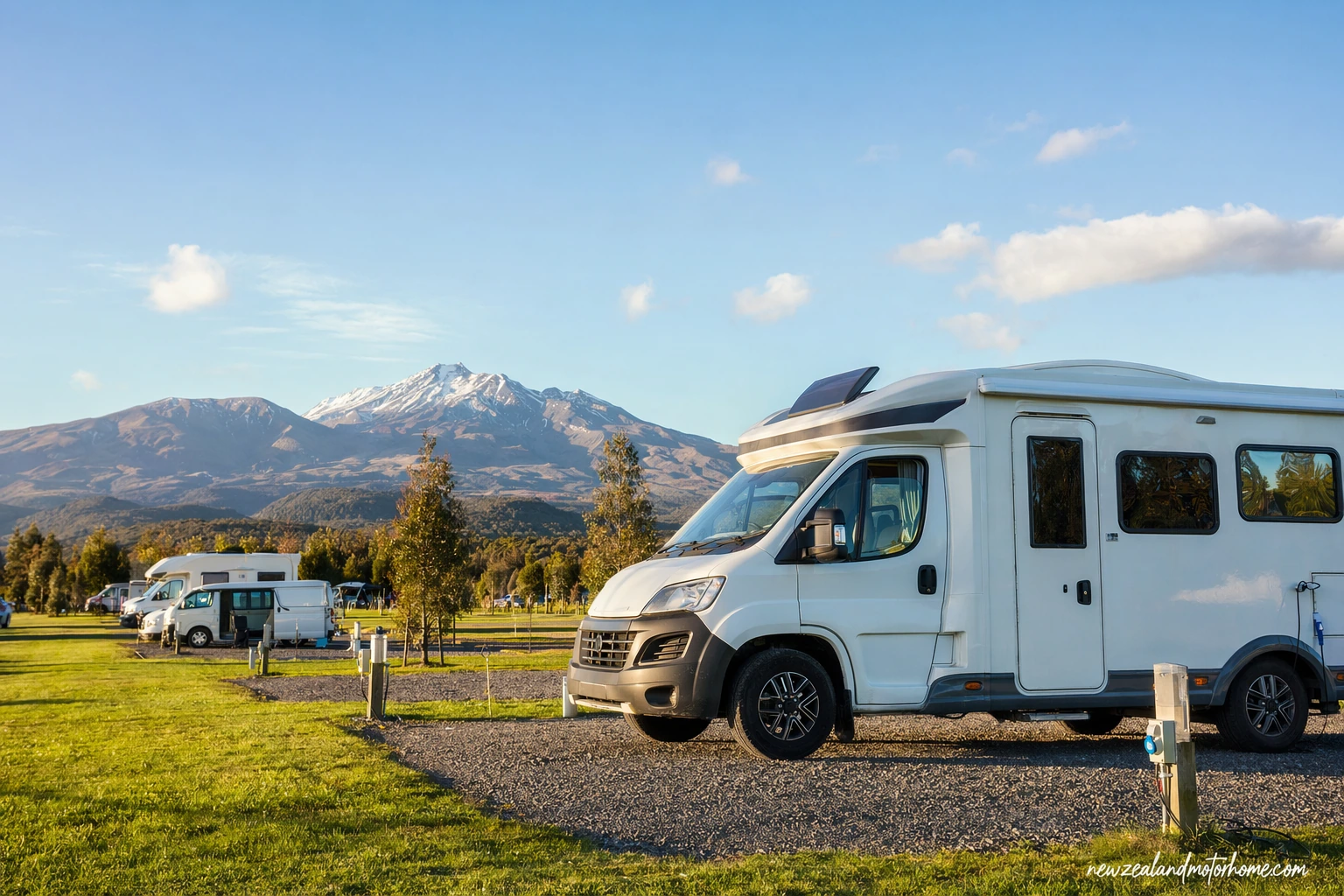
- Best season: summer and shoulder months; winter needs road checks
- Site types: powered, unpowered and designated campgrounds
- Allow: 2–4 nights for a useful campervan loop
- Van note: plan for cold nights and alpine wind
- Freedom camping: restricted; check signs and bylaws
Tongariro is a practical place to tour by campervan because the best overnight bases sit in a ring around the national park: Turangi to the north, National Park Village and Whakapapa on the western side, and Ohakune and Raetihi to the south. Each base changes the rhythm of your trip, from early Alpine Crossing shuttle starts to quieter nights near forest, rivers and the mountain roads.
This guide looks at holiday parks Tongariro travellers actually use in a self-drive van: where powered sites are most useful, when unpowered sites make sense, how freedom camping rules work around the park, and what to think about for dump stations, LPG, fresh water and winter road conditions.
Choosing the right Tongariro base for your van
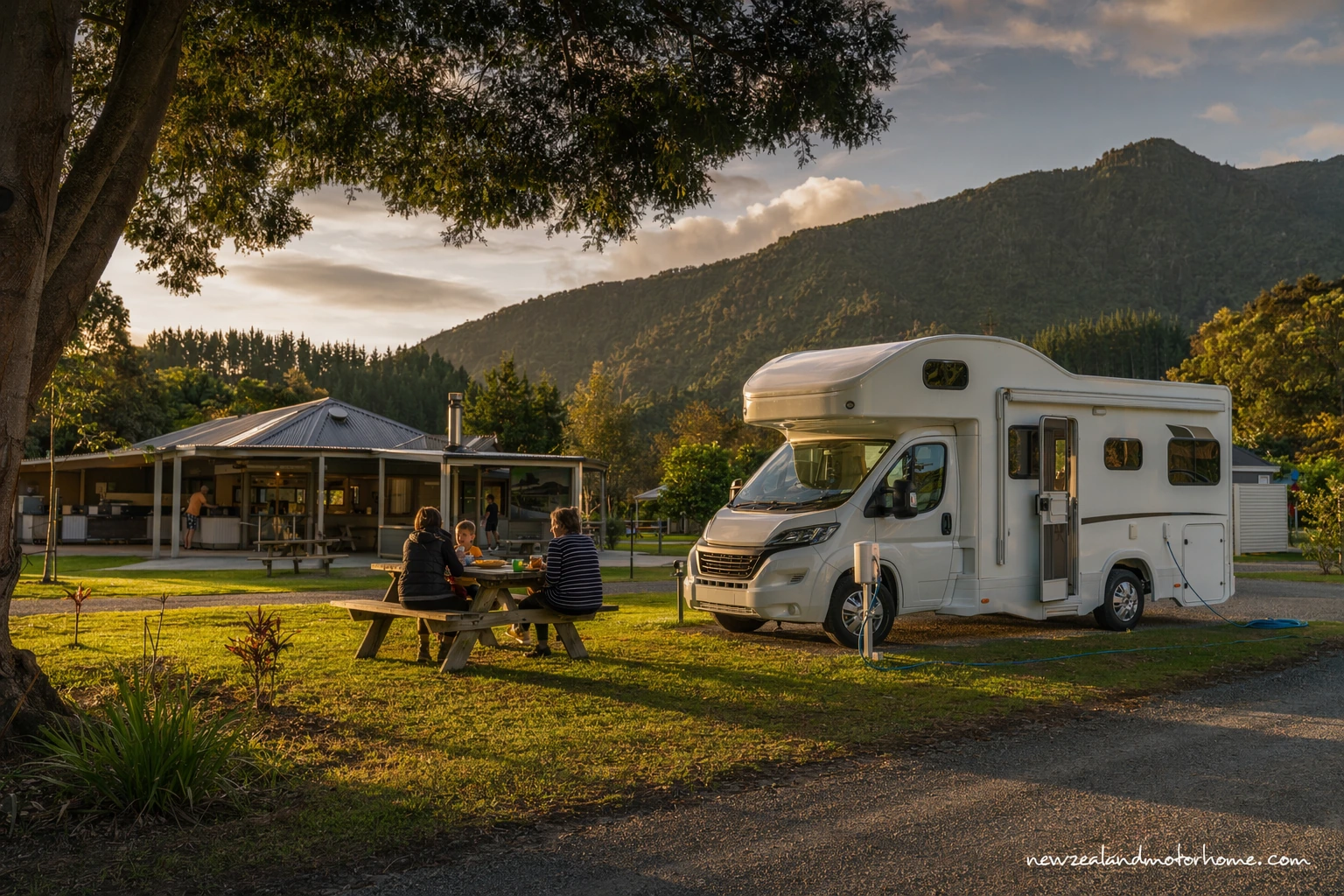
The holiday parks and campgrounds Tongariro visitors use are spread rather than clustered, so your best base depends on what you want to unlock the next morning. Turangi suits fishing, Lake Taupo, supermarket runs and northern shuttles. National Park Village and Whakapapa put you closer to the western park entrances, while Ohakune works well for Turoa, the Old Coach Road and a slower loop south.
For a hired motorhome, the question is not simply which place looks closest on the map. It is where you can park level, plug in if the nights are cold, empty grey water, refill fresh water, and leave the van safely while you take a shuttle or day walk.
- Turangi: useful for supplies, fuel, dump-station planning and Lake Taupo side trips.
- National Park Village: handy for shuttle pick-ups and a central western base, with easy SH4 and SH47 access.
- Whakapapa: closest to short alpine walks and the ski-field road, but plan ahead for food, LPG and waste.
- Ohakune and Raetihi: good southern bases for longer stays, bike trails, Turoa access and gentler driving days.
Powered and unpowered sites in alpine weather
Powered sites Tongariro-wide are worth considering even outside winter. Nights can drop quickly at altitude, and a powered site lets you run the van heater appropriately, recharge devices for maps and shuttle messages, and keep the fridge steady after a day on rougher roads. In shoulder seasons, a powered pitch can be the difference between a damp van and a comfortable one.
Unpowered sites suit certified self-contained vans with good batteries, especially in warmer months or when you are only stopping one night. If you are travelling in a larger motorhome, ask about site length and access before you commit; some older campsites Tongariro travellers find charming are tighter to manoeuvre into than they look online.
When comparing a top 10 holiday park Tongariro list or review round-up, look beyond the star rating. Check whether the park has easy late-arrival instructions, level hardstand or gravel options after rain, guest laundry and drying space, and whether dump-station use is included for staying guests.
Freedom camping around Tongariro National Park
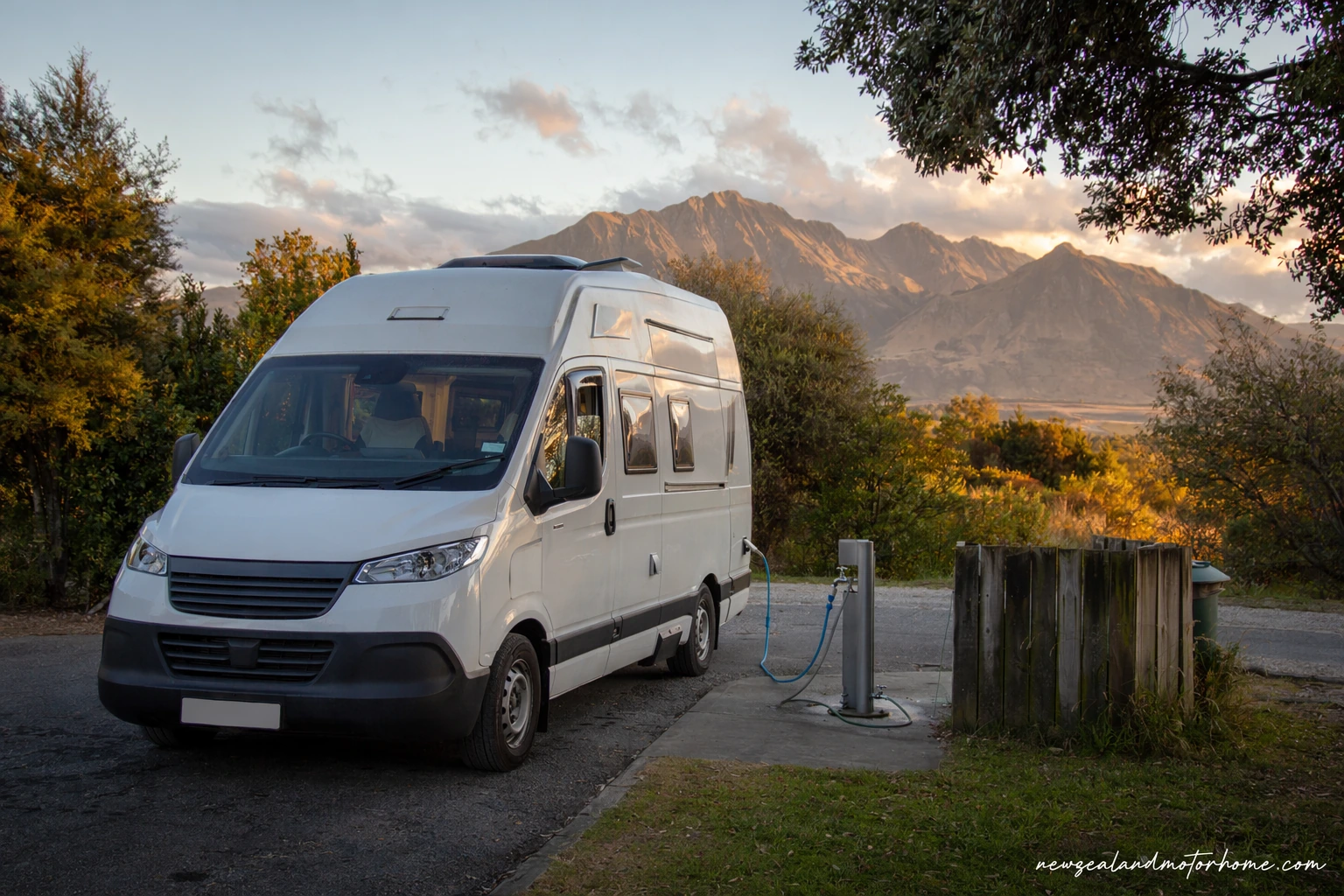
Freedom camping is not something to wing around Tongariro. The national park itself is tightly managed, and councils around the park have their own bylaws, restricted areas and signage. A certified self-contained vehicle helps, but it does not give you permission to overnight anywhere you can fit the van.
Use designated sites, DOC campgrounds where campervans are allowed, or holiday parks when you want certainty. This matters after big walks, when you are tired and tempted to pull over near a trailhead. Many car parks are for day use only, and enforcement can change by season or because of local pressure.
- Check current signage when you arrive, not just an old app listing.
- Do not rely on trailhead parking for overnight stays.
- Keep grey water contained and use proper dump stations.
- Arrive before dark if you are using a basic campground with fewer markers or tighter access.
Dump stations, water, LPG and food planning
Tongariro touring is easier when you treat service towns as reset points. Turangi and Ohakune are the most useful ends of the region for supermarket-style supplies, fuel, water planning and waste routines, while smaller alpine bases are better thought of as overnight or activity locations rather than full-service stops.
Holiday parks often provide fresh-water fills and dump-station access for guests, but do not assume every campground has both. If your cassette or grey-water tank is getting close to full, reset before heading up to Whakapapa or into a quieter DOC-style site. LPG is also best topped up in larger towns rather than left until you are near the mountain.
If you want help matching overnight stops to your tank range, van size and walking plans, use the soft planning step at talk to us and we can shape the route around real campervan logistics rather than just distances on a map.
Driving between Tongariro holiday parks
Distances around Tongariro are not huge, but the driving deserves respect in a campervan. State Highway 1 over the Desert Road can close or become icy in winter, and SH47, SH48 and the Ohakune Mountain Road all feel more exposed in poor weather. If you are in a tall motorhome, take extra care with gusty crosswinds and leave more room for braking on shaded bends.
Plan your overnight stop so you are not moving the van before dawn unless you really need to. For the Tongariro Alpine Crossing, many travellers leave the motorhome parked at their holiday park and use a shuttle rather than trying to juggle trailhead parking restrictions. This is easier on your insurance, your battery, and your nerves after a long walk.
- Allow extra time in winter and after heavy rain.
- Check road status before committing to the Desert Road.
- Use lower gears on long descents, especially in a heavy motorhome.
- Ask your holiday park about shuttle pick-up points before parking up for the night.
What each overnight stop unlocks
The best campgrounds Tongariro road-trippers choose are rarely just a bed for the night. A Turangi base unlocks the Tongariro River, Tokaanu, southern Lake Taupo and easier restocking. National Park Village works for the western side of the park, railway history, shuttle connections and a straightforward hop between north and south.
Whakapapa is the most alpine-feeling option, with short walks, visitor-centre access and quick starts onto the mountain road, but it rewards travellers who arrive with tanks sorted. Ohakune gives you a warmer town feel, bike-friendly days, Turoa access and an easier recovery night after a big walk or ski day.
For many campervan itineraries, the sweet spot is two different bases rather than one. Spend a night or two near Turangi or National Park Village for park access, then shift the van to Ohakune for laundry, supplies and a different side of Ruapehu without backtracking.
Keep planning
Visiting tongariro alpine crossing by campervan
Read onHoliday parks tongariro crossing
Read onFarmers markets tongariro
Read onTongariro crossing campervan guide
Read onCampervan guide tongariro nz
Read onBest time to visit tongariro nz
Read onCommon questions
Do I need a powered site in Tongariro?
Can I freedom camp near the Tongariro Alpine Crossing?
Which base is best for the Tongariro Alpine Crossing in a motorhome?
Are there dump stations around Tongariro?
Is the driving suitable for a large motorhome?
Have a planner shape this for your dates
Send a short outline — your dates, party size, and the kind of trip you want. A planner replies with a vehicle recommendation, a paced route, and the realistic budget.