- Best overall: late Feb-Apr
- Allow 2-3 nights
- No park car-park overnighting
- Powered sites best in winter
- Check snow and wind forecasts
Tongariro is one of those places where the calendar matters. In a campervan, the difference between a relaxed night plugged into a powered site and a cold, windy evening hunting for a legal stop can come down to season, weather windows and how early you book.
This guide is written for self-drive travellers sleeping in their hired van. We cover when to visit Tongariro for clearer tracks, quieter campgrounds, ski-season road conditions, freedom camping limits, dump stations, fresh-water planning and where to leave the van while you walk.
Quick answer: the best months for a campervan trip
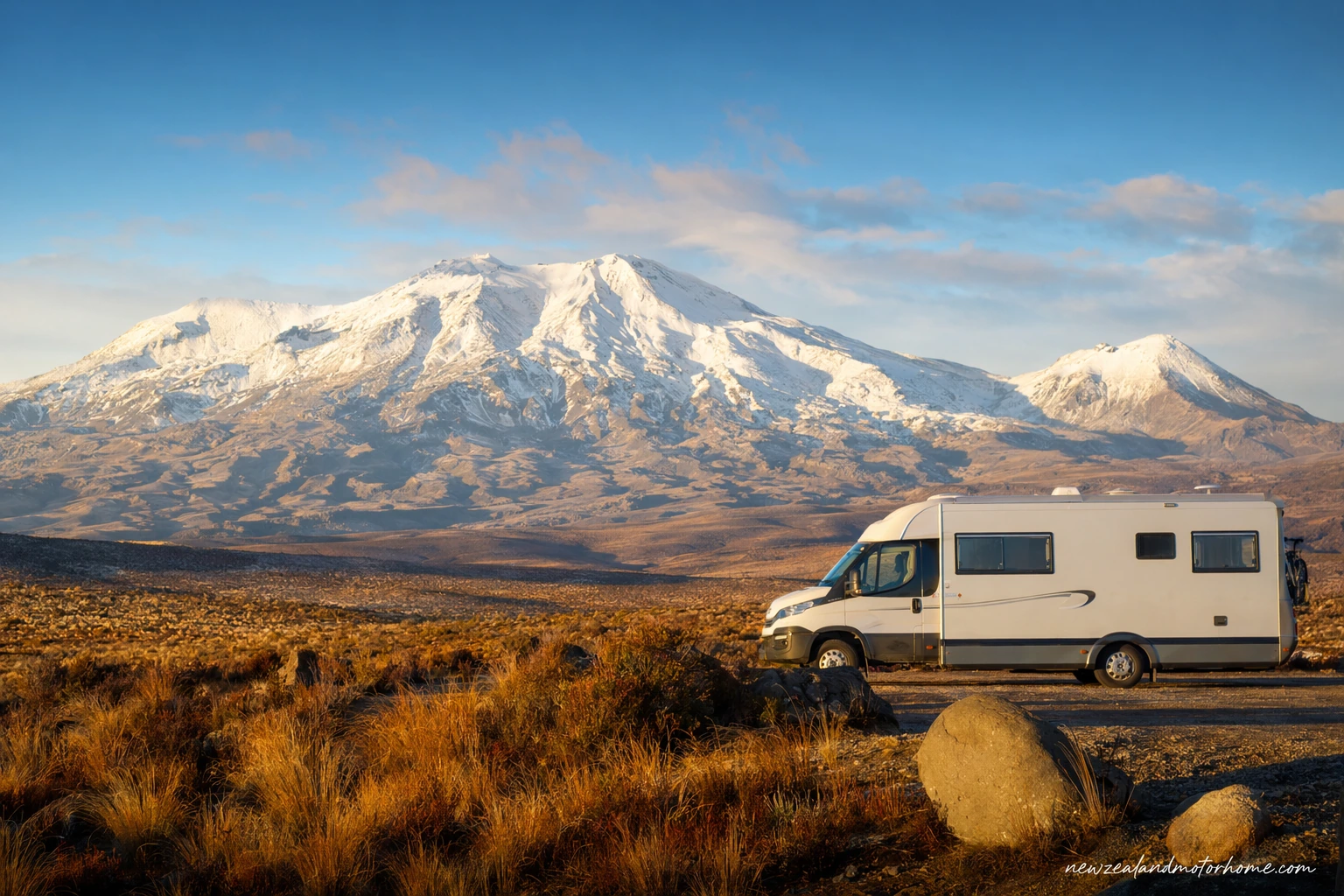
For most motorhome travellers, the best time to visit Tongariro NZ is late February to April. The summer holiday rush has eased, daylight is still useful, the alpine tracks are usually more settled, and powered sites around National Park Village, Whakapapa and Tūrangi are easier to come by than in January.
December and January suit families and longer daylight days, but they are the busiest months for the Tongariro Alpine Crossing and local holiday parks. If you need a powered site for heating, charging devices or running a fridge comfortably, book ahead rather than relying on arrival-day luck.
- Best overall: late February, March and April for milder conditions and fewer crowds.
- Best for skiing: July to September, with winter driving preparation.
- Quietest shoulder feel: May and early November, but expect cold nights and changeable weather.
- Most difficult for last-minute sites: late December, January and long weekends.
If your route needs to line up with ferry dates, van pick-up times or a walking weather window, you can also talk to us before you lock in the Tongariro nights.
Tongariro weather by month: what it means for the van
Tongariro weather by month is not as tidy as a coastal region. You are on the Central Plateau, with alpine winds, sudden cloud, frosty mornings and big differences between a sheltered campsite and a road-end car park near the mountain.
Summer days can feel warm in National Park Village or Tūrangi, then turn cold and exposed near Mangatepopo, Whakapapa or the Bruce Road. In winter, snow and ice can affect access roads, the Desert Road section of State Highway 1, and higher car parks around Whakapapa.
- December to February: longest days, busiest tracks, warmest afternoons, but still carry warm layers in the van.
- March to April: often a sweet spot for campervans, with cooler nights and generally calmer travel patterns.
- May to June: colder, quieter and more limited for alpine walks; check weather daily before driving up the mountain roads.
- July to September: ski season, frosts, snow risk and possible chain requirements on upper roads.
- October to November: spring winds, lingering snow on higher routes and variable crossing conditions.
Even in settled months, keep your fresh-water tank topped up before you head into the park area. A cold, wet evening is much easier when you are not trying to find water, LPG or a dump station after dark.
Campsites, freedom camping and facilities through the seasons
Do not plan to freedom camp inside Tongariro National Park car parks. Overnighting is generally restricted to designated campgrounds, huts or approved sites, and day-use track car parks are not a place to sleep in the van. A certified self-contained vehicle still needs to follow local bylaws and posted signs.
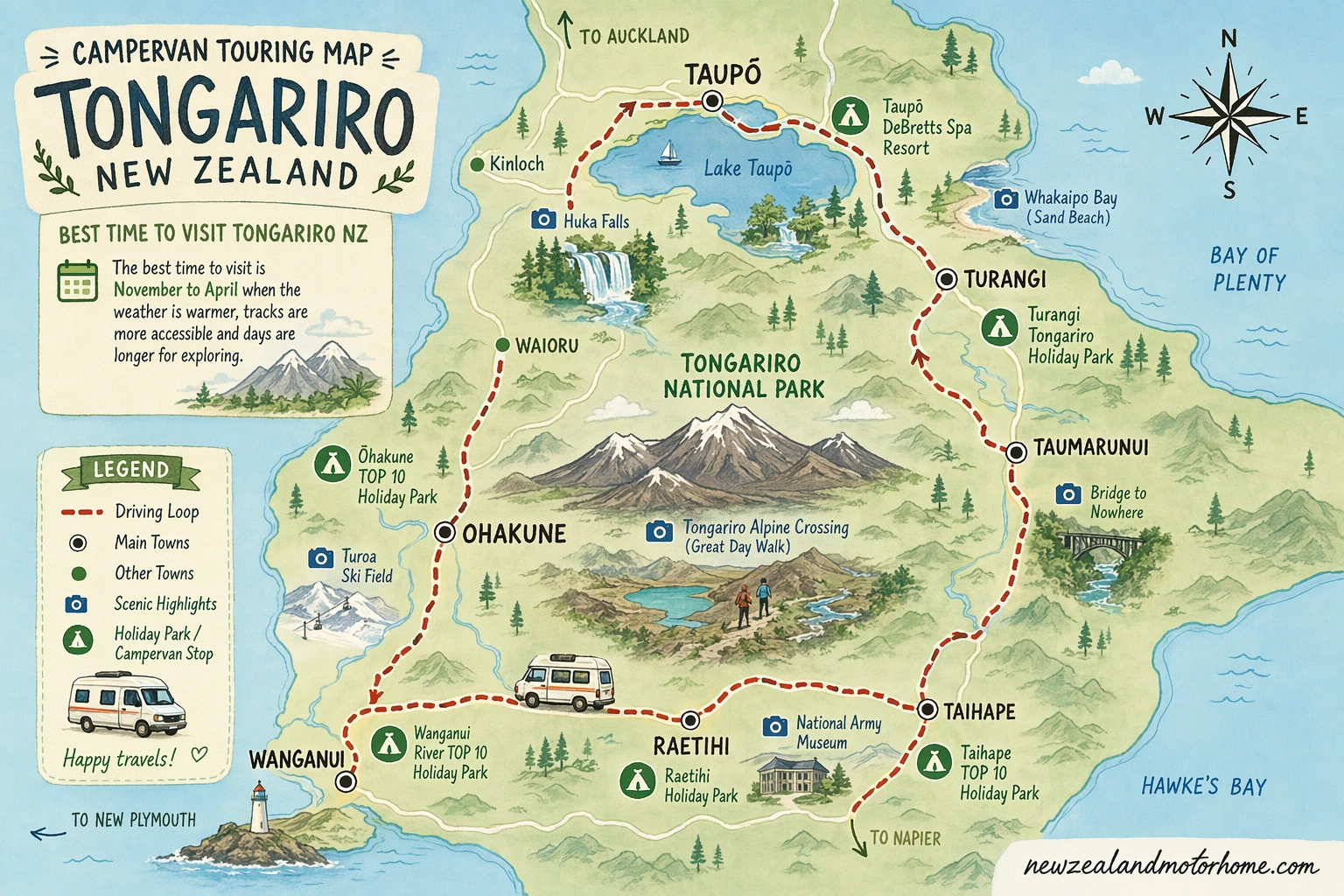
In summer, the practical base towns are National Park Village, Whakapapa Village, Tūrangi, Ohakune and, for some routes, Raetihi or Taumarunui. Holiday parks and designated campsites offer the most reliable access to toilets, showers, rubbish, fresh water and dump stations, while unpowered sites are useful if your van battery and heater setup can cope.
- Powered sites: best for winter, frosty shoulder-season nights and longer stays where you want reliable heating and charging.
- Unpowered sites: workable in warmer months if your van is self-contained and you manage battery use.
- Dump stations: plan around service towns such as National Park, Tūrangi and Ohakune rather than assuming facilities at trailheads.
- LPG and groceries: easier to sort before you enter the high plateau, especially if arriving late in the day.
In winter, some campgrounds or facilities may operate on reduced capacity, and powered spaces can be more valuable than the view from a roadside stop. In peak summer, the issue flips: sites fill, shuttle spaces book out, and you will want overnight stops confirmed before you drive in.
Driving, parking and road conditions by season
Most campervans can reach the main Tongariro service villages on sealed roads, but the weather decides how easy it feels. High-sided motorhomes notice the wind on the open plateau, and longer vans need extra care in tight car parks, icy margins and busy shuttle pick-up areas.
The Bruce Road to Whakapapa can be straightforward on a clear autumn day and completely different during a winter front. The Desert Road can close in snow or ice, and fog can make the plateau feel much more demanding than the map suggests.
- Before alpine walks: park at your booked shuttle base or accommodation where allowed, not in an overnight-restricted trailhead car park.
- In winter: check road reports, carry any required chains if your hire agreement allows them, and understand your rental company’s snow-road rules.
- In wind: slow down on exposed sections, especially in taller motorhomes and when passing trucks.
- After dark: avoid arriving at unfamiliar campsites late; signage, icy ground and tight turning areas are harder in a large van.
If you are driving a longer 6-berth motorhome, give yourself more time around Whakapapa and National Park Village. Car parks that look generous on a quiet weekday can be awkward when walkers, shuttles and ski traffic all arrive together.
Crowds, crossings and what is open
The Tongariro Alpine Crossing shapes much of the region’s rhythm. From late spring through autumn, good-weather days can pull a lot of people into the same shuttle times, cafés, car parks and campground kitchens. If the crossing is central to your trip, allow at least two nights nearby so you have a spare weather day.
Winter is a different style of visit. The crossing becomes an alpine trip, not a casual day walk, and many travellers focus on Whakapapa ski area, short lower walks, warm powered sites and scenic drives between weather systems. Some activities and services change hours by season, so check close to arrival.
- For the crossing: base the van legally overnight, then use a shuttle rather than trying to leave the motorhome at restricted car parks.
- For short walks: Whakapapa Village gives access to lower tracks that are easier to fit around weather.
- For ski trips: book powered sites early and confirm how you will manage wet gear inside the van.
- For flexibility: keep one loose night between Tongariro and your next region, especially in spring and winter.
When deciding when to visit Tongariro, think less about finding a perfect month and more about building a forgiving plan. A campervan gives you flexibility, but only if your overnight stops, water, waste and parking are sorted before the weather turns.
Keep planning
Visiting tongariro alpine crossing by campervan
Read onHoliday parks tongariro crossing
Read onHoliday parks tongariro
Read onFarmers markets tongariro
Read onTongariro crossing campervan guide
Read onCampervan guide tongariro nz
Read onCommon questions
Can I freedom camp in Tongariro National Park in a certified self-contained campervan?
Do not assume you can. Tongariro National Park car parks are generally for day use, and overnight camping is limited to designated places. Use legal campgrounds or approved overnight sites, and always follow posted signs and local bylaws.
What month is best for the Tongariro Alpine Crossing by campervan?
March and April are often the most practical months for campervan travellers, with fewer crowds than January and generally useful daylight. You still need a weather window, legal overnight parking and a shuttle plan from your base.
Do I need a powered site in Tongariro?
In summer, an unpowered site can work if your van is certified self-contained and you manage battery use. In winter and the colder shoulder months, a powered site is much more comfortable for heating, charging and drying gear.
Are Tongariro roads suitable for large motorhomes?
The main roads to National Park, Whakapapa, Tūrangi and Ohakune are sealed, but conditions can be alpine. Longer or taller motorhomes need extra care in wind, snow, busy car parks and on the Bruce Road during ski season.
How many nights should I allow in Tongariro with a campervan?
Allow two nights if you want to attempt the Alpine Crossing, because weather can easily move your walking day. Three nights is better if you also want Whakapapa short walks, Tūrangi services or a slower loop through Ohakune.
Have a planner shape this for your dates
Send a short outline — your dates, party size, and the kind of trip you want. A planner replies with a vehicle recommendation, a paced route, and the realistic budget.