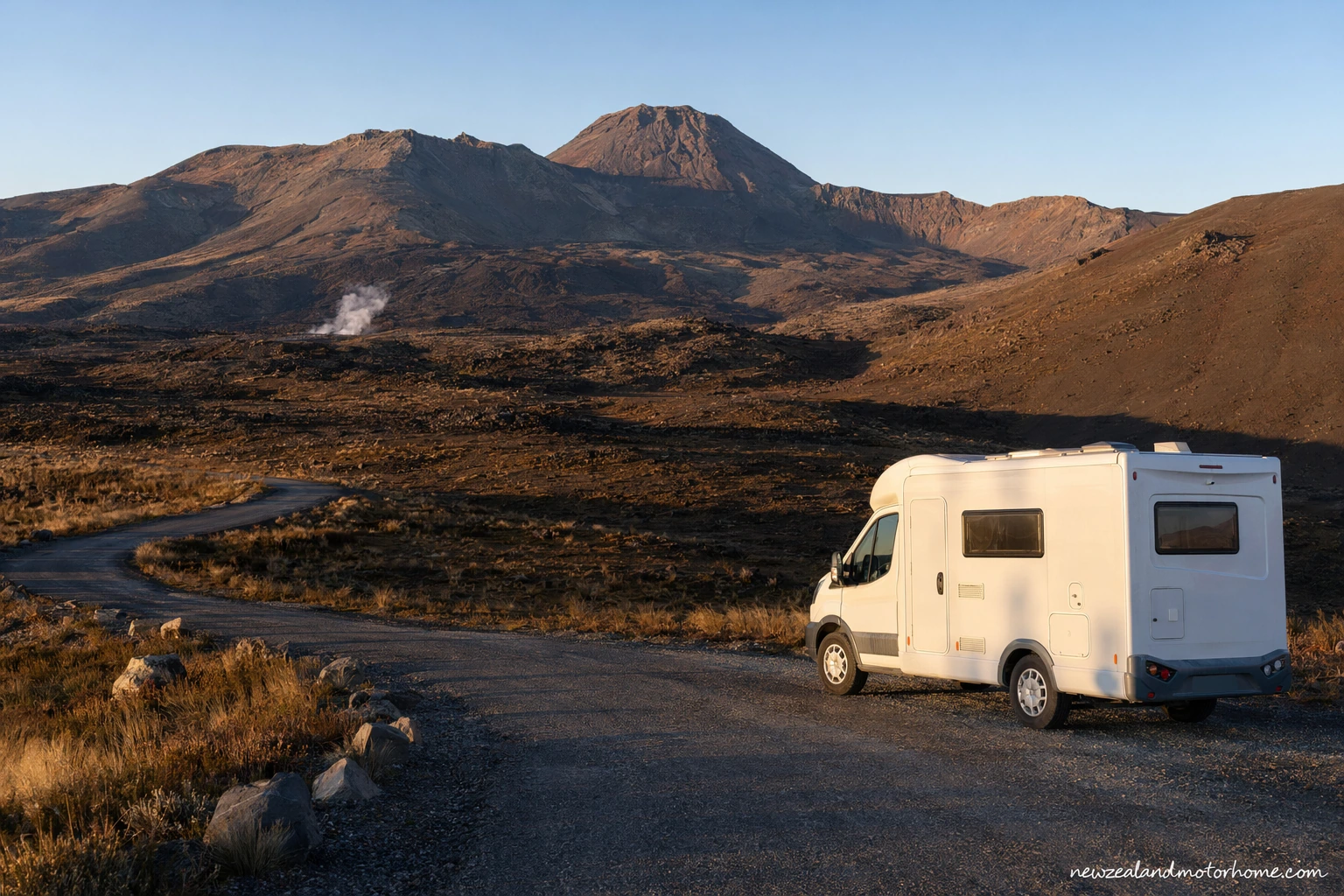
- Best with 2 nights nearby
- Use shuttles for the one-way walk
- Powered and basic campsites available
- No overnighting at trailhead car parks
- Alpine weather affects roads and timing
The Tongariro Alpine Crossing is one of those days where your campervan plan matters as much as your hiking boots. It is a one-way alpine walk, the weather can turn quickly, and the trailhead car parks are not set up as overnight bases for vans.
This tongariro crossing campervan guide is written for travellers sleeping in their hired motorhome or campervan, not just driving in for the day. You will find where to base the van, how shuttles work, what to know about freedom camping, and how to fit the Crossing into a wider North Island route without rushing the weather window.
Where the Crossing sits, and why your van base matters
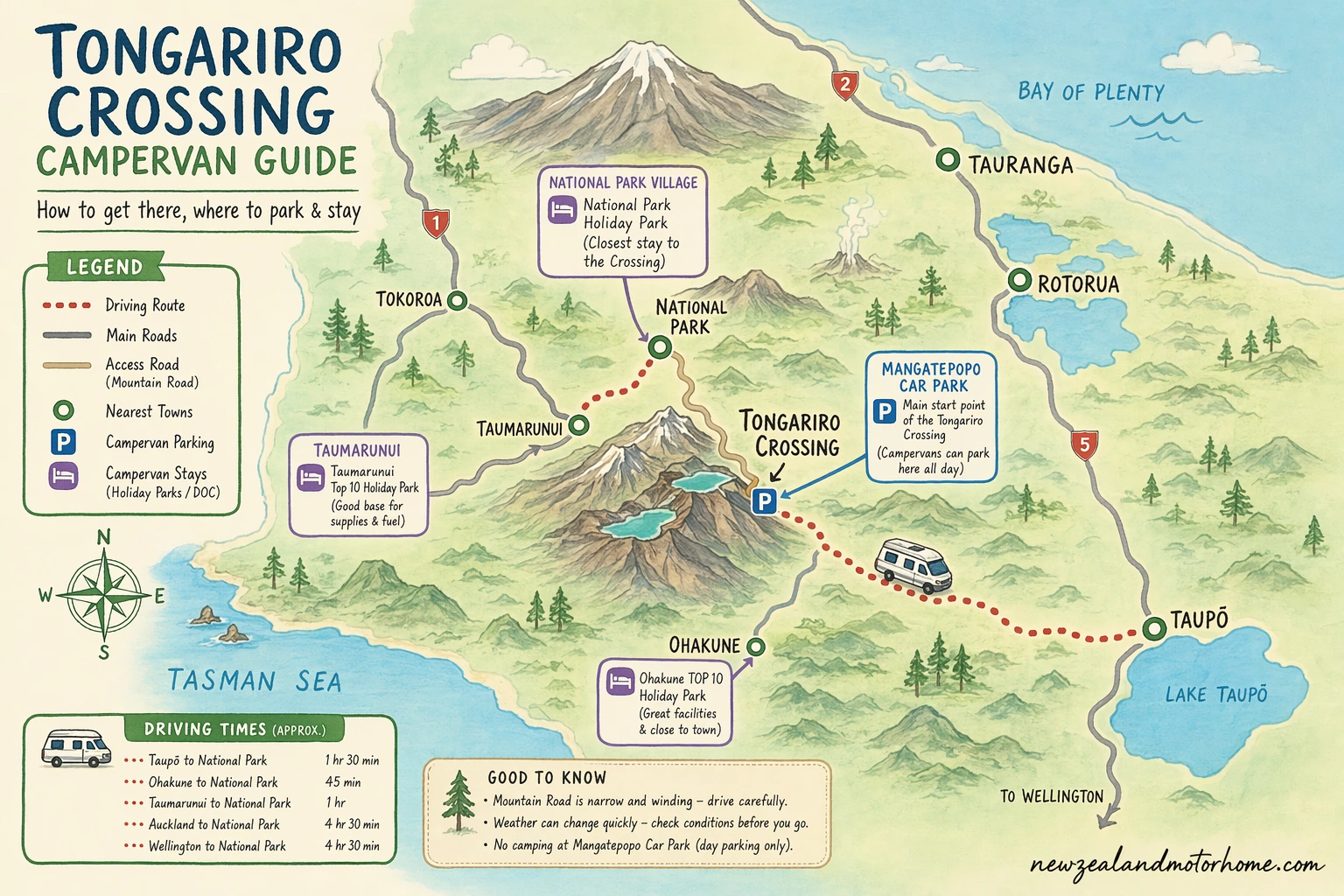
The Tongariro Alpine Crossing runs between Mangatepopo and Ketetahi on the western side of Tongariro National Park. Most walkers start at Mangatepopo and finish at Ketetahi, which means you need a transport plan before you lace up. Driving a motorhome Tongariro Crossing day as if it were a normal return walk is where people come unstuck.
For campervan travellers, the best approach is to sleep nearby the night before, leave the van somewhere legal and practical, and use a shuttle to the start or back from the finish. National Park Village, Whakapapa Village, Tūrangi and the Tokaanu area are the common bases, each with different trade-offs for drive time, services and powered-site availability.
- National Park Village: handy for the western approach and a sensible base if you are coming from Waitomo, Taumarunui or Whanganui.
- Whakapapa Village: close to the park and useful for short walks on a non-Crossing day, but book ahead in busy periods.
- Tūrangi or Tokaanu: good if you want more food, fuel and service options, or you are linking with Taupō and the Desert Road.
Parking the campervan: trailheads, shuttles and day timing
Do not assume you can park a campervan at Mangatepopo all day and walk away for seven or eight hours. In the main walking season, parking restrictions commonly apply at the Mangatepopo road end, and the road end car parks are for day access, not camping. Always check current DOC and local shuttle guidance before committing to a parking plan.
Most campervan Tongariro Crossing days work best with a shuttle. Depending on where you stay, you may be picked up from a village, a holiday park, or a designated parking area. If your van is over six metres, ask about suitable parking before the day; a long rear overhang is no fun in a tight gravel bay at 5:30am with headlamps everywhere.
- Book the shuttle for the weather window, not just the date: alpine wind and cloud can make a planned day unsafe.
- Leave nothing visible in the cab: trailhead parking is remote and you will be away for most of the day.
- Know the final pick-up time: missing it can create an expensive and stressful end to the walk.
- Take your van keys with care: zip them inside a pack pocket rather than loose in a jacket.
Camping near Tongariro Crossing: powered sites, DOC camps and freedom camping
Camping near Tongariro Crossing ranges from powered holiday-park pitches to basic DOC-style camping with fewer services. A powered site is worth considering the night before the walk if you want charged phones, a warm van and an easy early start. In colder months, that plug-in can be the difference between a comfortable night and a damp, fogged-up morning.
Basic campsites around the park suit self-contained vans that can manage their own grey water, rubbish and battery use. Check whether fresh water is available and whether it must be treated. Even if your campervan has a valid self-containment certificate, that does not give permission to sleep at trailhead car parks or anywhere a bylaw or national park rule says no.
- Use holiday parks when you need powered sites, showers, laundry, rubbish disposal or a reliable dump station.
- Use basic campsites when you are happy with unpowered parking, simple toilets and a quieter bush-edge setting.
- Avoid road-end camping at Mangatepopo, Ketetahi or other walk car parks unless signage specifically allows it.
- Arrive before dark in winter or bad weather; finding a level van site is easier before the cloud drops.
Water, dump stations, LPG and food before you hike
The Crossing is not a place to run the van down to empty. Fill fresh water, empty grey and black water, sort rubbish, and check LPG before you drive into your overnight base. Services are more reliable in larger settlements such as Tūrangi, Taupō and Taumarunui, while village and campsite facilities can be limited, seasonal or available only to guests.
Trailhead car parks should be treated as no-service places: no dump station, no powered hook-up, no place to refill a motorhome tank, and no guarantee of mobile coverage when you need it. Pack your hiking water from a safe supply before the shuttle arrives, and keep a dry change of clothes in the van for when you return.
- Fresh water: fill before entering the park if you are unsure what your campsite provides.
- Toilet cassette: empty it the day before, not after a long walk when every dump point feels too far away.
- LPG: check bottle levels if you are relying on gas heating, hot water or cooking.
- Food: buy walk snacks and an easy van dinner before you settle in for the night.
Road notes for motorhomes around Tongariro National Park
The main approaches use state highways and sealed local roads, but this is alpine country. SH1 over the Desert Road, SH47 and SH48 can be affected by snow, ice, wind and low visibility, especially from late autumn through spring. High-sided campervans feel crosswinds more than cars, so give yourself time and do not chase a shuttle departure in poor conditions.
Fuel is not something to leave until the last bar on the gauge. Fill in the larger towns on your approach, and remember that winter driving with heating, demisters and slower travel can make the day feel longer than the map suggests. If you are in a longer motorhome, take extra care at small village turns, campsite entrances and gravel pull-offs after rain.
- Coming from Auckland or Waitomo: National Park Village is a logical overnight step before the Crossing.
- Coming from Wellington: Tūrangi, Tokaanu or National Park can all work, depending on your shuttle plan.
- Coming from Hawke’s Bay or Taupō: watch the Desert Road forecast and have a backup night if it closes.
How to fit the Crossing into a wider campervan route
Build in at least two nights around Tongariro if the Crossing is a priority. One night gives you no weather flexibility; two or three nights let you wait out wind or cloud and still enjoy shorter walks, hot pools nearby, or a slow van day with laundry and battery charging. A good Tongariro plan is not packed to the minute.
Northbound, the area links naturally with Wellington, Whanganui, the Forgotten World Highway, Taupō and Rotorua. Southbound, it pairs well with Waitomo, Taranaki, the central plateau and the lower North Island. If you want help matching shuttle timing, overnight stops and service points to your actual van size and travel dates, you can use the talk-to-us step and we will shape the route around how you like to drive.
- Fast but sensible: Waitomo, National Park, Tongariro Crossing, Taupō.
- More relaxed: Rotorua or Taupō, Tūrangi, two nights near Tongariro, then Whanganui or Wellington.
- Winter-minded: keep a flexible night either side in case roads or shuttles are affected by alpine weather.
Keep planning
Visiting tongariro alpine crossing by campervan
Read onHoliday parks tongariro crossing
Read onHoliday parks tongariro
Read onFarmers markets tongariro
Read onCampervan guide tongariro nz
Read onBest time to visit tongariro nz
Read onCommon questions
Can I sleep in my campervan at the Tongariro Crossing car park?
Do not plan to overnight at Mangatepopo or Ketetahi car parks. These are walk access areas, not campervan campsites, and local rules or signage may prohibit overnight stays. Use a legal campsite or holiday park nearby, even if your van is self-contained.
Where should I base the van for the Tongariro Alpine Crossing?
National Park Village, Whakapapa Village, Tūrangi and Tokaanu are the most practical bases. Choose based on your shuttle pick-up, whether you need a powered site, and where you are heading next on your North Island route.
Do I need a shuttle if I have a campervan?
Usually, yes. The Crossing is a one-way walk and seasonal parking restrictions can make all-day parking at the start impractical. A shuttle lets you leave the campervan at a legal base or designated parking area and avoid trying to retrieve it tired at the end of the hike.
Is there freedom camping near Tongariro Crossing?
Freedom camping is tightly controlled around Tongariro National Park and surrounding districts. A self-containment certificate is essential in many places, but it does not override no-camping signs, national park rules or council bylaws. Check current local guidance and use designated sites where required.
Can a large motorhome handle the roads to Tongariro?
Most main approach roads are suitable for motorhomes in normal conditions, but winter weather, fog and strong wind are genuine factors. Longer vehicles need extra care at campsite entrances, village parking areas and gravel road-end pull-offs. Check road conditions before committing to an early shuttle.
How many nights should I allow in a campervan for the Crossing?
Allow two nights if the Crossing is important to your trip. That gives you a weather buffer, time to service the van, and a calmer start on walking day. One night can work, but it leaves little room for alpine conditions to change.
Have a planner shape this for your dates
Send a short outline — your dates, party size, and the kind of trip you want. A planner replies with a vehicle recommendation, a paced route, and the realistic budget.