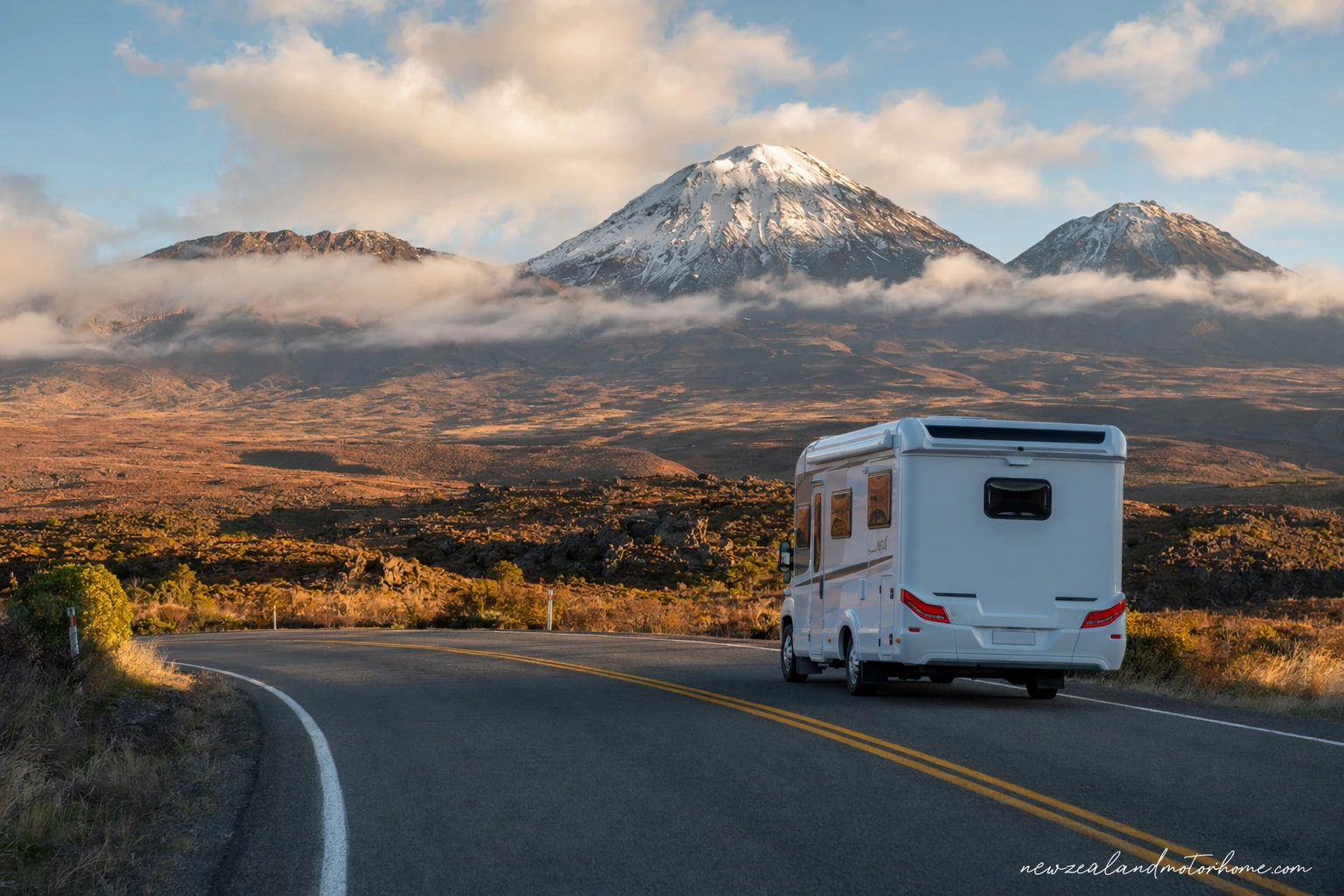
- Best with 3–4 days
- Alpine weather year-round
- Powered sites useful in cold
- Shuttle needed for Crossing
- Self-containment rules apply
Tongariro is one of those places where having your bed, kettle and wet-weather gear in the same vehicle makes real sense. The weather can swing from bluebird to sleet in an hour, the villages are spread out, and the best walking days often start early. This campervan guide Tongariro NZ page is written for self-drive travellers planning where to park, sleep, fill, empty and move between the volcanoes.
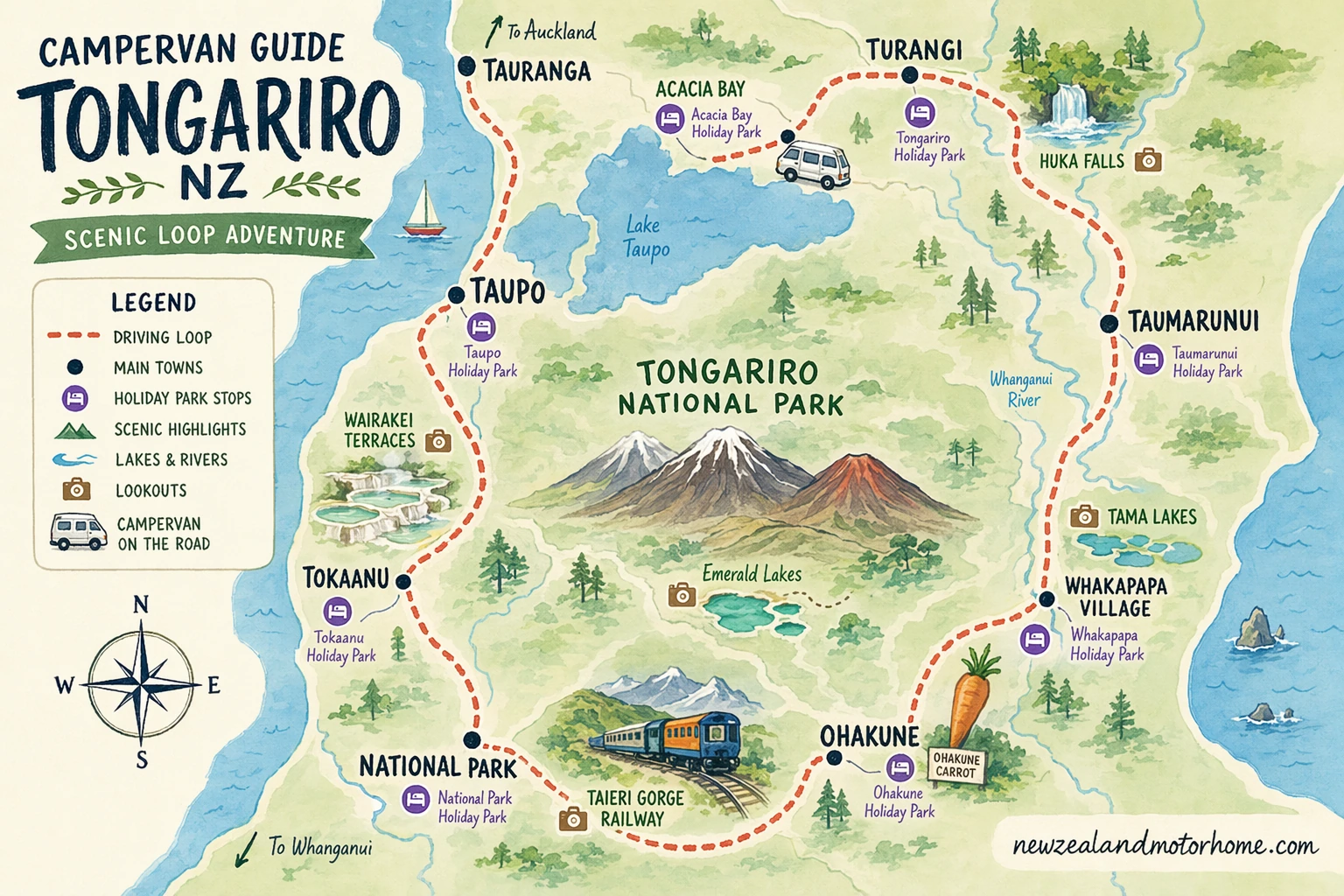
The region centres on Tongariro National Park, with practical campervan bases at National Park Village, Whakapapa, Tūrangi and Ohakune. Below you’ll find van-friendly road notes, overnight options, dump station and water planning, plus the best things to do Tongariro campervan travellers can fit around weather windows and campsite check-in times.
How many days to allow in a Tongariro campervan trip
Two nights is the bare minimum if you are hoping to walk part of the national park rather than just drive through it. Three to four nights is much better for a motorhome Tongariro loop, because the mountain weather often decides your walking day for you. Build in a spare night rather than trying to force the Alpine Crossing, Tama Lakes or the Old Coach Road into the wrong conditions.
A useful pattern is to arrive from Taupō or Rotorua into Tūrangi, move to National Park Village or Whakapapa for the high-country walks, then roll south to Ohakune or west towards the Whanganui region. If you are coming up from Wellington, reverse the order and use Ohakune as your first easy night off SH1 or SH49.
- 1 night: scenic drive only, short waterfall walk, powered site or simple DOC-style stop.
- 2 nights: one main walk day, with a little flexibility for clouds and wind.
- 3–4 nights: best for the Tongariro Alpine Crossing, Taranaki Falls, Ohakune and a proper van-paced loop.
- Winter: add time for icy roads, later starts, drying gear and checking alpine access.
Where to stay: powered sites, unpowered stops and freedom camping
Tongariro is not a place to assume you can simply pull over and sleep. Much of the land is national park, conservation estate or tightly managed roadside, and freedom camping rules vary between districts. If you are in a hired campervan, check that your vehicle has current self-containment certification and still use only legal overnight areas for that class of vehicle.
For comfort, National Park Village, Tūrangi and Ohakune are the most practical bases, with holiday park-style options where you can plug into power, use showers, top up fresh water and deal with laundry after a wet walk. Whakapapa Village puts you closest to several trailheads, but services are more limited, so arrive with food, fuel range and your wastewater sorted.
- Powered sites: choose these if you are running heaters, drying boots, charging devices or travelling in shoulder season.
- Unpowered sites: good for self-contained vans with decent batteries, especially in settled weather.
- DOC-style campsites: expect simpler facilities; check vehicle access, booking requirements and whether large motorhomes fit before committing.
- Freedom camping: use official council or DOC information on the day, as signs and bylaws can change.
If you want help turning your walking wish-list into a sensible overnight sequence, you can talk to us before you lock in your campervan route.
Driving the volcanic plateau in a motorhome
The main approaches are sealed and regularly used by campervans, but this is still alpine country. SH1 across the Desert Road is exposed, SH47 and SH48 lead into Whakapapa, and SH49 brings you through to Ohakune. In bad weather, high-sided campervans can feel the wind, and winter ice can appear early or linger in shaded sections.
Allow more time than the map suggests. You will want to pull into viewpoints, let faster traffic pass, and avoid arriving at a campsite in the dark after a long walking day. Keep an eye on fuel: Tūrangi, National Park Village and Ohakune are the practical service points, while Taupō gives you broader supermarket, LPG and workshop options before you enter the plateau.
- Bruce Road to Whakapapa: sealed and scenic, but alpine; check weather, snow and chain requirements in winter.
- Desert Road: spectacular in clear weather, unpleasant in strong wind or sleet; check road status before committing.
- Longer motorhomes: use slow vehicle bays and proper pull-outs rather than stopping on narrow shoulders for photos.
- Height and gear: secure roof vents, awnings and bikes before exposed sections.
Parking the van for walks and volcano days
The Tongariro Alpine Crossing is the big name, but it is not a casual motorhome parking exercise. Seasonal restrictions, small trailhead car parks and one-way logistics mean most campervan travellers are better off leaving the van at a campsite or shuttle pick-up point in National Park Village, Whakapapa or Tūrangi. That also means you return to a legal overnight base instead of trying to sort sleeping arrangements while tired.
For shorter walks, parking is generally simpler but still deserves thought. Tawhai Falls, Taranaki Falls, the Ridge Track and Whakapapa Village walks suit a slower campervan day, while Tama Lakes needs a full weather window and enough daylight. Never block access roads, shuttle areas, gates or bus turning spaces; mountain operations and emergency vehicles need room.
- Tongariro Alpine Crossing: plan shuttle logistics first, then choose your overnight stop around the pick-up time.
- Taranaki Falls: a strong half-day option from Whakapapa when the tops are cloudy.
- Tama Lakes: bigger walking day; carry layers and return before late-afternoon cold settles in.
- Ohakune Old Coach Road: good for walking or biking, with van logistics easier from the Ohakune side.
Dump stations, fresh water, LPG and food planning
Do not arrive in the national park expecting full motorhome services at every village. The safest rhythm is to empty grey and black water, fill fresh water and stock the fridge before heading to your highest overnight stop. Taupō and Tūrangi are useful on the northern side; Ohakune and Raetihi help on the southern and western side; National Park Village is handy but smaller.
Use official council, holiday park or camping-app listings for current dump station locations, opening access and potable water status. Some dump points are beside service stations or public facilities, while others are available only to guests. LPG is more reliable in larger towns, so check bottle levels before a cold Tongariro night rather than waiting until the heater is already struggling.
- Fresh water: fill at your holiday park or a confirmed potable tap before heading into the park.
- Wastewater: never empty grey water on the ground; use designated dump stations only.
- LPG: top up or swap before remote nights, especially if using gas for heating, cooking and hot water.
- Food: supermarket choice is broader in Taupō, Tūrangi and Ohakune than in the smaller park villages.
Easy route ideas through Tongariro by campervan
A north-to-south route works well if you are coming from Rotorua, Taupō or the central North Island lakes. Spend a night near Tūrangi to get organised, move into National Park Village or Whakapapa for the walking focus, then finish with Ohakune for gentler roads, cafés and the Old Coach Road. It keeps the big mountain day in the middle rather than at the end of a long drive.
From Wellington, many campervan travellers prefer to break the approach before tackling the plateau, then use Ohakune as the first proper Tongariro base. In winter, keep your route flexible: if the Desert Road closes or snow sits low, it may be better to pause, plug into a powered site and wait for a safer travel window.
- Short loop: Taupō or Tūrangi, Whakapapa/National Park, Ohakune, then onward south or west.
- Walking-focused: three nights split between National Park Village and Whakapapa, with shuttle planning built in.
- Winter van trip: powered sites, shorter walks, road-status checks and no pressure to cross the plateau late.
- Family pace: waterfalls, visitor centre time, easy village stops and a campground with reliable showers.
Keep planning
Visiting tongariro alpine crossing by campervan
Read onHoliday parks tongariro crossing
Read onHoliday parks tongariro
Read onFarmers markets tongariro
Read onTongariro crossing campervan guide
Read onBest time to visit tongariro nz
Read onCommon questions
Can I freedom camp in my campervan near Tongariro National Park?
Is the Tongariro Alpine Crossing suitable to do from a motorhome?
Where should I base the van: Tūrangi, National Park Village, Whakapapa or Ohakune?
Do I need a powered site in Tongariro?
Are Tongariro roads okay for a larger motorhome?
Have a planner shape this for your dates
Send a short outline — your dates, party size, and the kind of trip you want. A planner replies with a vehicle recommendation, a paced route, and the realistic budget.