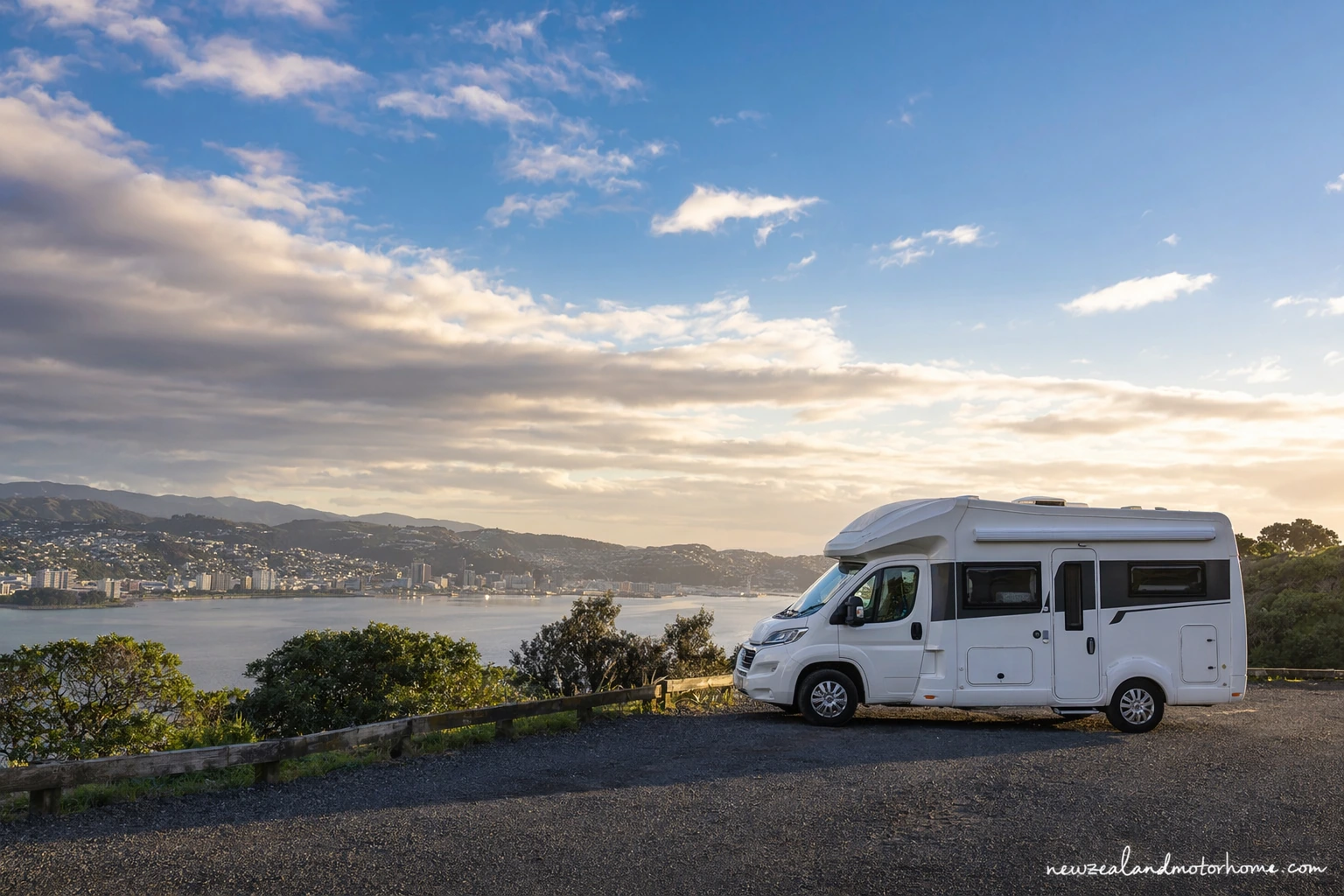
- Allow 2–3 days for city, coast and Kāpiti
- Certified self-contained needed for most freedom camping
- Large vans: avoid tight hill streets and low-clearance parking
- Best base options: Hutt Valley, Porirua or Kāpiti holiday parks
Wellington is a brilliant campervan region when you plan it like a driver, not a pedestrian. The city is squeezed between harbour, hills and open Cook Strait, so the best stops are often close together but not always easy for a tall or long van to nip into on impulse.
This guide picks out the best campervan stops Wellington has for self-drive travellers: where to park the van for views, which coastal roads need care, where freedom camping Wellington rules matter, and how to choose an overnight base with water, dump station access and a sensible morning exit.
Start with a simple Wellington campervan shape
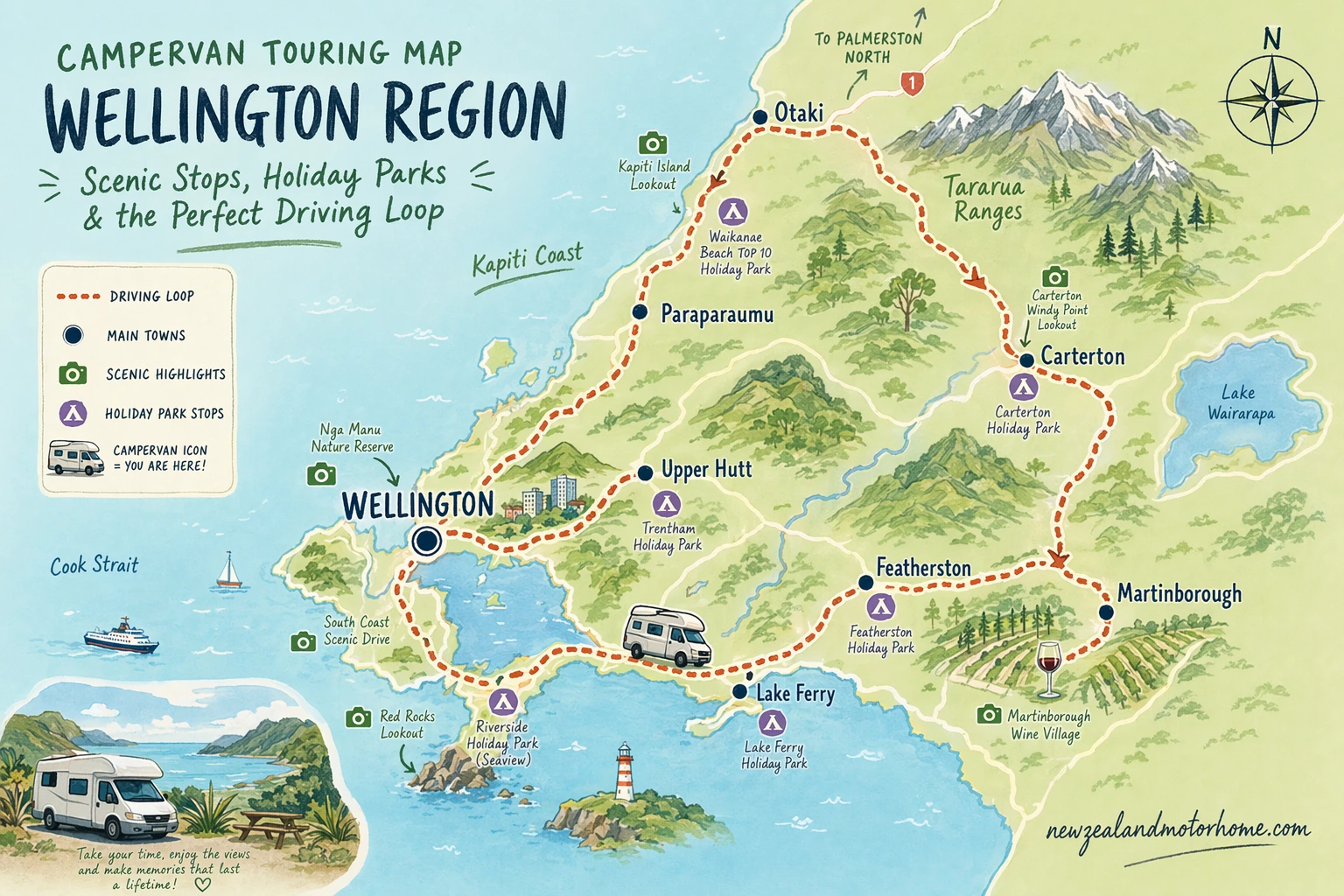
The easiest way to enjoy Wellington in a campervan is to treat the city centre as a day stop, then sleep slightly out of the tightest streets. The harbour edge, Miramar Peninsula, south coast, Hutt Valley and Kāpiti Coast all work as short loops, so you can avoid dragging a high-roof van through the same central lanes again and again.
If you are arriving on the Interislander or Bluebridge ferry, give yourself time before booking an activity or aiming for an overnight site. Ferry traffic can bunch up, and unfamiliar one-way streets around the quays feel tighter when you are watching your mirrors and roofline.
- Best first night: choose a legal signed site or a holiday park north or east of the city if you arrive late.
- Best city day: park once on the harbour side, then walk or use public transport rather than moving the van between attractions.
- Best road rhythm: do Miramar and the south coast in daylight; save motorway runs for poor weather or early departures.
- Van note: Wellington wind is real. Open side doors carefully and think twice before parking broadside on exposed ridges.
Harbour viewpoints and city stops with van-friendly parking
The classic Wellington view is from the hills, but the easiest campervan views are often at harbour level. Oriental Bay, Evans Bay, Shelly Bay and the Miramar side give you wide water, city lights and aircraft dropping over the runway without needing to thread a large van into a steep residential street.
Mount Victoria Lookout is worth it for smaller campervans when traffic is calm, but the climb is narrow in places and parking at the top is limited. If your motorhome is long, heavy or you dislike hill starts, park lower down and choose a harbour walk instead; you will enjoy the day more.
- Oriental Bay and waterfront: good for a walk to the city, but check parking time limits and avoid hunting for a space at peak lunch hours.
- Evans Bay: a practical pause for harbour photos, ferry watching and checking your route before heading to Miramar.
- Shelly Bay and Scorching Bay: scenic, slower roads with tight sections; better in a compact van than a large motorhome.
- Te Papa and central waterfront: use larger public parking areas where permitted, then explore on foot rather than squeezing into side streets.
South coast stops: Ōwhiro Bay, Red Rocks and Makara
The south coast is where Wellington feels wild. Ōwhiro Bay and the Red Rocks track look straight into Cook Strait, with spray on a southerly and big views toward the South Island on clear days. It is one of the best campervan stops Wellington offers for a picnic, a short walk and that proper end-of-the-road feeling.
Do not treat the coast road like a fast shortcut. It has cyclists, walkers, parked cars, salt air and occasional windblown grit. If your van is wide, take it gently and be ready to wait rather than forcing a pass. Makara Beach is another memorable stop, but the road in is narrow and winding, so it suits confident drivers and smaller vans best.
- Ōwhiro Bay: use formed parking areas only and keep clear of boat ramps, residents' access and turning spaces.
- Red Rocks: park the van and walk; do not take a hired camper beyond public vehicle limits or onto rough coastal tracks.
- Makara Beach: excellent in settled weather, but avoid arriving after dark in a large motorhome.
- Wildlife note: in winter, seals may be around the south coast. Give them space and never use the van as a way to get closer.
Where to stay campervan Wellington: legal overnight bases
If you are searching for where to stay campervan Wellington, start with legality before scenery. Wellington councils actively manage overnight parking, and signs on the ground matter more than old blog posts. Freedom camping Wellington is generally for certified self-contained vehicles only, and even then only in designated or permitted areas.
For a low-stress city visit, many travellers use a holiday park in the Hutt Valley, Porirua or up the Kāpiti Coast, then drive or train into the city. That gives you powered sites, showers, laundry, fresh-water fills and easier dump station routines than trying to solve everything in the central city.
- Freedom camping: check the current council map, obey bay markings, and display or carry your self-containment certification as required.
- Holiday parks: book ahead around summer weekends, public holidays, major events and ferry disruption periods.
- Powered vs unpowered: choose powered if you have been free camping for a few nights or need to recharge devices and house batteries.
- Late arrivals: confirm check-in arrangements before you drive across town in the dark.
Porirua, Kāpiti and Hutt Valley loops to add on
Wellington's best campervan day does not have to be central Wellington. Porirua Harbour, Plimmerton, Pukerua Bay and the Kāpiti Coast give you open parking, beach walks and easier driving after the tight city streets. In settled weather, Paekākāriki Hill Road has huge views, but it is narrow, twisting and not a place to hurry a big motorhome.
The Hutt Valley works well if you want a calmer base with supermarket stops, fuel, LPG exchange options and straightforward access back to the harbour. Petone is good for a flat foreshore walk, while Days Bay and Eastbourne make a pleasant harbour-edge drive when you are not in a rush.
- Porirua and Plimmerton: useful for a northbound night before SH1 or a ferry-buffer day if sailings change.
- Kāpiti Coast: beach stops are easier with a van, but respect local freedom camping restrictions and dune protection areas.
- Petone foreshore: good for a leg stretch and lunch stop; choose spaces where your rear overhang does not block the path.
- Remutaka Hill: allow extra time, use lower gears, and pull over only in proper lay-bys if heading toward Wairarapa.
Van services and small decisions that make Wellington easier
Before you settle into an overnight stop, sort the practical things: empty the toilet cassette, top up fresh water, check LPG, and think about tomorrow's exit route. Wellington is not the place to discover at 8pm that your grey-water tank is full or your gas bottle is nearly empty.
Dump stations and potable water points are usually easier to use on the approach roads, at holiday parks or in outer suburbs than in the tight central city. Fuel stations can be busy and some forecourts feel cramped for a long motorhome, so look for a clean swing in and out rather than the cheapest-looking stop on a map.
If you want help linking the harbour, south coast and a legal overnight into one relaxed plan, you can send us your dates and van size through /talk-to-us/ and we will point you in the right direction.
- Height: check car park clearance before entering any building or covered bay; many campervans will not fit.
- Wind: take extra care on exposed coastal roads, ridgelines and ferry ramps.
- Water: only fill from signed potable taps, not beach showers or public garden taps.
- Rubbish: carry it to a proper bin or transfer station; coastal car parks are not camp kitchens.
Keep planning
Wellington to whangarei campervan
Read onWellington to tauranga campervan
Read onWellington to rotorua campervan
Read onWellington to picton campervan
Read onWellington to palmerston north campervan
Read onWellington to new plymouth campervan
Read onCommon questions
Can I freedom camp in Wellington in a campervan?
Yes, but only where the relevant council permits it, and usually only if your van is certified self-contained. Check the current council freedom camping map and the signs at the car park before you settle in for the night.
Is central Wellington easy in a large motorhome?
It is manageable if you plan your parking, but it is not a carefree city for large vehicles. Streets can be narrow, parking bays short, and height clearances limited, so park once in a suitable area and explore on foot where you can.
Where should I stay before an early ferry from Wellington?
Choose a legal overnight site or holiday park with a straightforward drive to the ferry terminal, and allow more time than your map suggests. Morning traffic, check-in queues and unfamiliar lane changes can all slow a campervan down.
Are the south coast roads suitable for campervans?
Most standard campervans can reach places like Ōwhiro Bay in normal conditions, but take care with wind, cyclists and tight parking. Avoid rough tracks and do not drive beyond signed public vehicle access, especially in a hired motorhome.
Do Wellington holiday parks have dump stations and water?
Many holiday parks in the wider Wellington region provide fresh-water access and dump station facilities for guests, but facilities vary. Confirm before booking if you specifically need to empty grey water, refill, plug into power or arrive late.
Have a planner shape this for your dates
Send a short outline — your dates, party size, and the kind of trip you want. A planner replies with a vehicle recommendation, a paced route, and the realistic budget.