- Best months: March-April, October-November
- Allow 2-4 nights for city plus coast
- Book powered sites in summer and winter
- Certified self-contained only for permitted freedom camping
- Watch crosswinds on ferry days and exposed roads
The best time to visit Wellington NZ in a campervan is usually late spring through early autumn, when daylight is generous, waterfront walks are easier to enjoy, and holiday parks have a little more breathing room outside peak summer. That said, Wellington is a year-round city if your van is self-contained, your ferry timing is flexible, and you are ready for wind.
This guide is written for travellers driving and sleeping in their own hired campervan or motorhome. We cover Wellington weather by month, seasonal campsite availability, freedom camping expectations, ferry-day logistics, dump stations, LPG and water, plus the road conditions that matter when you are steering a taller vehicle through the capital.
The short answer: March, April, October and November suit most vans
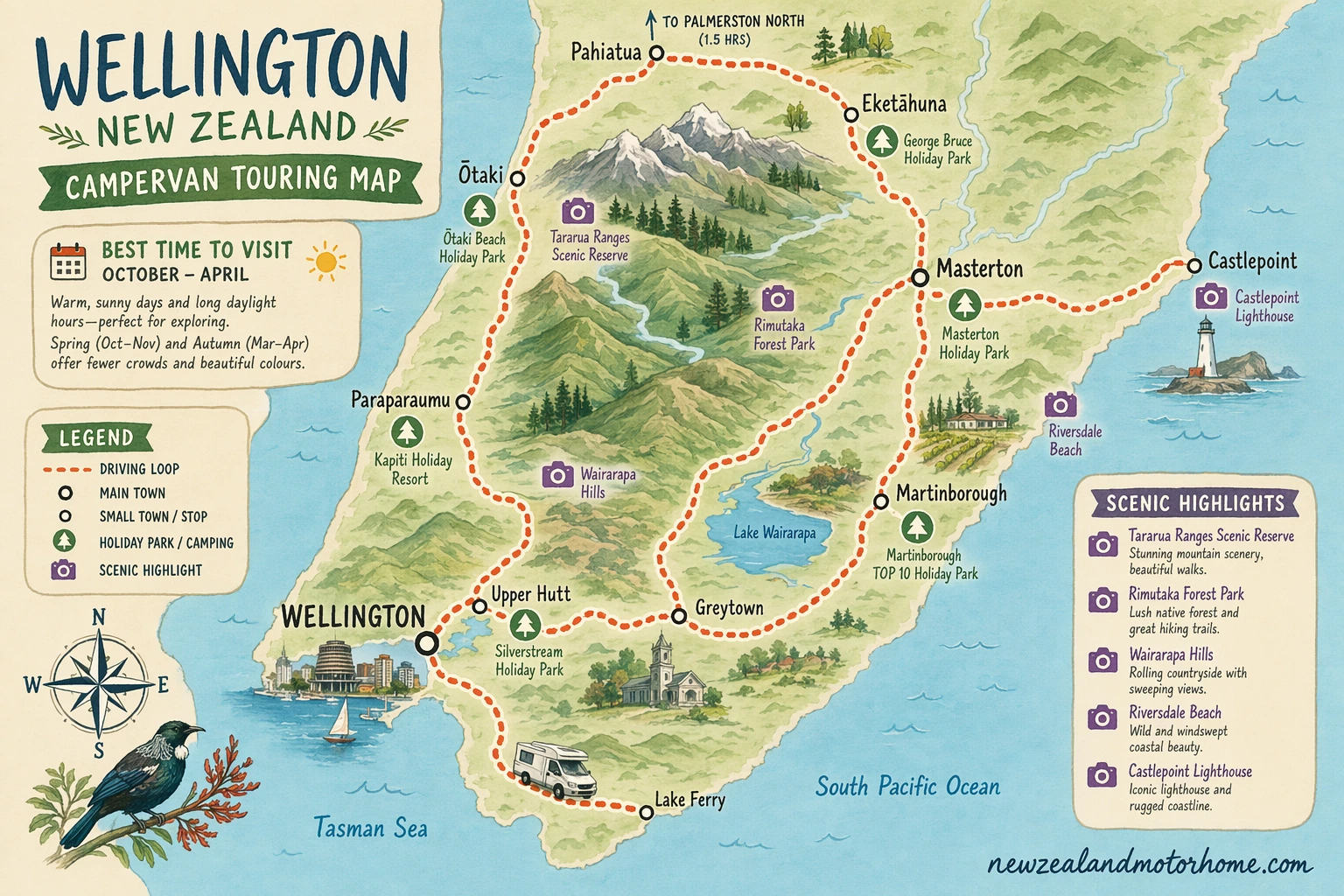
For most self-drive campervan travellers, the sweet spots are March to April and October to November. You get useful daylight, fewer school-holiday crowds than January, and generally better availability for powered sites around the harbour, Hutt Valley, Porirua and the Kāpiti Coast.
Summer is still excellent if you book ahead, especially if you want beaches, Zealandia, the waterfront and day trips to the south coast. Winter works well for city-focused travel, ferry connections and museums, but choose overnight stops with reliable power if your van heater, batteries or dehumidifying habits need help.
- Best overall: March and April for settled-feeling days and easier site availability.
- Best for long evenings: December to February, with the biggest crowds and strongest booking pressure.
- Best for quieter touring: May, June, September and early October.
- Best if catching the ferry: Any month, but allow buffer time for wind delays and do not plan a tight mountain-drive connection straight after docking.
Wellington weather by month: what it means for your campervan
Wellington weather by month is less about extreme temperatures and more about wind, changeability and where you choose to park the van overnight. A calm, bright winter day can feel glorious on the waterfront; a southerly in midsummer can still make you zip up the jackets before dinner.
January and February are the warmest months, with busy beaches, packed waterfront parking and strong demand for powered and unpowered sites. March and April are often the easiest months for touring: warm enough for open-door van evenings, but with fewer families on the road once schools are back.
May to August is cooler and darker, so a powered site is worth considering if you want heating, battery top-ups and an easy place to dry coats. September can be unsettled, while October and November bring spring colour, longer days and plenty of wind reminders that you are in Wellington.
- Pack for wind in every month: secure awnings, roof vents and loose camp chairs before leaving the van.
- Choose sheltered overnight spots: valleys and established holiday parks are usually more comfortable than exposed coastal car parks.
- Watch condensation in winter: ventilate the van and use powered sites if your battery setup is modest.
Summer in Wellington: book sites early and plan your parking
December to February is when to visit Wellington if you want long evenings, harbour swims, outdoor eating and the easiest weather for wandering from the waterfront to Cuba Street. It is also when campervan sites closest to the city fill fastest, particularly around Christmas, New Year, public holidays and ferry-heavy weekends.
If you are travelling in a larger motorhome, do not assume you can glide into any central car park. Height barriers, tight angle parking and busy commuter streets make the CBD better suited to short stops than overnight improvising. Park the van once, use buses, trains, bikes or your feet, and keep ferry-terminal driving to quieter parts of the day if you can.
- Book ahead: powered sites are snapped up first in peak summer; unpowered grass sites may still need reservations.
- Freedom camping: use only signed or council-approved areas and check the current rules for certified self-contained vehicles before you park for the night.
- Water and waste: top up fresh water and empty the toilet cassette before arriving in the inner city; use holiday park or official public dump stations in the wider region.
- Wind tip: never leave an awning out while you go for a walk, even on a sunny day.
Autumn and spring: the best balance for ferry days and road trips
Autumn and spring are our favourite seasons for a Wellington motorhome stay because you can combine the city with short regional loops: Mākara coast, Eastbourne, the Hutt Valley, Paekākāriki and Wairarapa if the forecast is friendly. March and April usually feel more relaxed than January, while October and November give you spring daylight without full summer pressure.
These shoulder months are also practical if you are connecting the North and South Islands by ferry. You still need a proper buffer, because Cook Strait sailings can be affected by wind and swell, but campsite availability is generally kinder if you need to shift your overnight stop by a day.
If you would like help lining up ferry timing, overnight stops and a weather-aware route, you can send us your dates through talk to us and we will help shape a sensible campervan plan.
- Good overnight strategy: stay one night north of the city before a morning ferry, or one night in Wellington after an evening arrival.
- Road note: SH1 through Transmission Gully is straightforward but exposed in places; keep two hands on the wheel in crosswinds.
- Scenic add-on: the Kāpiti Coast is easier with a van than central-city hopping, with more space to park and reset.
Winter touring: quieter sites, shorter days and sensible power use
June, July and August are not off-limits for campervans in Wellington. In fact, winter can be a smart time if you want galleries, museums, cafés, harbour views and fewer people at overnight stops. The trade-off is shorter daylight, more wet gear inside the van and a stronger case for booking powered sites.
Before leaving the city for Wairarapa or the central North Island, check the forecast carefully. The Remutaka Hill Road on SH2 is scenic but narrow and winding in places, and it is not the road to rush in a high-sided motorhome during heavy rain, strong wind or low visibility.
- Use power wisely: a powered site helps with heating, device charging and running ventilation overnight.
- Drying space matters: choose a holiday park with laundry access if you are travelling for more than a few days.
- Dump and refill before remote nights: public options are easier in Lower Hutt, Porirua and along main routes than on small coastal side roads.
- LPG planning: service stations in the wider region may offer bottle swap or refills, but check your bottle type and opening hours before you are low.
Freedom camping, facilities and van size considerations by season
Wellington is not a place to wing freedom camping. Rules can vary between Wellington City, Hutt Valley, Porirua and Kāpiti, and many attractive waterfront areas are day-use only or restricted overnight. If your hired van is not certified self-contained, plan on holiday parks or other permitted campgrounds rather than trying to sleep in street parking.
For certified self-contained vans, always confirm the current council map before parking overnight, arrive early enough to read signs properly, and keep your setup discreet. In busy summer periods, designated spaces can fill well before dark; in winter they may be quieter but more exposed to wind.
- Small campervan: easier for city parking, supermarket stops and tight coastal pull-offs.
- Larger motorhome: better comfort in poor weather, but allow more room for turning, parking and ferry lanes.
- Fresh water: refill at holiday parks or approved public taps; do not rely on beach taps for potable water.
- Waste: empty grey water and toilet cassettes only at official dump stations, never into street drains.
- Height awareness: check car park barriers and low tree branches before committing to a turn in the CBD or older suburbs.
Keep planning
Wellington to whangarei campervan
Read onWellington to tauranga campervan
Read onWellington to rotorua campervan
Read onWellington to picton campervan
Read onWellington to palmerston north campervan
Read onWellington to new plymouth campervan
Read onCommon questions
What is the best month to visit Wellington NZ in a campervan?
March is often the most comfortable month for a campervan trip: warm enough for outdoor evenings, less crowded than January, and usually easier for campsite bookings. April and November are also good choices if you want shoulder-season availability.
Is Wellington too windy for a motorhome?
No, but you need to drive and park with the wind in mind. Keep speeds conservative in crosswinds, avoid leaving awnings out unattended, and choose sheltered overnight stops rather than exposed coastal car parks when a strong southerly or northerly is forecast.
Can I freedom camp in Wellington with a certified self-contained van?
Only in places where the local council permits it, and rules can change between Wellington City, Hutt Valley, Porirua and Kāpiti. Check the current council map, obey on-site signs, and do not assume a waterfront car park allows overnight sleeping.
Should I book a powered site before or after the Cook Strait ferry?
Yes, it is a good idea, especially in summer, winter or if you are arriving late. A powered site gives you a proper reset after ferry delays, wind, rain or a long drive, and it removes the stress of finding a legal overnight space in the dark.
Are dump stations and fresh-water fills easy to find around Wellington?
They are available in the wider region, particularly at holiday parks and some official public facilities, but they are less convenient in the central city. Empty waste and refill fresh water before heading into tight urban streets or out to smaller coastal spots.
When should I avoid driving a large motorhome near Wellington?
Avoid exposed or winding roads during severe wind, heavy rain or poor visibility, especially the Remutaka Hill Road and coastal side routes. If the forecast looks rough, wait it out at a powered site and travel when conditions settle.
Have a planner shape this for your dates
Send a short outline — your dates, party size, and the kind of trip you want. A planner replies with a vehicle recommendation, a paced route, and the realistic budget.