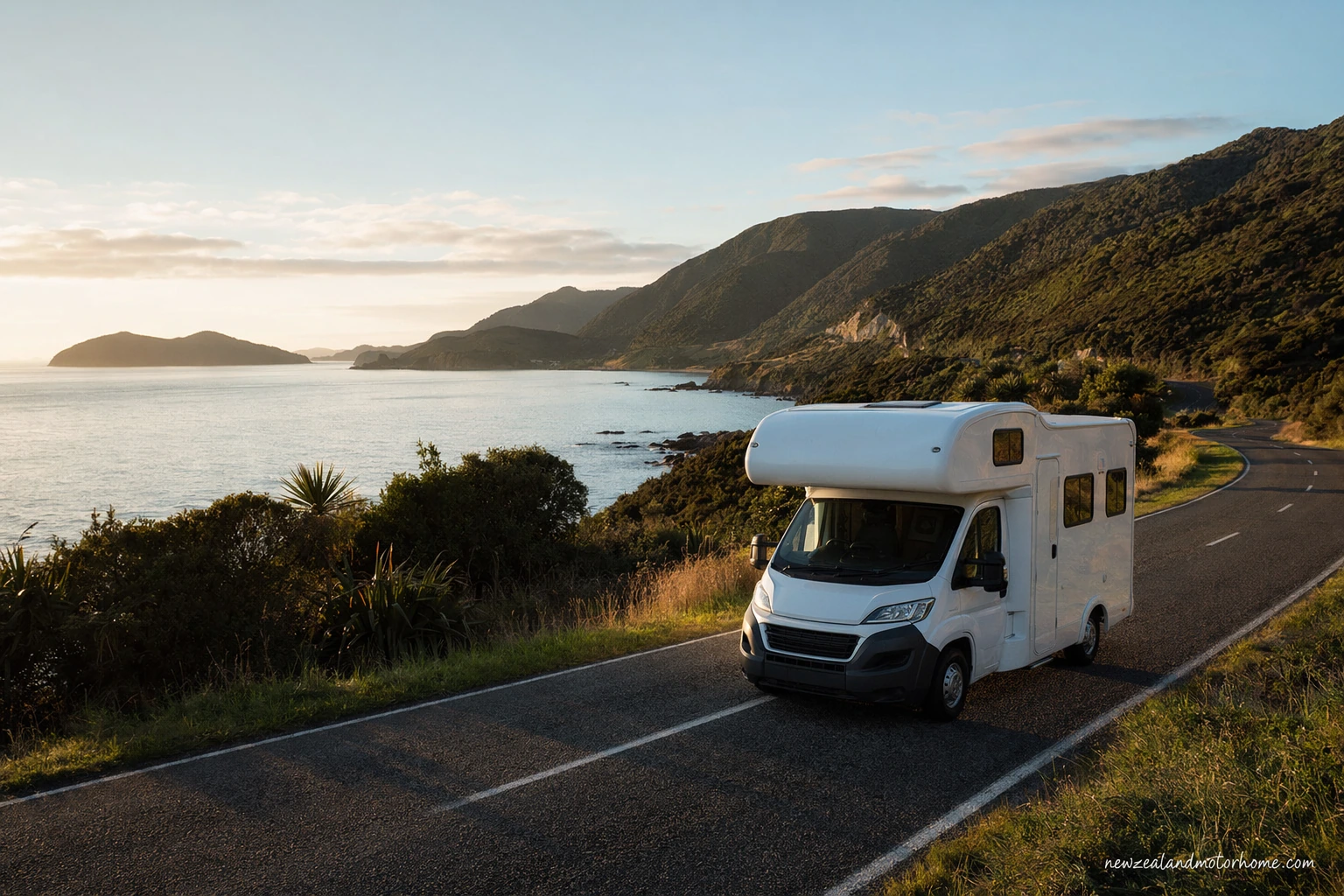
- Best with 2-3 nights
- Few easy CBD overnight options
- Self-contained rules vary by council
- Wind and hill roads need care
- Plan services before the ferry
Wellington is a brilliant campervan stop, but it asks for a little planning. The city is tucked between steep hills and a busy harbour, so the best motorhome Wellington days usually start with choosing where to leave the van, then exploring on foot, by bus, or along the waterfront.
This guide is written for self-drive travellers sleeping in their own hired van: where to base yourself, which roads suit longer vehicles, how to manage powered sites, dump stations and fresh water, and how to join the Cook Strait ferry without turning the day into a scramble.
How long to allow with a campervan in Wellington
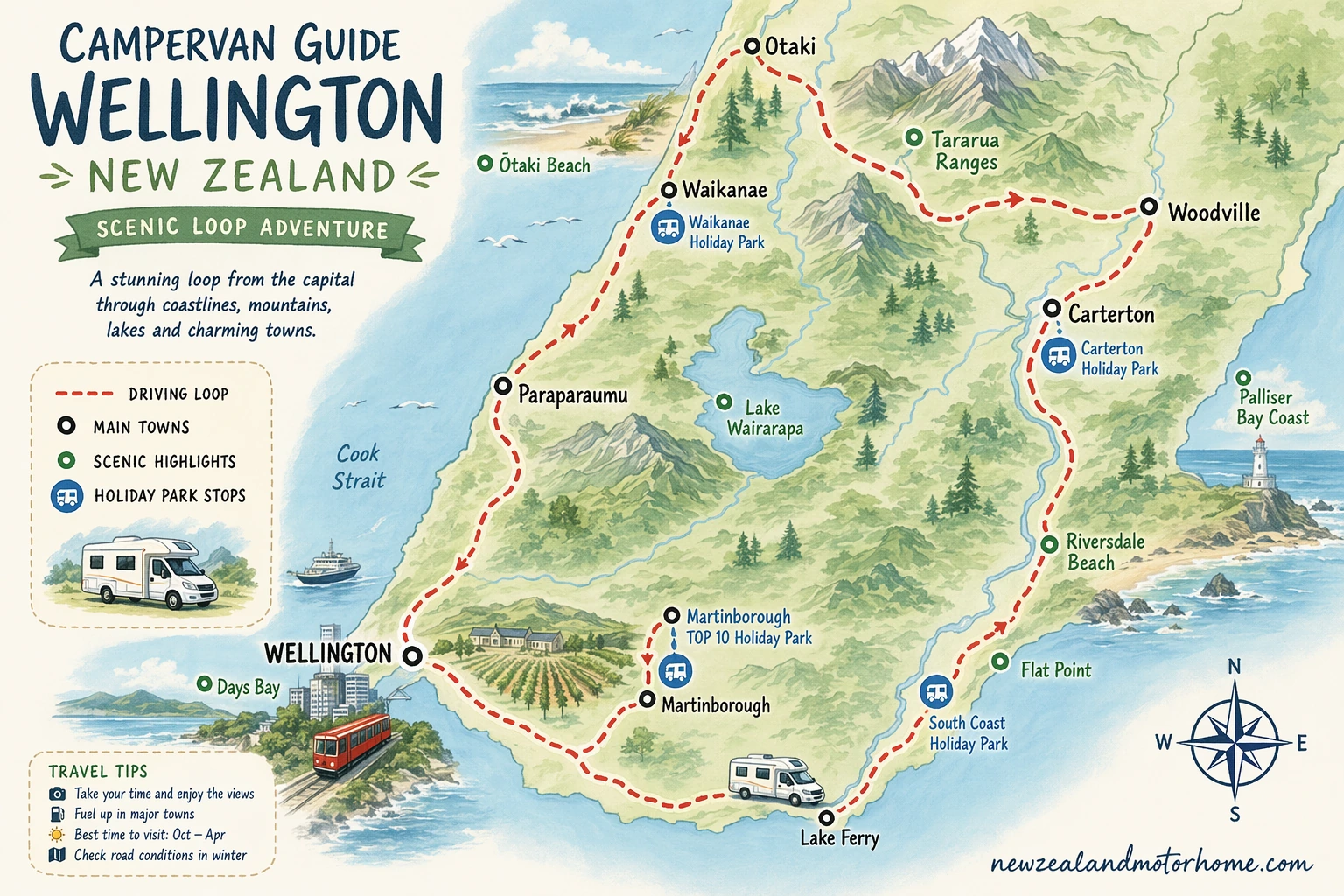
For most Wellington campervan travellers, two nights is the comfortable minimum. That gives you one day for the central city, waterfront and museums, and another for a harbour drive, Zealandia, Wētā Cave, or a slower run out to the south coast when the wind is behaving.
If you are catching the Cook Strait ferry, add a buffer night rather than trying to drive in from the central North Island on the same day. Wellington traffic is manageable compared with bigger overseas cities, but the last few kilometres to the ferry terminals can be slow, especially around commuter times and sailings.
- 1 night: best if you are only positioning for the ferry.
- 2 nights: enough for the city, waterfront and one outer drive.
- 3 nights: better if you want the Kāpiti Coast, Hutt Valley or Remutaka side trips.
- Ferry day: keep fuel, LPG, water and dumping sorted before you queue.
Where to park the van for central Wellington
Central Wellington is compact, walkable and not especially forgiving for tall or long motorhomes. Many inner-city car parks have height barriers, tight ramps or time limits, so check signs before committing and do not assume a multistorey will work for a high-top van.
A common approach is to stay outside the tightest city streets, then bus or train in from the Hutt Valley, Porirua, or the Kāpiti line. If you do drive in, arrive early, avoid the steepest residential streets, and look for open-air parking where your rear overhang is not blocking a footpath or traffic lane.
- Waterfront days: park once and walk; Te Papa, the harbour promenade and Cuba Street are close together.
- Long vehicles: avoid squeezing into narrow hill suburbs unless your route is certain.
- Wind: open doors carefully on exposed harbour edges; Wellington gusts are not a joke.
- Security: do not leave passports, tablets or bags visible while you are away from the van.
Overnight stops: powered, unpowered and freedom camping
There are fewer inner-city campground options than many first-time visitors expect, so think of Wellington as a region rather than just the CBD. Powered and unpowered sites are usually easier to manage in the Hutt Valley, Porirua, or up the Kāpiti Coast, with train links or straightforward drives back into town.
Freedom camping rules vary by council area and can change, particularly around beaches, reserves and ferry-adjacent streets. Only use signed, legal overnight spots, and make sure your vehicle meets current self-containment certification requirements if the site demands it.
- Powered sites: useful before or after the ferry for charging, laundry and a proper reset.
- Unpowered sites: fine for one night if your house battery, water and toilet capacity are in good shape.
- Freedom camping: check local council maps and on-site signage, not just an old app pin.
- Late arrivals: book ahead where possible; turning up after dark in a long van is stressful.
Dump stations, fresh water, LPG and supplies
Sort your van services before you head deep into the city. Dump stations and potable water are easier to find around holiday parks, some council facilities, and larger service areas in the wider Wellington region than on tight central streets.
Use a current camping app or council information to confirm access, opening hours and whether a dump point is for public use. LPG bottle swaps and refills are generally easier in suburban service areas than in the CBD, and it is worth topping up before a South Island crossing if your next few nights are remote.
- Before the ferry: empty the cassette or grey tank, fill fresh water, and secure loose items inside the van.
- After a windy night: check vents, awning clips and exterior lockers before driving.
- Groceries: stock up in larger supermarkets before heading to quieter coast or hill routes.
- Rubbish: carry it to an approved bin; do not leave bags beside full public bins.
Van-suitable drives around Wellington
The best things to do Wellington campervan style are often short drives with big pay-offs: a harbour lap, a south coast lookout, or a half-day out through the Hutt Valley. Distances are not large, but roads can be narrow, exposed or steep, so drive for the conditions rather than the map time.
The south coast around Island Bay, Ōwhiro Bay and Red Rocks/Pariwhero is memorable, but some sections have tight corners, shared road space and weather exposure. Makara is beautiful too, though the road is winding and better suited to confident drivers in shorter vans than nervous first-timers in a large motorhome.
- Easy harbour run: Petone foreshore and Eastbourne give roomier parking than many inner-city bays.
- Hill driving: use lower gears on descents and pull over only where the shoulder is safe.
- Remutaka Hill: scenic but winding; allow time and avoid rushing in poor weather.
- Kāpiti Coast: a good next-night option if you want flatter driving after the city.
A simple Wellington campervan plan
A relaxed plan is to arrive from the north or east, service the van, then base yourself in the wider region rather than trying to sleep right in the central city. Spend one day walking the waterfront and museums, then use your second day for a coast or harbour drive before either rolling to the ferry or continuing north.
If you would like help fitting Wellington between Tongariro, the Wairarapa, the Kāpiti Coast or a South Island crossing, you can talk to us and we will shape the route around your van size, travel dates and overnight style.
- Northbound/southbound: keep a buffer either side of the ferry if your itinerary is tight.
- City day: park once, walk plenty, and avoid peak-hour van shuffling.
- Weather day: choose indoor stops when wind or rain makes coastal roads less pleasant.
- Final check: fuel, LPG, water, dump, ferry documents and food all done before departure morning.
Keep planning
Wellington to whangarei campervan
Read onWellington to tauranga campervan
Read onWellington to rotorua campervan
Read onWellington to picton campervan
Read onWellington to palmerston north campervan
Read onWellington to new plymouth campervan
Read onCommon questions
Can I freedom camp in Wellington in a campervan?
Only in places where the local council allows it, and often only if your campervan is certified self-contained. Check current council maps and on-site signs before settling in, as rules differ between Wellington City, Hutt, Porirua and Kāpiti areas.
Is central Wellington easy in a large motorhome?
It is doable, but not especially relaxed. Streets can be narrow or steep, and many car parks have height restrictions, so longer motorhomes are usually better based outside the CBD with public transport or a single planned city parking stop.
Where should I stay before catching the Cook Strait ferry?
Choose an overnight stop in the wider Wellington region that lets you reach the terminal without crossing the whole city at peak time. A powered site the night before is handy for charging devices, filling water, dumping waste and packing the van properly.
Are there dump stations near Wellington?
Yes, but they are more practical in suburban and wider regional areas than in the tight central city. Use current council information or a trusted camping app to confirm public access, potable water availability and any restrictions before you drive there.
What are the best things to do in Wellington with a campervan?
Park the van once for the waterfront, Te Papa, Cuba Street and the central city, then use another day for Petone, Eastbourne, the south coast, Zealandia or the Kāpiti Coast. The trick is not to move the van too often in the CBD.
Have a planner shape this for your dates
Send a short outline — your dates, party size, and the kind of trip you want. A planner replies with a vehicle recommendation, a paced route, and the realistic budget.