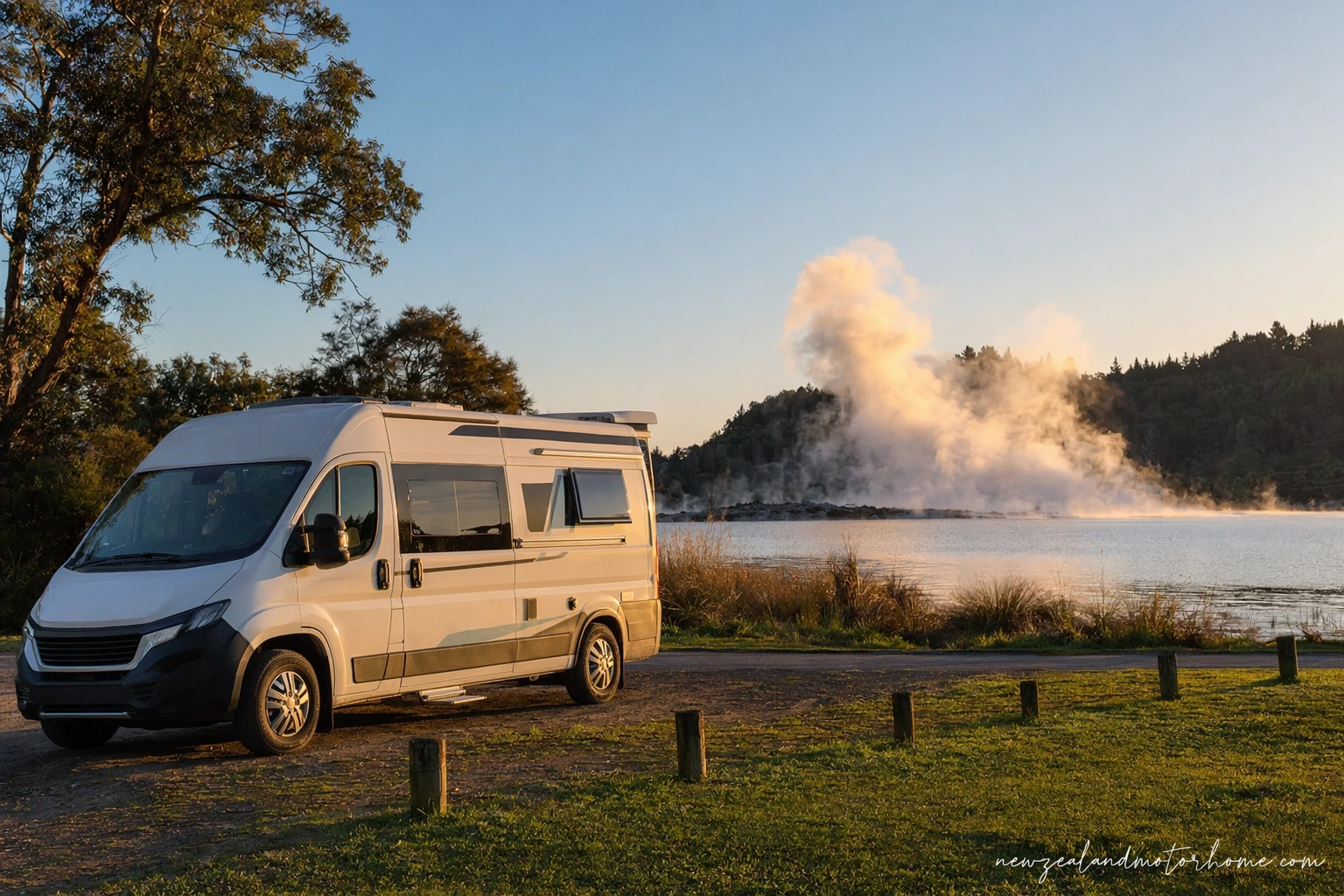
Campervan hire Rotorua: start your motorhome trip in the geothermal heart
- Best for central North Island starts
- Book first night powered if new to vans
- Certified self-contained needed for freedom camping
- Watch narrow lake roads and busy car parks
- Handovers may be depot or airport-area meet point
Starting with campervan hire Rotorua puts you close to lakes, forests, thermal valleys and the main roads to Taupō, Tauranga, Hamilton and the East Coast. It is a smaller pick-up market than Auckland or Christchurch, so the practical details matter: where the handover happens, how soon you can stock the van, and where your first safe overnight stop will be.
This page is written for self-drive travellers sleeping in their hired campervan or motorhome, not passing through in a car. We cover Rotorua depot patterns, first-night choices, powered and unpowered sites, freedom camping rules, dump stations, LPG and fresh-water planning, plus sensible route options once you are confident behind the wheel.
Where Rotorua campervan pick-ups usually work
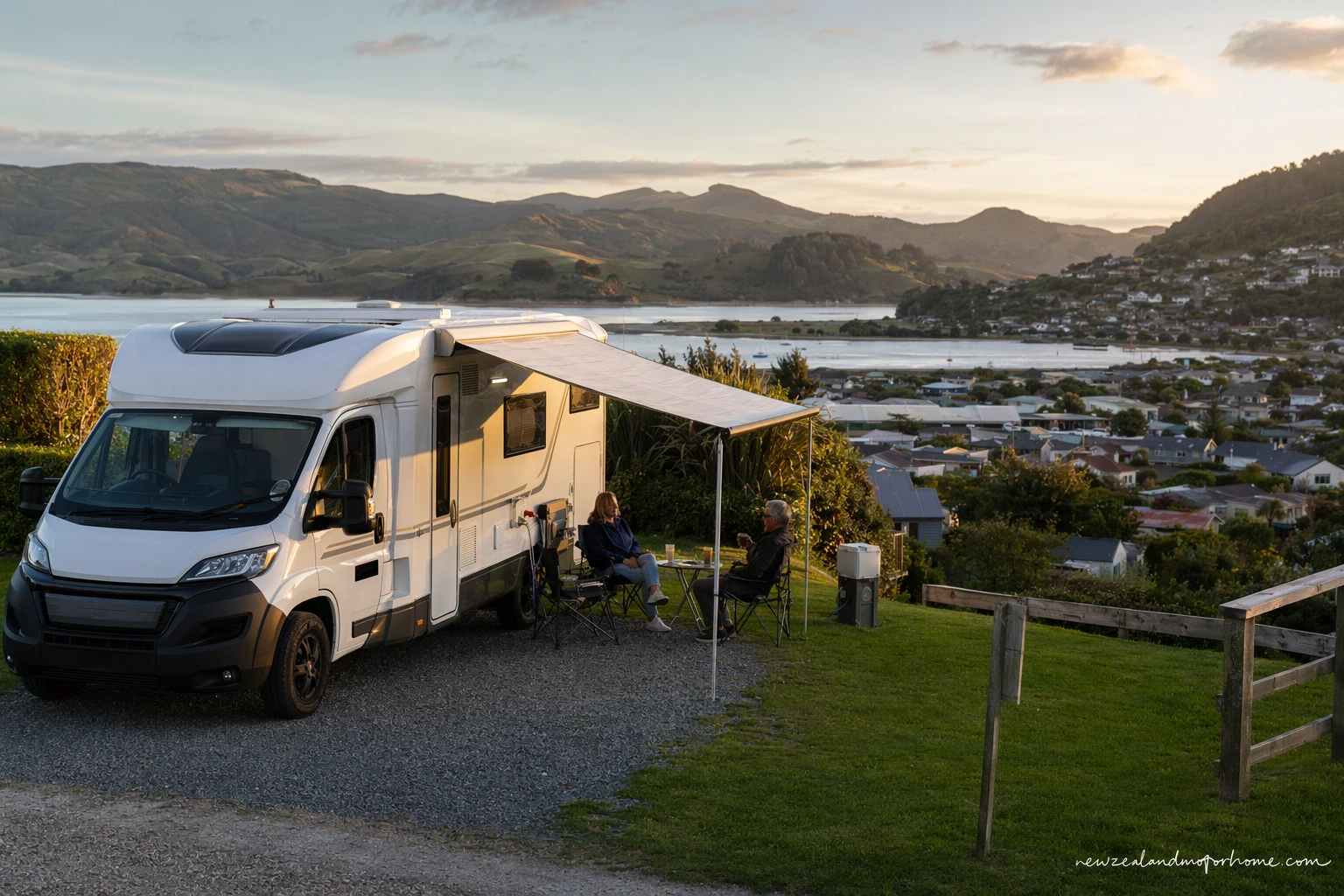
Rotorua does not have the same spread of large campervan depots as the bigger gateway cities. Rotorua campervan hire is often arranged through a local yard, an airport-area handover, or a meet point near central accommodation, depending on the operator and season. Confirm the exact address before you book onward activities, as a depot on the eastern side of town feels quite different from one near the city centre once you are driving a long vehicle.
If you are flying in, Rotorua Airport sits east of town near Te Ngae Road and the lake edge. That is convenient for heading towards Whakatāne, Tauranga via SH33, or the lakes district, but you may still want to pause before tackling narrow lake roads or busy supermarket car parks in a new van.
- Ask whether the pick-up is a staffed depot, airport handover, or accommodation transfer.
- Check vehicle height and length before entering supermarket or motel car parks.
- Allow time for the self-containment, water, LPG, power lead and dump-hose briefing.
- Photograph existing marks and test cupboards, fridge latches and the gas bottle before leaving.
Getting the van out of Rotorua without a stressful first hour
Rotorua is manageable in a campervan, but it is not a place to rush. The city has steady visitor traffic, roundabouts, steam vents, busy lakefront streets and locals who know exactly where they are going. Take the first few kilometres slowly while you get used to mirror width, braking distance and how the van sits through corners.
The main exits are straightforward once you are oriented. SH5 runs south to Taupō and north-west over the Mamaku Range, SH30 circles towards the eastern lakes, SH33 heads for Tauranga, and SH36 is another Tauranga route with hillier sections. If this is your first day in a motorhome hire Rotorua vehicle, choose the simplest road rather than the most scenic detour.
- Use wider fuel-station forecourts for your first diesel or petrol stop, not tight inner-city pumps.
- Set navigation before moving; Rotorua roundabouts arrive quickly.
- Watch for cyclists and pedestrians around the lakefront, Redwoods and central accommodation areas.
- Keep left on geothermal valley roads where shoulders can be soft or narrow.
First overnight stops: stay close, plug in, settle the van
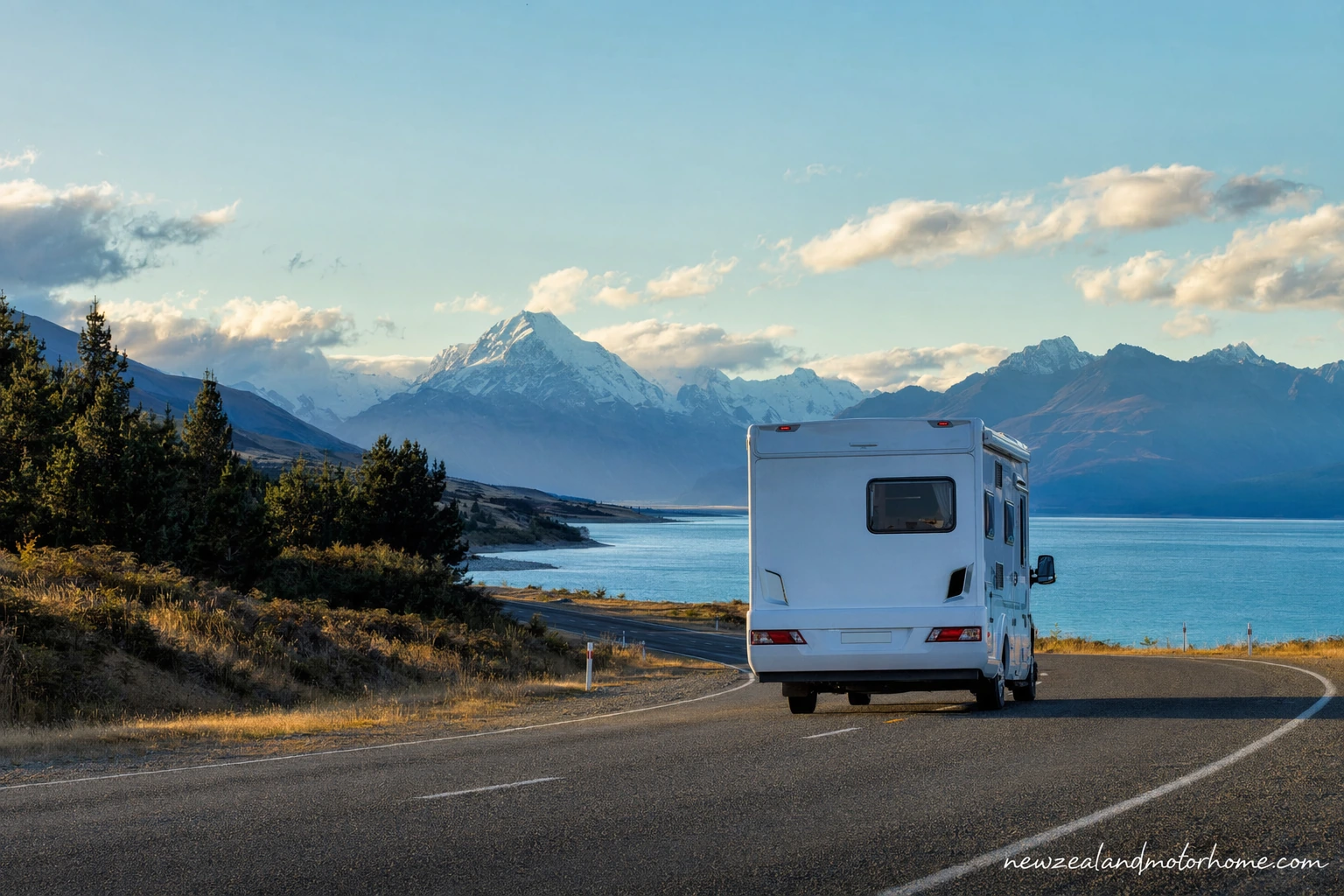
Your first night after campervan rental Rotorua is best spent nearby, even if your route eventually points to the South Island, Coromandel or East Coast. A powered site gives you time to learn the heater, fridge, mains cable, grey-water tank and toilet cassette without also navigating unfamiliar rural roads in the dark.
Good first-night areas include holiday parks around the Rotorua lakefront, Ngongotahā, the Blue Lake/Tikitapu area, Okere Falls and the road towards Lake Rotoiti. These locations keep you close to groceries, fuel, thermal attractions and forest walks while still feeling like you have left town.
- Powered holiday park site: best for charging devices, testing the house battery and using shared showers.
- Unpowered site: fine once you understand your battery, solar and fridge draw.
- Lake-area sites: book ahead in summer weekends and school holidays, especially with a larger motorhome.
- Arrival timing: aim to park up before dusk so you can level the van and connect services calmly.
Freedom camping, dump stations, water and LPG around Rotorua
Freedom camping around Rotorua is tightly managed because the lakes, reserves and geothermal areas are sensitive and busy. Do not assume that a quiet lakeside parking bay is an overnight spot. Use current council information and on-site signs, and only stay where certified self-contained campervans are allowed.
Most travellers doing campervan hire Rotorua use a mix of holiday parks and permitted freedom camping rather than relying on free sites every night. Holiday parks and some public facilities provide dump stations; potable water may be separate from dump points, so check the tap is marked for drinking before filling your fresh tank. LPG bottle swaps or fills are generally handled at larger service stations or hardware-style outlets, but access is easier when the forecourt is not crowded.
- Carry proof of self-containment and display it as required.
- Empty grey water and toilet cassettes only at approved dump stations.
- Top up fresh water before heading to smaller lake or forest stops.
- Never wash dishes or drain grey water onto the ground near lakes or geothermal areas.
Routes out of Rotorua for a self-drive motorhome holiday
Rotorua is a useful starting point because you can shape the trip without backtracking. South to Taupō is the classic thermal highway, with geothermal stops and lake views once you arrive. East towards Whakatāne and the coast gives you longer rural stretches, while north towards Tauranga connects you with the Bay of Plenty beaches and harbours.
If you are comparing motorhome hire Rotorua, campervan rental Rotorua or even searching for caravan hire Rotorua, think about the route before choosing vehicle size. A compact self-contained camper is easier at lake car parks and forest trailheads; a larger motorhome gives more living space but needs more care on narrow scenic roads and in busy holiday park lanes. If you want help matching vehicle size, first nights and route timing, you can talk to us before locking in the plan.
- Rotorua to Taupō: easy first leg, good for thermal stops and a second-night lake stay.
- Rotorua to Tauranga: useful for Bay of Plenty beaches, with hill sections depending on route.
- Rotorua to Hamilton or Auckland: plan extra time over the Mamaku/Kaimai approaches and avoid peak city arrivals.
- Rotorua to East Coast: fill fuel, water and food before longer rural runs.
Keep planning
Wellington to rotorua campervan
Read onVisiting polynesian spa rotorua by campervan
Read onVisiting agrodome rotorua by campervan
Read onTauranga to rotorua campervan
Read onRotorua to whangarei campervan
Read onRotorua to timaru campervan
Read onCommon questions
Is Rotorua a good place to pick up a campervan?
Yes, especially if your trip focuses on the central North Island, Taupō, Bay of Plenty or East Coast. The choice can be smaller than in Auckland, so confirm depot location, handover time and vehicle availability early.
Can I freedom camp near Rotorua lakes?
Only in places where overnight camping is specifically allowed, and usually only in a certified self-contained campervan. Many lakefront reserves and parking areas are restricted, so check current council signs before settling in.
Should I book a powered site for my first night?
It is a good idea. A powered site lets you charge the van, test the fridge and heating, refill water if available, and sort your gear without worrying about the house battery on night one.
Are Rotorua roads suitable for larger motorhomes?
The main state highways are suitable for motorhomes, but some lake, forest and scenic roads are narrower with limited shoulders. Check your vehicle length and height, take corners wide, and avoid tight car parks if the van is overhanging marked bays.
Where do I empty waste and refill water in Rotorua?
Use approved dump stations at holiday parks or council-listed public facilities. Potable water is not always beside the dump point, so look for a drinking-water label before filling your fresh tank.
Have a planner shape this for your dates
Send a short outline — your dates, party size, and the kind of trip you want. A planner replies with a vehicle recommendation, a paced route, and the realistic budget.