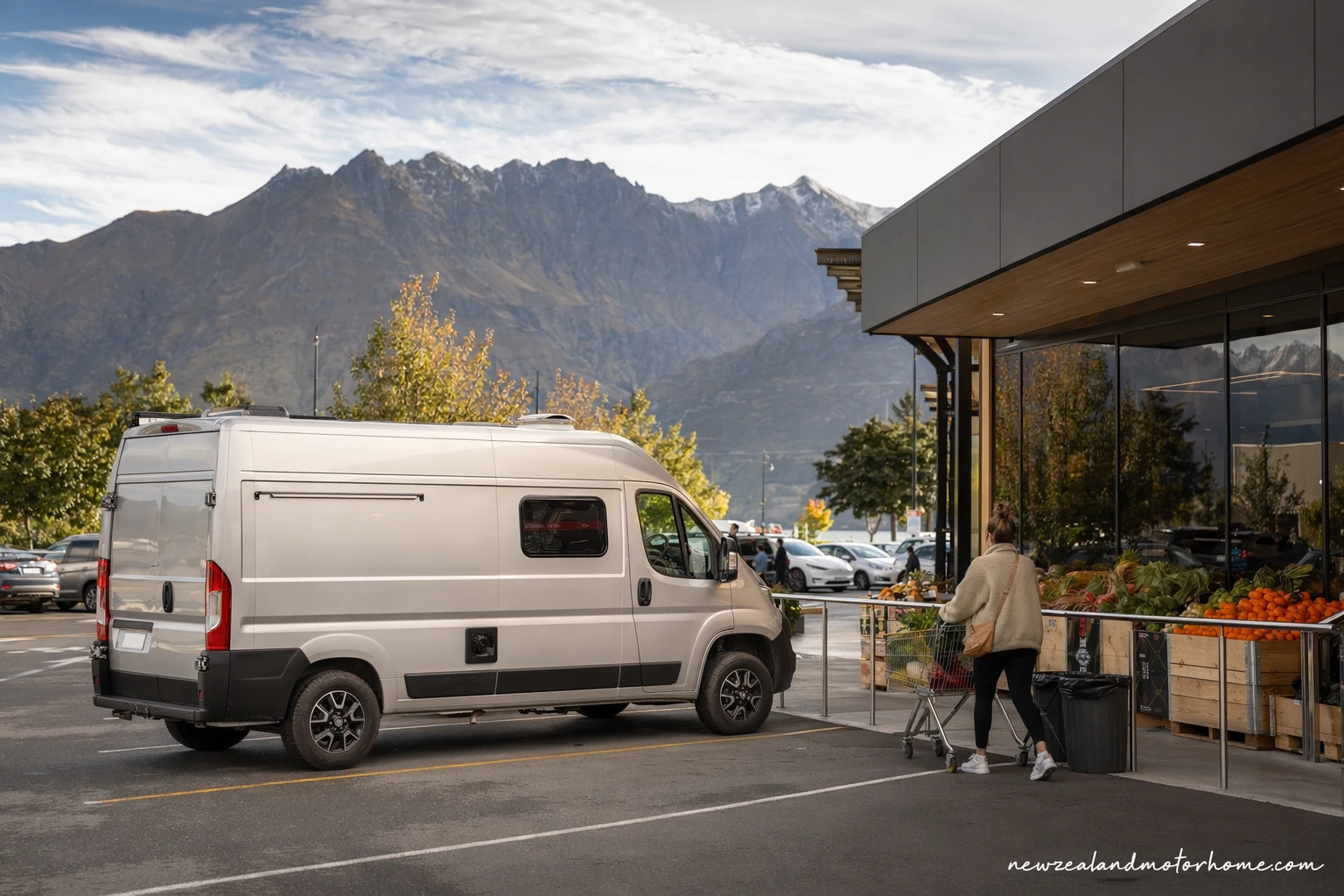
- Best reset area: Frankton
- Allow 1-2 hours for supplies
- Check height-restricted parking
- Top up before alpine roads
- Self-containment rules apply
Queenstown is one of the handiest South Island places to reset a campervan, but it is also busy, hilly and tight in the wrong car park. If you are driving a hired motorhome, the trick is to plan your stop: shop where the bays suit your van, top up before the mountain roads, and avoid trying to squeeze through the town centre at peak time.
This guide covers practical campervan supplies in Queenstown: supermarkets, LPG and fuel, water, dump stations, laundromats, and what to stock before you drive on towards Glenorchy, Wānaka, Te Anau or Aoraki/Mount Cook. If you would like your supply stops built into a wider South Island route, you can also start with our talk-to-us planning step.
Where to shop with a campervan in Queenstown
The main supermarkets Queenstown campervan travellers use are spread between the town centre, Frankton and nearby shopping areas. For most motorhomes, Frankton is usually the easier provisioning stop because the roads are wider, traffic is less compressed than central Queenstown, and you are close to fuel, outdoor gear, takeaway food and the airport road.
Central Queenstown is fine for a small van if you are already staying nearby, but larger motorhomes can find the turns, gradients and parking bays awkward. If your vehicle is over 7 metres, treat supermarket stops as a logistics stop rather than a casual wander into town.
- Best time to shop: early morning or mid-evening, especially in summer, school holidays and ski season.
- Parking approach: look for edge-of-car-park spaces where you can drive through or reverse without blocking smaller vehicles.
- Town centre note: do not assume a standard car bay will suit a campervan with bike racks or rear overhang.
- Stock check: buy heavier pantry items before heading into smaller settlements where choice can be limited.
LPG, fuel and road-ready checks before you leave town
For an lpg refill Queenstown stop, look around the larger service-station and industrial areas rather than waiting until you are already on a scenic road. Not every petrol station swaps or fills every gas bottle type, so check the bottle size and fitting in your hire van before you queue. If your camper uses LPG for cooking, heating and hot water, top up before colder alpine nights.
Petrol stations Queenstown-wide can be busy, and some forecourts are tight for long motorhomes. Enter slowly, watch roof clearance near canopies, and choose a pump line that lets you exit forward if possible. Before leaving, check diesel, AdBlue if your vehicle requires it, tyre pressure, screen wash and whether your grey-water tank is getting close to full.
- Heading to Glenorchy: fill up first; the road is beautiful but not a supply run.
- Heading over the Crown Range: secure cupboards and avoid travelling with nearly empty fuel in winter conditions.
- Heading to Te Anau or Milford Sound: reset fuel, LPG and food in Queenstown or Frankton before the longer drive.
Fresh water, dump stations and keeping tanks simple
A dump station Queenstown stop is worth doing before you settle into a holiday park or push on to a remote DOC-style campsite. Queenstown Lakes has public and holiday-park dump facilities in the wider area, but access and rules can change, so use current council signage, your camping app, or ask your campground host before relying on a point.
Only use marked potable taps for drinking-water fills. It is tempting to top up from any tap when you are rushing, but your campervan fresh tank is something you drink, cook and brush your teeth from. Keep your drinking-water hose separate from your waste gear, and rinse the cassette area carefully after emptying.
- Before dumping: check you have gloves, toilet chemicals if your system needs them, and a clear hose connection.
- Before filling: confirm the tap is signed as drinking water or potable water.
- Before freedom camping: make sure your self-containment certification is valid and your tanks have enough capacity for the full stay.
- After winter nights: check that external taps and hoses have not stiffened or frozen before forcing fittings.
Laundry, rubbish and the small resets that make the next leg easier
A laundromat Queenstown stop is easiest when paired with groceries or fuel, rather than trying to find street parking in the busiest part of town with a wet washing bag. Many holiday parks also have laundry rooms, which can be simpler if you are already paying for a powered site and want to charge devices, refill water and dry gear in one place.
Queenstown’s climate can turn quickly from hot lakeside sun to damp alpine weather, so do not rely on drying towels inside the van while you drive. Use a proper dryer when you can, empty rubbish responsibly at approved points, and keep food scraps sealed; sandflies and summer heat are not kind to a loose bin bag under the sink.
- Do wash: base layers, socks, tea towels and microfibre towels before multi-day scenic drives.
- Do dry: ski gear or rain jackets properly before packing them into overhead lockers.
- Do not dump rubbish: at roadside bins, trailheads or freedom-camping areas unless signage says it is allowed.
What to stock for the road ahead from Queenstown
What you buy in Queenstown depends on your next direction. For Glenorchy, think simple meals, water and picnic supplies because the drive is about scenery rather than shops. For Wānaka via the Crown Range, secure your fridge and cupboards well; the road climbs, turns and can be icy in winter. For Te Anau, Milford Sound or the West Coast, stock for longer gaps between full-size supermarkets.
A practical campervan shop is not just food. It is the things that keep a small rolling home calm: toilet paper suitable for your cassette, dish liquid, rubbish bags, matches or a lighter if your hob needs one, pantry clips, spare water, and easy meals for nights when the weather arrives late.
- Food: breakfast staples, pasta or rice, quick sauces, fresh produce, snacks and one no-cook meal.
- Van supplies: biodegradable wipes for surfaces, rubbish bags, toilet chemical, dish brush and cloths.
- Weather gear: warm layers, dry socks and a torch for late campsite arrivals.
- Driving comfort: water bottles in the cab, sunglasses, phone charging leads and a downloaded map.
Keep planning
Visiting skyline queenstown gondola by campervan
Read onQueenstown to wellington campervan
Read onQueenstown to tauranga campervan
Read onQueenstown to rotorua campervan
Read onQueenstown to picton campervan
Read onQueenstown to palmerston north campervan
Read onCommon questions
Is Queenstown a good place to provision a campervan?
Where should I park a motorhome for supermarket shopping in Queenstown?
Can I freedom camp in Queenstown after stocking up?
Should I fill fresh water and empty waste before driving to Glenorchy?
Do Queenstown petrol stations suit large motorhomes?
Have a planner shape this for your dates
Send a short outline — your dates, party size, and the kind of trip you want. A planner replies with a vehicle recommendation, a paced route, and the realistic budget.