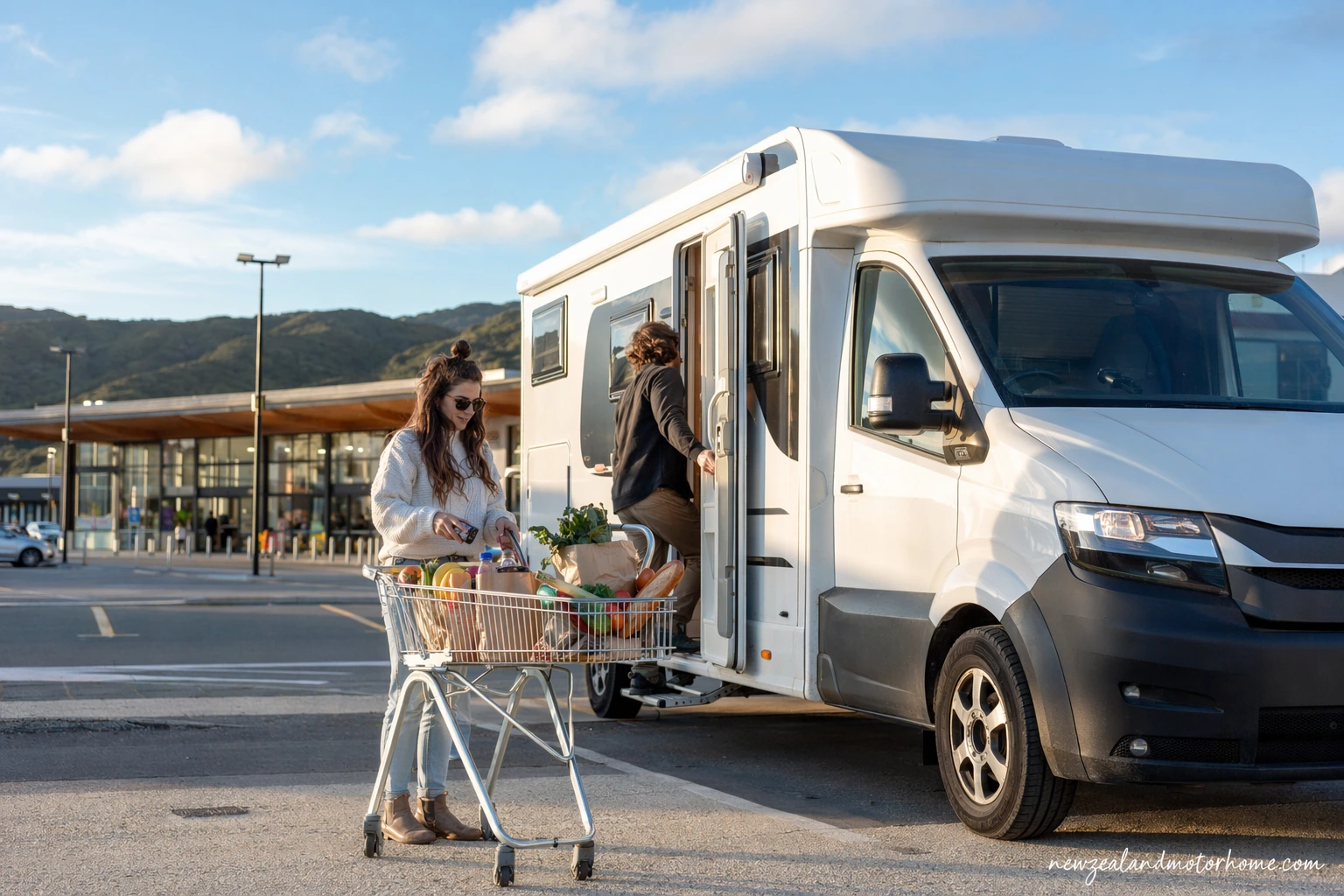
- Best stock-up: suburban open-air car parks
- Van note: avoid CBD height-restricted parking
- Useful before: ferry, Wairarapa or Kāpiti legs
- Reset needs: LPG, water, dump station, laundry
- Site type: powered helpful after wet weather
Wellington is a brilliant place to reset a campervan: big supermarkets sit close to the motorway, the ferry terminal is handy, and the harbour suburbs make a practical last stop before you aim for the Wairarapa, Kāpiti Coast or Cook Strait.
It is also a compact, windy city with tight kerbs, steep streets and plenty of height-restricted parking. This guide focuses on the everyday logistics that matter when you are sleeping in the van: groceries, LPG, fuel, water, dump stations, laundry and what to carry before the road opens out again.
Best areas to shop without squeezing the van into the CBD
For supermarkets Wellington campervan travellers can actually use, the suburbs are usually easier than the central city. Look for larger stores around Kilbirnie, Miramar, Newtown, Johnsonville, Lower Hutt, Petone and Porirua rather than trying to thread a high-roof van through tight CBD car parks.
Choose open-air car parks where you can see the entry height before committing. Park at the far edge of the bays, keep the rear overhang off footpaths, and avoid basement parking unless the height clearance is clearly above your van plus roof vents, aerials or solar fittings.
- Arriving from the ferry: stock up north of the CBD or continue to the Hutt Valley if traffic is heavy.
- Heading to the airport side: Kilbirnie and Miramar are practical for groceries before the south coast or Wairarapa.
- Heading north on SH1: Johnsonville, Porirua and Kāpiti-bound stops are usually easier for longer motorhomes.
- CBD caution: watch for bus lanes, clearways, one-way streets and short-stay loading zones.
What to buy before the next stretch of road
Wellington has plenty of food options, but once you leave the region your next easy stock-up depends on your route. The Remutaka Hill road towards the Wairarapa is winding, the Kāpiti Coast can be slow at peak times, and ferry delays can turn a simple crossing day into a long wait in the van.
Think in van days, not just meals. Buy enough to cover an extra night if the weather closes in, the Cook Strait sailing shifts, or your chosen campground is full. Keep heavy items low and secure before tackling hill roads or ferry ramps.
- Two easy dinners that do not need much water or bench space.
- Breakfast, coffee and lunch supplies for a ferry queue or early departure.
- Drinking water in the tank plus a small backup container.
- Rubbish bags, toilet chemical if your cassette needs it, paper towels and matches or a lighter.
- Warm layers and wet-weather gear, even in summer; Wellington wind has a way of finding van doors.
Fuel, LPG and gas bottle practicalities
Petrol stations Wellington wide are common on the main approaches, but not every forecourt is friendly to a long campervan. The best stops are usually on wider suburban roads or motorway edges where you can swing in, fill, and leave without reversing across busy traffic.
For an LPG refill Wellington is generally easier outside the tight central streets. Some places swap bottles rather than refill them, and not all staff can fill every bottle type, so check before you park up and unpack the gas locker. If your hire van uses a fixed LPG tank, confirm with your rental operator what fittings and filling points you are allowed to use.
- Fill fuel before the ferry or before heading over the Remutaka Hill, where fuel options thin out.
- Check whether your cooker/heater uses a swap bottle, refillable bottle or fixed tank.
- Keep gas turned off while driving and before boarding the ferry, following your operator and ferry crew instructions.
- Avoid small inner-city forecourts if your van has a long rear overhang or a high roof.
Water fills, waste water and dump stations
Do your fresh-water and waste-water reset before leaving the Wellington urban area, especially if you are aiming for a freedom camping spot with no facilities. A dump station Wellington listing should always be checked on the day through council, camping app or rental-operator information, because access and maintenance can change.
Some public dump points have potable water nearby; some do not. Treat drinking-water taps and rinse hoses as separate systems, and never use a dump-station rinse hose to fill your fresh tank. If in doubt, ask at your campground or use a clearly marked potable tap.
- Empty the grey tank before long climbs; it reduces weight and sloshing.
- Empty the toilet cassette well before it is full, particularly before ferry days.
- Carry a dedicated fresh-water hose and keep it separate from waste gear.
- Use gloves and wash hands afterwards; Wellington wind and dump-station spray are not a pleasant mix.
If you are unsure how to sequence a Wellington stock-up with a ferry, campground and dump stop, we can sanity-check your route through a plan-your-trip chat.
Laundry, showers and overnight reset options
A laundromat Wellington stop is worth planning if you have come off a wet west-coast run or are about to spend several nights in smaller freedom camping areas. Suburban laundromats are usually easier than central ones because you can find street parking nearby and move the van if a clearway starts.
For a full reset, use a holiday park or campground with powered sites, laundry, showers, fresh water and waste facilities. Powered sites are useful if you need to recharge house batteries, run a heater safely, dry gear or top up devices before a ferry crossing. Unpowered sites are fine if your batteries, water and toilet capacity are comfortable for the next leg.
- Dry towels and bedding properly before shutting the van up for a windy night.
- Use campground laundries when you need secure parking close to the machines.
- Book ahead around weekends, school holidays and big event periods.
- Check your self-containment certification before relying on freedom camping near the region.
Road notes after you leave Wellington
Wellington routes change character quickly. Northbound SH1 is a motorway-style run at first, but traffic can bunch through peak periods and holiday weekends. SH2 towards the Hutt Valley and Wairarapa is straightforward until the Remutaka Hill, where the road becomes narrow, twisty and exposed in wind.
If you are in a larger motorhome, give yourself extra time, pull over only where it is safe and legal, and let faster vehicles pass when a proper slow-vehicle bay appears. Secure drawers, fridge contents and loose groceries before you climb out of the harbour basin.
- To Kāpiti and beyond: stock up before traffic builds and keep snacks handy for slow patches.
- To Wairarapa: avoid rushing the Remutaka Hill and check weather if strong wind is forecast.
- To the South Island: arrive with fuel, water and food sorted; ferry queues are not the place to discover an empty gas bottle.
Keep planning
Wellington to whangarei campervan
Read onWellington to tauranga campervan
Read onWellington to rotorua campervan
Read onWellington to picton campervan
Read onWellington to palmerston north campervan
Read onWellington to new plymouth campervan
Read onCommon questions
Can I park a high-roof campervan at Wellington supermarkets?
Where should I look for an LPG refill in Wellington?
Is there a dump station in Wellington for campervans?
Should I fill water before taking the Cook Strait ferry?
Are Wellington petrol stations easy with a long motorhome?
Do I need a powered site in Wellington before heading on?
Have a planner shape this for your dates
Send a short outline — your dates, party size, and the kind of trip you want. A planner replies with a vehicle recommendation, a paced route, and the realistic budget.