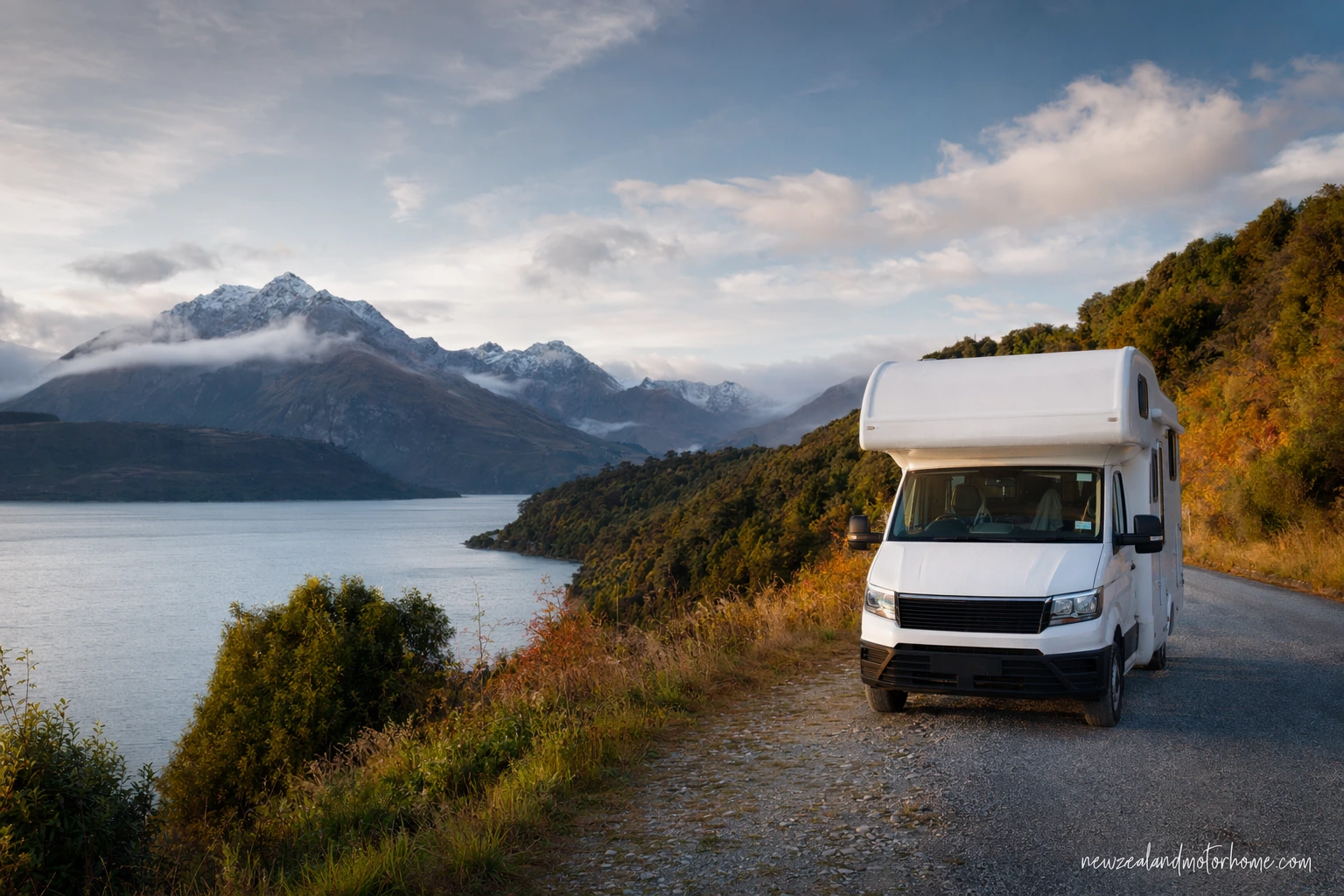
- Season: autumn shoulder season
- Site mix: powered plus unpowered nights
- Van note: watch height under trees
- Book ahead: Easter and ANZAC
- Road note: frosts possible inland
April is one of the more satisfying months to tour Aotearoa by van: autumn colour in the south, softer light on the coast, and fewer long queues at dump stations and holiday park receptions once the holiday rush has passed. It is also a month of contrasts, so a campervan New Zealand in April trip needs a little more thought than a mid-summer loop.
This guide is written for self-drive travellers sleeping in their hired campervan or motorhome. You will find practical notes on April New Zealand campervan weather, where the van nights work well, how powered and unpowered sites feel in autumn, what to pack, and when to book ahead around school holidays, Easter and ANZAC Day.
April weather and daylight from a van
April sits properly in autumn. Northland, Auckland, the Bay of Plenty and Hawke's Bay can still feel mild during the day, while Central Otago, the Mackenzie Country and inland Canterbury may deliver crisp mornings, fog in valley floors and the first real frosts. The West Coast can be beautiful between fronts, but rain can arrive hard and linger.
For campervan travellers, the big change is the evening routine. You will be cooking, filling water and setting the bed earlier than in summer, especially if you are using unpowered DOC-style sites or basic council reserves without much lighting.
- Expect layers: T-shirt weather at lunch can become puffer-jacket weather at the campsite.
- Watch condensation: Vent the van when cooking and sleeping, even if it feels chilly.
- Use powered sites strategically: A powered night every few days helps with heating, device charging and drying towels.
- Check forecasts locally: A calm east-coast day can coincide with heavy rain over an alpine pass.
Where April works especially well
The best campervan April New Zealand itineraries usually avoid trying to see both islands at racing speed. Pick a region with varied overnight options, reliable supply stops and a mix of wet-weather and fine-weather days. Autumn rewards slower driving: vineyards are turning gold, lakes are calmer, and beaches often have room to park the van without the summer squeeze.
Good April choices include Northland for warmer coastal nights, Hawke's Bay for settled east-coast weather, Nelson Tasman for beaches and national park edges, and Central Otago or the Mackenzie Country for big autumn colour. If you are crossing the Southern Alps, build in a spare day rather than locking yourself into a long drive over a pass during bad weather.
- Northland: Choose holiday parks or certified sites near towns if you want easy fresh-water fills and dump stations between beach stops.
- Nelson Tasman: Handy for shorter driving days, but book if your van needs a powered site near popular walking access points.
- Central Otago: Excellent in April, though mornings can be cold; a van heater and charged house battery matter.
- West Coast: Dramatic and rewarding, but keep wet gear separate and do not rely on drying laundry at basic sites.
Campsites, freedom camping and facilities in autumn
April is shoulder season, so you often get a calmer arrival at holiday parks and more choice of sites than in January. That said, the school holiday weeks, Easter and ANZAC long weekend can still fill powered sites in popular places. If your campervan is long, tall or has a rear bike rack, mention that when booking so you are not squeezed into a short bay under low branches.
Freedom camping rules do not loosen because it is quieter. You still need to follow local bylaws, stay only where overnight parking is allowed, and use a certified self-contained vehicle where required. Do not assume a beach car park, lakefront reserve or trailhead is an overnight stop just because it is empty at dusk.
- Dump stations: Empty before long rural stretches, especially in the Catlins, East Cape, the West Coast and inland South Island.
- Fresh water: Fill whenever you have a reliable tap; some basic sites have no potable water.
- LPG: Top up before heading into alpine or remote areas where cold evenings increase cooking and heating use.
- Powered versus unpowered: Mix them. Unpowered nights are lovely in quiet autumn spots, but powered nights keep the van comfortable and batteries healthy.
Road conditions and driving notes for April
April roads are usually more relaxed than peak summer routes, but they are not automatically easier. Wet leaves, low sun, fog and early frost can make shaded corners slick, particularly on inland South Island roads and high-country approaches. In a motorhome, allow more braking distance than you would in a car and take extra care after rain on narrow rural roads.
Vehicle height and length matter in April because you may be hunting for sheltered overnight spots or parking under trees in older holiday parks. Check clearance signs, avoid soft grass if the ground is wet, and reverse slowly with a spotter if branches are close to the roof vents, solar panels or bike rack.
- Alpine passes: Check road updates before Arthur's Pass, Lewis Pass, Lindis Pass, the Crown Range and Milford Road.
- Gravel roads: Ask your hire operator what is permitted; some scenic side roads are unsuitable or excluded.
- One-lane bridges: Slow right down; a heavy van takes longer to stop and restart.
- Parking: Use marked bays in towns and avoid blocking boat ramps, beach access, farm gates or trailhead turning circles.
What to pack and how to set up the van
Pack for two seasons in one day. You still want sunscreen, insect repellent and swimwear for warm northern afternoons, but your van will be more comfortable if you also have thermals, a warm hat, quick-dry socks and a waterproof shell. A head torch is especially useful for late arrivals at unpowered sites or walking to facilities after dark.
Inside the campervan, autumn comfort comes down to small habits. Crack a roof vent when cooking, wipe window moisture in the morning, keep bedding away from damp walls, and store wet jackets in the bathroom or cab rather than over the bed. If your van has a diesel or LPG heater, learn how it works before your first cold campsite night.
- Bring easy footwear: Campground grass can be wet by breakfast.
- Use levelling blocks: Rain runs better off the roof and sleeping is easier on older sites.
- Carry a refillable water bottle: Top it up when you fill the van tank.
- Keep rubbish contained: Some remote overnight stops have no bins, so plan to carry waste out.
Booking ahead without over-planning
April is a good month for flexible touring, but not for assuming every night will sort itself out. Book key nights where options are limited, such as small lake towns, national park gateways, ferry-adjacent stopovers and places with only a handful of powered sites. Around Easter, school holidays and ANZAC Day, book well ahead if you need power, laundry or a dump station on site.
A practical rhythm is to lock in the first and last night, any ferry or major crossing days, and the busiest holiday weekend nights, then leave the middle looser. If you want help shaping a route that fits your van size, driving pace and campsite style, you can talk to us before you commit to the whole loop.
- Book powered sites first: They are the ones that disappear fastest in cold or wet spells.
- Have a fallback stop: Keep a second legal overnight option in mind before driving into a remote area late.
- Arrive before dark: It is much easier to read signs, find the dump point and park level.
- Check minimum stays: Holiday weekends can affect how flexible a campsite booking is.
Keep planning
Campervan in winter new zealand
Read onCampervan new zealand in september
Read onCampervan new zealand in october
Read onCampervan new zealand in november
Read onCampervan new zealand in may
Read onCampervan new zealand in march
Read onCommon questions
Is April a good month to campervan around New Zealand?
Yes, April can be excellent for a campervan trip if you plan for cooler nights and mixed weather. Roads and campsites are generally quieter than summer, but holiday periods still need advance booking.
Do I need powered campsites in April?
You do not need power every night, especially in a well-equipped certified self-contained campervan. However, powered sites are useful every few days for heating, charging, drying gear and giving the house battery an easier time.
Can I freedom camp in April?
Only where local rules allow it, and often only in a certified self-contained vehicle. Always check signs on arrival, avoid day-use-only car parks, and leave enough daylight to move on if overnight parking is not permitted.
Which island is better for an April campervan trip?
Both work well. The North Island is generally milder, while the South Island has stronger autumn colour and colder nights; choose based on your driving time rather than trying to rush both.
Will I need snow chains in April?
Most April trips will not need chains, but alpine roads can still get early snow or ice. Check conditions before passes such as the Crown Range, Lindis Pass, Arthur's Pass and Milford Road, and follow your hire operator's rules.
How far ahead should I book campsites for April?
Book early for Easter, school holidays, ANZAC weekend, ferry towns and national park gateways. Outside those pinch points, you can often keep a few nights flexible, especially if you do not need a powered site every night.
Have a planner shape this for your dates
Send a short outline — your dates, party size, and the kind of trip you want. A planner replies with a vehicle recommendation, a paced route, and the realistic budget.