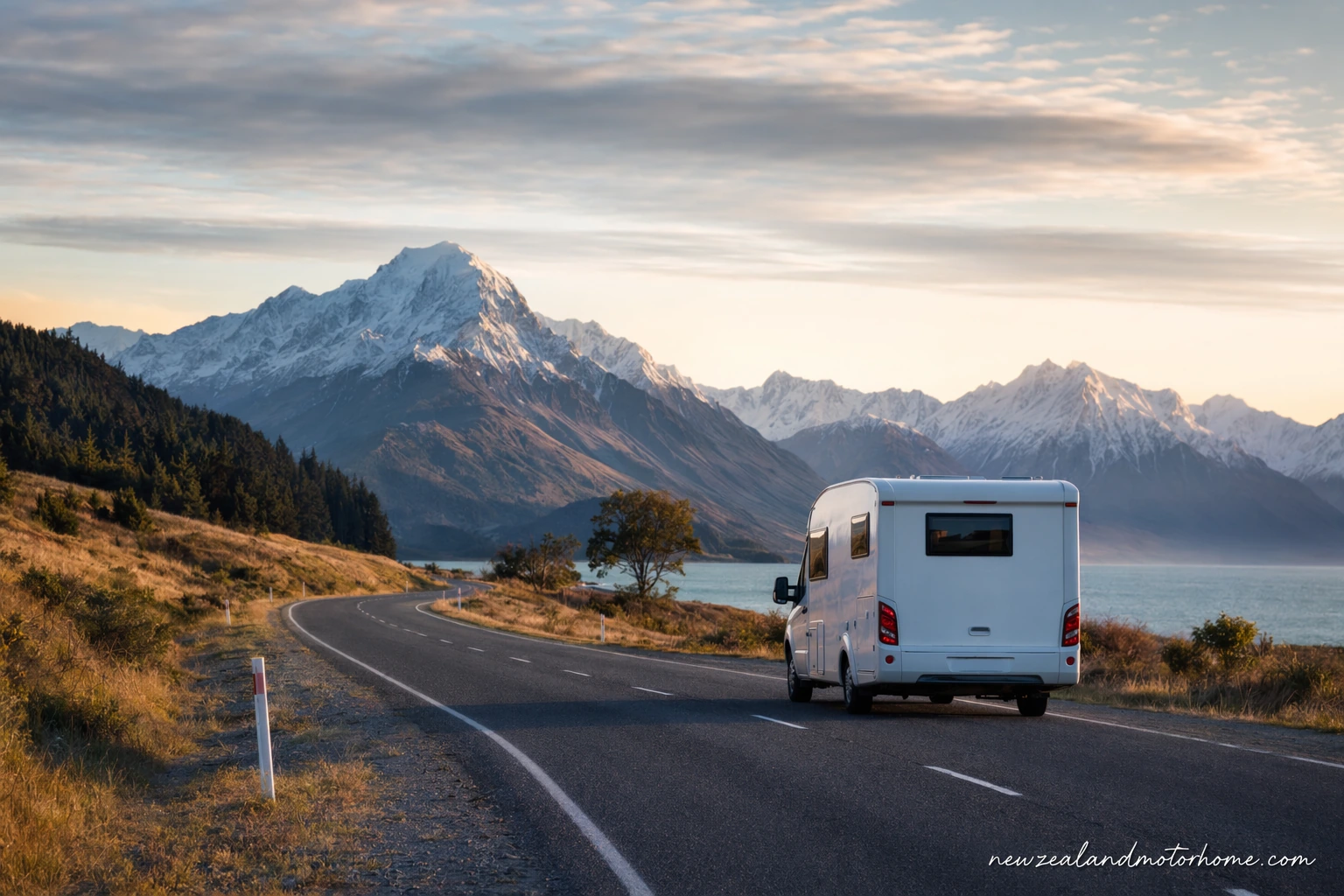
- Season: late autumn
- Best style: slower touring
- Powered sites: useful often
- Watch: frost and short daylight
- Freedom camp: certified only where allowed
May is the hinge between golden autumn and early winter in Aotearoa. For a self-drive campervan trip, that means quieter roads, softer light, fewer booked-out holiday parks, and the first real need to think about warmth, battery use, condensation and daylight hours.
This guide is written for travellers living in the van as they go: where powered sites make sense, how may New Zealand campervan weather affects route choices, what to pack, and which regions are especially good when the crowds have thinned. If you are looking for the best campervan May New Zealand plan, start with comfort overnight and flexibility by day.
May weather from the driver’s seat
May is autumn, but it behaves differently from Cape Reinga to Te Anau. Northland, Auckland and the Bay of Plenty can still feel mild in the middle of the day, while inland Canterbury, Central Otago and the Mackenzie Basin can wake to frost. The West Coast is lush and dramatic, but you should expect rain windows and keep wet-weather gear close to the sliding door.
For campervan travellers, the real change is overnight. You will use more power for lights, charging, diesel or gas heating if fitted, and hot drinks. If your van is older or you are staying off-grid, plan powered sites every few nights so you can recharge house batteries, dry towels and run a fan heater if the campground permits it.
- Daylight: Shorter days mean less time for long scenic detours after 4 pm, especially on winding roads.
- Cold starts: Inland frosts can make early departures slow; let the windscreen clear properly before driving.
- Condensation: Crack a vent where safe, use campground drying rooms when available, and keep bedding away from damp windows.
- Alpine weather: Check conditions before Lewis Pass, Arthur’s Pass, Lindis Pass, Crown Range Road and the Milford Road.
Where May works especially well in a campervan
The best May route is not always the biggest loop. With cooler mornings and shorter days, it is often better to drive less and stay two nights in useful bases where you can plug in, dump waste, refill fresh water and take day trips without packing up every morning.
Northland is a good choice if you want milder nights, coastal walks and less chance of ice on the roads. The Coromandel and Bay of Plenty suit a slower beach-and-bush trip, though wet spells can make unsealed side roads muddy. In the South Island, Central Otago and the Mackenzie Country can be beautiful in late autumn, with clear skies and sharp mornings, but you will want a warm van and a plan for powered nights.
- Warmest feel: Northland, Auckland region, Bay of Islands, Bay of Plenty.
- Autumn colour: Arrowtown, Wānaka, Cromwell, Alexandra and parts of inland Canterbury.
- Big scenery: Mackenzie Basin, Aoraki/Mount Cook, West Coast glaciers and Fiordland, with weather flexibility.
- Easy shoulder-season touring: Nelson Tasman and Marlborough, where holiday parks and dump stations are well spaced.
Road, parking and overnight conditions in May
May roads are generally open and calmer than peak summer, but wet leaves, shaded corners and early ice can catch out a heavy campervan. Give yourself more braking room than you would in a car, especially on descents into valleys or on narrow coastal roads. If your vehicle is tall, keep an eye on low branches in older holiday park sites after autumn rain and wind.
Freedom camping can be pleasant in May because popular areas are less crowded, but the rules do not relax with the season. You still need to be in a certified self-contained vehicle where required, obey local signs, and avoid overnighting in day-use car parks unless it is clearly permitted. A quieter car park is not the same thing as a legal overnight stop.
- Powered sites: Worth booking for cold inland areas, longer stays, and nights when you need to dry gear.
- Unpowered sites: Fine for mild regions if your battery, fridge and heating setup can handle cool nights.
- Dump stations: Do not leave it until the tank is full; some rural sites have fewer services or shorter office hours in shoulder season.
- LPG and water: Refill before remote drives such as the West Coast, Mackenzie Basin or approaches to Fiordland.
What’s on, and what to book ahead
May is quieter than summer, but it is not empty. Autumn colour weekends around Central Otago can still fill convenient powered sites, and some towns get busy around regional food, wine, cycling or heritage events. Mother’s Day weekends can also bring more domestic travel than you might expect.
The upside is that you often have more choice of pitches, especially midweek. If you are travelling in a larger motorhome, book ahead where you need a long site, easy turning space, or a powered pitch close to amenities. Smaller campervans can be more flexible, but should still check whether seasonal campgrounds are open before arriving late in the day.
If you would rather not guess which nights need power and which routes need weather back-ups, you can use the talk-to-us step and we will help shape a May itinerary around your van size, comfort level and must-see places.
Packing for a May motorhome trip
Pack for mixed seasons inside one day. A sunny coastal lunch stop can feel like late summer, then a frosty lakeside morning can have you boiling the kettle in a beanie. In a campervan, bulky damp clothing becomes annoying quickly, so favour layers that dry fast and store neatly.
Think beyond clothes. May touring is when small van habits matter: keeping torch batteries charged, having slippers or warm socks for cold floors, and carrying a spare towel so one can dry while the other is in use. If your hire van uses LPG for cooking, hot water or heating, ask at handover how to check levels and where the bottle is safely accessed.
- Warm sleeping layers, even if the van has heating.
- Waterproof jacket and shoes that can handle wet campground grass.
- Head torch for dump stations, late arrivals and walking to amenities after dark.
- Microfibre towels and a small laundry bag for damp gear.
- Phone mount, offline maps and charging cables for cab and house power points.
A simple May route rhythm
A good campervan new zealand in may rhythm is two or three hours of driving, a proper daylight stop, then an early settle into your overnight site. This gives you time to level the van, connect power if using it, cook before it gets cold, and sort water or waste without rushing around in the dark.
Try pairing freedom camping or DOC-style basic sites with regular full-service holiday parks. For example, you might spend one scenic unpowered night near a lake or coast, then follow it with a powered pitch where you can use showers, laundry, dump station facilities and fresh-water taps. That balance keeps the trip relaxed rather than feeling like constant van maintenance.
Keep planning
Campervan in winter new zealand
Read onCampervan new zealand in september
Read onCampervan new zealand in october
Read onCampervan new zealand in november
Read onCampervan new zealand in march
Read onCampervan new zealand in june
Read onCommon questions
Is May a good month for a New Zealand campervan trip?
Yes, May can be excellent if you are comfortable with cooler nights and shorter days. You get quieter campsites, autumn scenery and more flexible booking than summer, but you need to plan for warmth, rain and occasional frost inland.
Do I need powered sites in May?
Not every night, but powered sites are very useful in May. They help with heating, charging, drying clothes and managing condensation, especially in the South Island or anywhere inland.
Can I freedom camp in May in New Zealand?
You can freedom camp only where local rules allow it, and many places require a certified self-contained campervan or motorhome. Always check signs on arrival, use approved apps or council information, and leave early if an area is day-use only.
Will alpine roads be safe for a motorhome in May?
Most main roads are usually manageable, but May can bring frost, heavy rain and early snow on higher routes. Check road conditions before driving alpine passes, avoid rushing late in the day, and do not take a large van onto roads your hire agreement excludes.
Which island is better for campervanning in May?
The North Island is generally milder, so it suits travellers wanting easier temperatures and coastal touring. The South Island is colder but can be spectacular for autumn colour, clear skies and mountain scenery if you build in weather flexibility.
Have a planner shape this for your dates
Send a short outline — your dates, party size, and the kind of trip you want. A planner replies with a vehicle recommendation, a paced route, and the realistic budget.