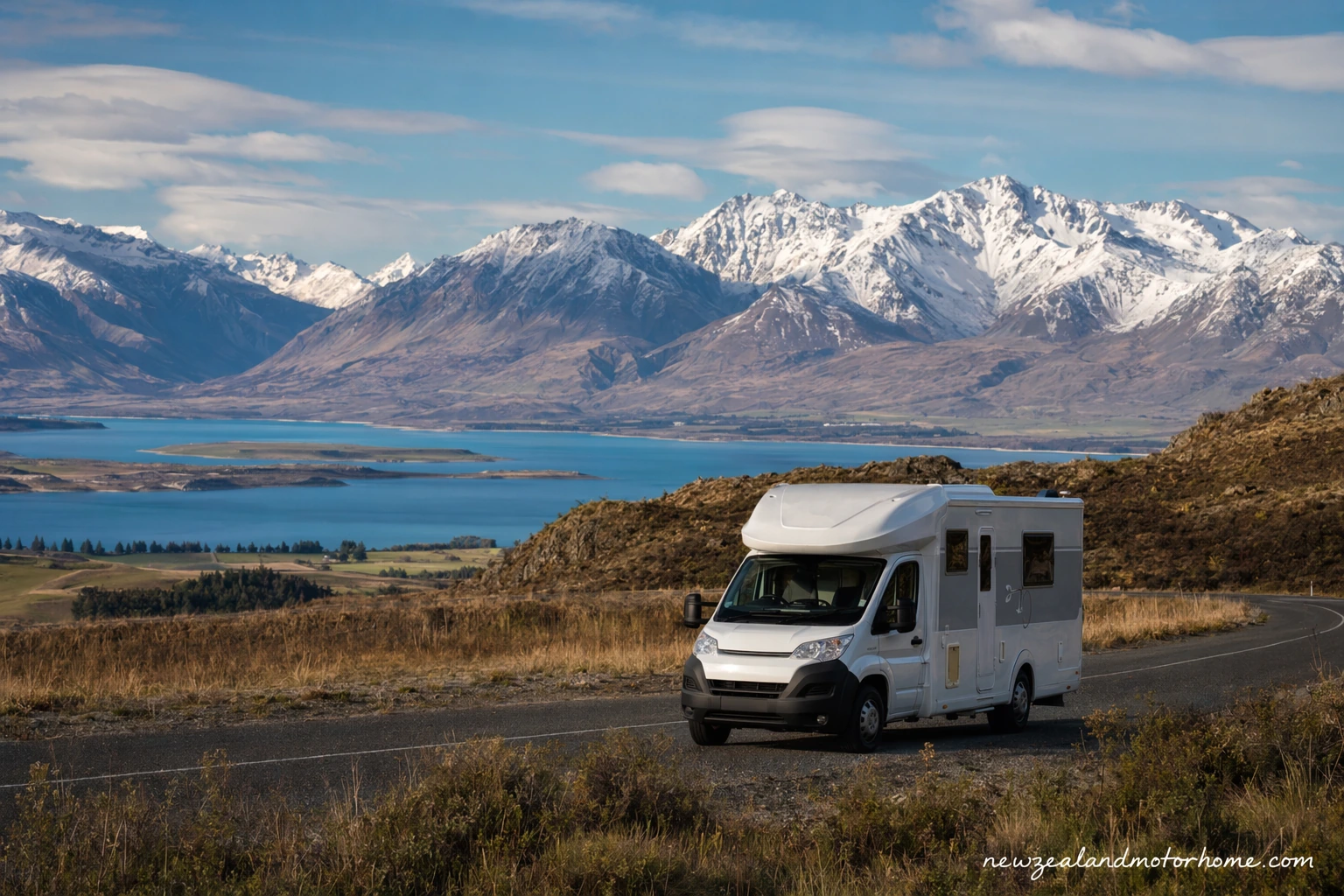
- Season: late spring
- Best for: flexible touring before peak summer
- Site mix: powered, unpowered and legal freedom camping
- Van note: book by correct vehicle length
- Pack for: sun, rain, wind and cool nights
November is one of the more useful months for a self-drive campervan trip in New Zealand: late enough for longer daylight and greener landscapes, but usually before the full summer crush hits the popular holiday parks. You still need to pack for changeable spring weather, especially if you are taking the van through alpine passes or parking overnight near the coast.
This guide is written for travellers living out of their hired campervan or motorhome — not just passing through in a car. We cover November New Zealand campervan weather, where the month tends to work well, how campsites and freedom camping areas feel before peak season, and the practical things that make a trip easier: dump stations, fresh-water fills, LPG, road conditions and booking ahead.
What November weather means when your van is your bedroom
November is late spring, so expect a bit of everything. Northland, Auckland, Coromandel and Bay of Plenty can feel mild and settled, with warm afternoons and cooler nights. The lower South Island and alpine areas can still throw cold snaps at you, and strong westerlies can make exposed lakeside or coastal camps feel less relaxing than they look on a map.
For campervan travellers, the main point is overnight comfort. If your hire van has a heater, check how it runs before you leave the depot — diesel, gas or mains power all affect where you can comfortably stay. A powered site is worth considering after a wet driving day so you can run heating, charge devices and dry gear without leaning too hard on the house battery.
- North Island: generally milder, but rain can still make grass freedom camping areas soft or closed.
- South Island: bright days are possible, but bring warm layers for Tekapo, Queenstown, Fiordland and the West Coast.
- Coastal sites: check wind direction before choosing an exposed beachfront park-up.
- Alpine roads: watch forecasts for Arthur’s Pass, Lewis Pass, Lindis Pass and the Milford Road.
Where November works especially well by campervan
The best campervan November New Zealand routes are often the ones that use spring daylight without depending on perfect beach weather. Nelson Tasman is a strong choice, with good holiday park coverage around Motueka, Kaiteriteri and Nelson, plus day-parking options for walks and beaches. Marlborough also suits campervans in November, especially if you want shorter driving days and sheltered overnight stops.
In the North Island, Hawke’s Bay, Taranaki and the Coromandel can be rewarding before the school-holiday rush. Around Rotorua and Taupō, November is handy because there are plenty of campgrounds, dump stations and supermarket stops, so you are not stretching the van’s water tank or toilet cassette too far between services.
If you are heading south, Central Otago and the Mackenzie Country are beautiful in late spring, but do not treat them like summer yet. Choose overnight stops where you can plug in if the forecast drops, and avoid arriving late at small lakeside camping areas where turning space may be tight for longer motorhomes.
Campsites, freedom camping and booking before peak season
November is not as squeezed as January, but it is not empty either. Weekends, long fine spells, event dates and popular places like Queenstown, Wānaka, Rotorua, Abel Tasman gateways and the Coromandel can still book up. If you need a powered site for a larger motorhome, it is sensible to book key nights rather than assuming you can roll in at dusk.
Freedom camping rules are local, specific and regularly enforced. Only use places that allow your vehicle type, and make sure your campervan meets current self-containment requirements. Many councils distinguish between certified self-contained vehicles and non-self-contained vans, and some areas have maximum-night limits or marked bays only.
- Powered sites: useful after wet days, cold nights or when you need a full battery reset.
- Unpowered sites: fine in settled weather if your battery, water and toilet capacity are in good shape.
- Freedom camping: check local signage on arrival, not just an app listing saved weeks earlier.
- Holiday parks: best for laundry, hot showers, dump stations, fresh water and easy LPG top-ups nearby.
If you want help balancing freedom camping nights with serviced stays, our talk-to-us planning step is a simple way to sanity-check the route before you commit to dates.
Road and driving conditions in late spring
November driving is usually easier than winter, but New Zealand roads still ask more of a motorhome than the map suggests. Many scenic routes are narrow, winding and slow, especially around the Coromandel, Banks Peninsula, the West Coast, and the approaches to Milford Sound. Build your day around driving time, not just kilometres.
Spring roadworks are common as crews repair winter damage before the main summer traffic arrives. Allow extra time for stop-go controls, gravel patches and temporary speed limits. If your campervan is long or high, be cautious with small gravel detours, overhanging trees at rural picnic areas, and tight supermarket car parks in older town centres.
- Milford Road: check conditions before leaving Te Anau and fill fuel, water and food there.
- West Coast: plan dump and fresh-water stops around larger towns rather than waiting until the tank is full.
- Coromandel: take corners slowly and avoid parking where the van blocks narrow coastal shoulders.
- Urban parking: use edge-of-town supermarket or public parking areas when height barriers make central parks awkward.
What to pack and check for a November campervan trip
Pack for spring rather than for a brochure version of summer. You may be eating outside in a T-shirt one evening and closing every vent against a southerly the next. A compact drying setup is useful: quick-dry towels, a small clothesline, pegs and a plan to use holiday park laundry every few days if the weather turns damp.
Before leaving the depot, do a practical walk-through of the van. Know where the fresh-water inlet is, how the grey-water tap works, how to empty the toilet cassette, how to switch LPG bottles, and how to read the battery monitor. November’s longer daylight can encourage bigger driving days, but the van still needs regular servicing stops.
- Warm layer, rain jacket and footwear that can handle wet campground grass.
- Head torch for late dump-station visits or finding amenities after dark.
- Reusable water containers if your van’s fresh tank is small.
- Insect repellent for sandflies on the West Coast, Fiordland and lakeside stops.
- A soft bag rather than hard suitcases, so storage inside the campervan stays workable.
November events, busy pockets and route timing
November brings local markets, garden festivals, food events and early-summer outdoor weekends, but the campervan issue is not usually the event itself — it is where you sleep afterwards. A small town with one campground can feel full if a regional event lines up with a sunny weekend. Book overnight stops near event towns early, or stay one town out and drive in for the day.
Ferry crossings between Wellington and Picton also deserve attention if you are linking both islands. November sailings are not usually as pressured as the Christmas period, but campervan spaces can still be limited because vehicle length matters. Give your correct van length when booking, and leave enough time to reach the terminal without rushing through city traffic.
A good November rhythm is to lock in the nights that matter — first night after pick-up, ferry-adjacent nights, Queenstown or Abel Tasman gateways, and any weekend in a popular coastal area — then leave quieter inland nights more flexible if your travel style allows.
Keep planning
Campervan in winter new zealand
Read onCampervan new zealand in september
Read onCampervan new zealand in october
Read onCampervan new zealand in may
Read onCampervan new zealand in march
Read onCampervan new zealand in june
Read onCommon questions
Is November a good month to hire a campervan in New Zealand?
Yes. November gives you longer days, spring landscapes and generally lighter campsite pressure than peak summer. You still need a flexible weather mindset, especially in alpine and southern areas.
Do I need to book campsites in November?
Book powered sites in popular places, on weekends, and around ferry dates or events. In quieter regions you may have more flexibility, but arriving late without a plan is risky in a large motorhome.
Can I freedom camp in New Zealand in November?
You can only freedom camp where local rules allow it and where your vehicle meets the required self-containment standard. Always check signs on site, use marked bays if provided, and leave before any stated time limit.
What is the weather like for campervanning New Zealand in November?
November New Zealand campervan weather is changeable: mild in many northern and coastal areas, cooler in the mountains and deep south, and sometimes windy. Pack for rain and cold nights as well as sunny afternoons.
Should I choose powered or unpowered sites in November?
A mix works well. Use unpowered sites when the forecast is settled and your battery, water and toilet capacity are comfortable; choose powered sites after cold, wet or heavy driving days so you can recharge and dry out.
Are South Island roads safe for motorhomes in November?
Usually, but conditions can still change quickly on alpine passes and remote roads. Check the forecast, allow time for spring roadworks, and drive to the size of your van rather than the posted speed limit.
Have a planner shape this for your dates
Send a short outline — your dates, party size, and the kind of trip you want. A planner replies with a vehicle recommendation, a paced route, and the realistic budget.