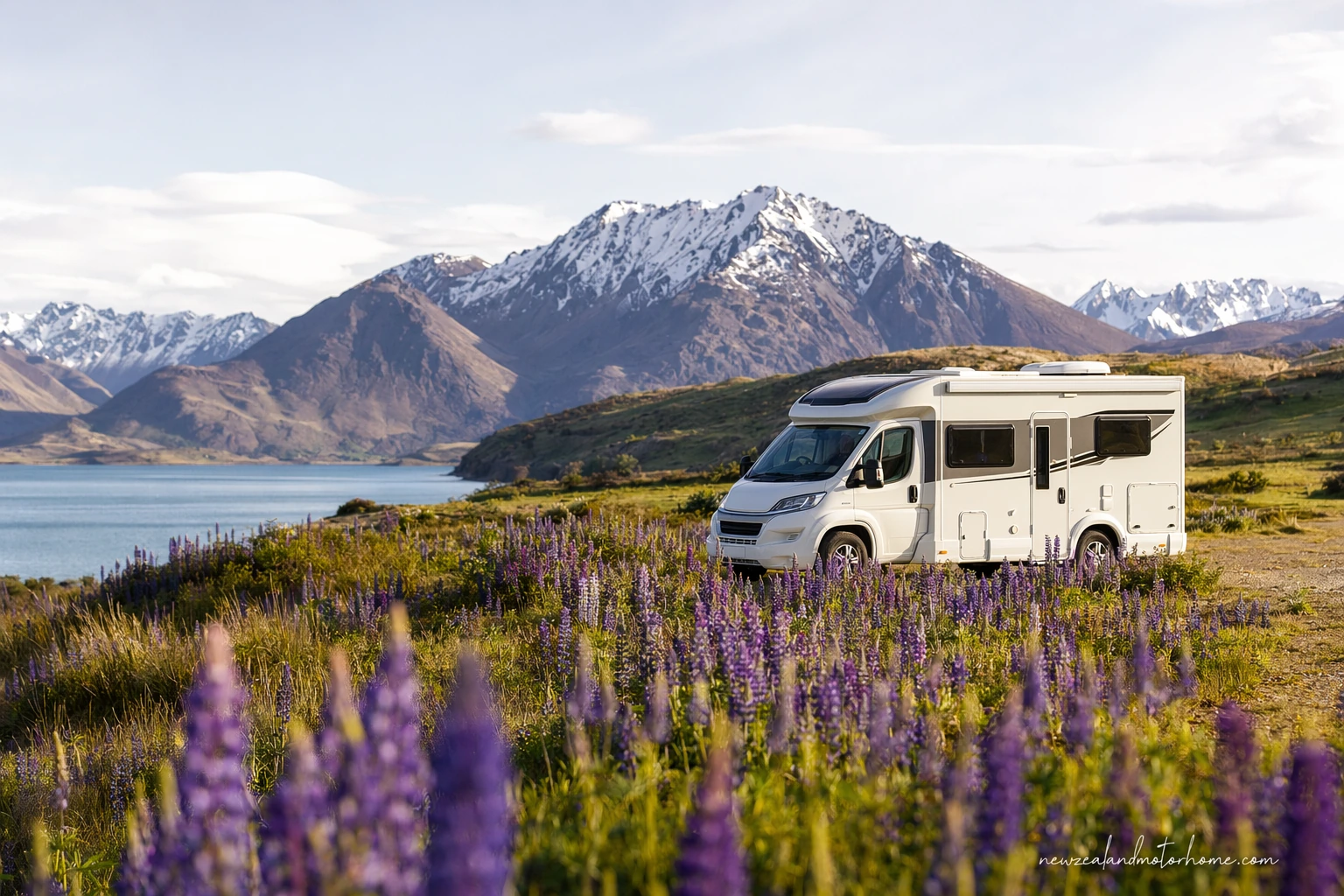
- Season: early spring
- Best with flexible routing
- Powered sites useful at night
- Alpine roads can still be wintry
- Certified self-contained for freedom camping
September is the hinge month for campervanning in New Zealand: ski fields can still be white, orchards begin to blossom, and coastal roads feel quieter before the main summer rush. It is a good month for a self-drive van trip if you are happy to plan for cold nights, wet gear, and the odd change of route.
This guide is written for travellers driving and sleeping in their hired campervan or motorhome. You will find practical notes on September New Zealand campervan weather, powered site choices, freedom camping, dump stations, LPG and fresh-water fills, road conditions, and where the best campervan September New Zealand routes tend to work well.
September weather: spring days, winter edges
September is officially spring, but in a campervan it often behaves like two seasons in one day. Northland, Auckland and the Coromandel can be mild and showery, while the Central Plateau, Mackenzie Country, Queenstown Lakes and Fiordland can still bring frost, sleet, snow on high roads, and very cold mornings inside the van.
Daylight is getting longer, which helps with driving and setting up before dark, but do not build a route that depends on perfect weather. A good September plan leaves space for a wet laundry stop, a powered night to run the heater safely, and a coastal detour if an alpine pass is closed or unpleasant.
- Expect: cool mornings, changeable afternoons, and strong westerly systems, especially in the South Island.
- Use powered sites: they are useful for electric heating, drying towels, charging devices, and reducing condensation.
- Keep water topped up: colder areas can make you use more hot drinks and cooking water than expected.
- Check forecasts locally: mountain weather can differ sharply from the town you left that morning.
Where September works well by campervan
If you want gentler driving and fewer frost issues, the upper North Island is a comfortable September choice. Northland, the Bay of Islands, Auckland’s west coast, the Coromandel and Bay of Plenty all suit a campervan pace, with enough holiday parks and public dump stations to avoid stretching the van’s tanks too far.
For a classic South Island September route, keep your overnight stops close enough together that you are not forced over a high pass in bad weather. Nelson Tasman, Marlborough, Kaikōura, Canterbury, Mackenzie Country, Wānaka, Queenstown and Central Otago can be brilliant, but alpine roads need a flexible day or two built in.
- Coastal fallback: Tasman Bay, Kaikōura, the Otago coast and parts of Hawke’s Bay give you big scenery without committing every day to mountain driving.
- Blossom and vineyards: Central Otago, Hawke’s Bay and Marlborough can be lovely in late September, with easier parking in town than peak summer.
- Late snow scenery: Aoraki/Mount Cook, Lake Tekapo, Wānaka and Queenstown can be stunning, but choose powered overnight stops when temperatures drop.
- Van parking: in smaller towns, look for signed long-vehicle bays or edge-of-centre parking rather than squeezing into short angle parks.
Campsites, freedom camping and van services
September is shoulder season, so you will usually find more space than in January, but not every campground or DOC site has full summer facilities operating yet. Before driving down a long side road, check that the campsite is open, that your vehicle length is suitable, and whether fresh water, toilets or a dump station are actually available.
Freedom camping rules are local, and you should only plan it if your campervan is certified self-contained and the place you are stopping permits overnight stays. In September, freedom spots can be quiet and beautiful, but exposed coastal areas and high-country pull-offs can be windy, muddy or very cold overnight.
- Powered holiday parks: best after wet driving days, ski days, or when you need hot showers and laundry.
- Unpowered sites: fine for mild coastal nights if your house battery is healthy and you are not relying on electric heating.
- Dump stations: empty before remote stretches such as the West Coast, Mackenzie Basin or East Cape rather than waiting for the warning light.
- LPG and water: refill in bigger towns before heading into national park areas, where options may be limited.
Road conditions and driving notes for September
September driving is usually manageable in a campervan, but the risk sits in sudden weather rather than distance. Roads such as the Crown Range, Lindis Pass, Arthur’s Pass, Lewis Pass, Desert Road and the Milford Road can see winter conditions, especially early in the month or after a southerly change.
A larger motorhome needs more patience on wet corners, narrow bridges and steep descents. Keep an eye on vehicle height before entering covered parking or service station canopies, and remember that a long van needs more room to turn around if a scenic side road becomes gravel, snow-dusted or washed out.
- Check road alerts: look at current road conditions before leaving, not just the night before.
- Carry chains if required: some alpine routes can require chains in winter conditions; know whether your hire vehicle permits them and how they fit.
- Drive for the van: brake early, let faster traffic pass at safe pull-offs, and avoid dusk driving in rural areas.
- Watch wind: high-sided campervans can move around on exposed bridges, lake edges and Canterbury or Otago highways.
What to pack and how to set up the van
Pack for damp boots, cold floors and sunny lunches outside the sliding door. A September kit should make the van comfortable without relying on fine weather: warm sleepwear, a proper rain jacket, a beanie, quick-dry layers, and a place to separate wet gear from bedding.
Condensation is common in spring, especially with two people cooking and sleeping in a compact camper. Ventilate when cooking, wipe windows in the morning, and use powered nights to dry towels rather than letting moisture build up through the trip.
- Bring: warm layers, waterproof shoes, gloves for frosty mornings, and a head torch for campsite setup.
- Useful in the van: microfibre towels, a small mat by the door, reusable water bottles, and easy meals for late arrivals.
- For alpine areas: sunglasses, sunscreen and warm clothing; spring snow glare can be strong even when the air is cold.
- Before bed: park level, keep vents cracked where safe, and check that heaters are used only as instructed for your campervan.
Booking ahead without over-locking the route
You do not need to book every September night months ahead, but some places deserve a plan. Ski towns, hot-pool towns, popular national park gateways, Friday and Saturday nights, and the late-September school holiday period can fill faster than you expect, especially for powered sites.
A good approach is to book the nights that matter, then leave flexible gaps for weather. If a front is crossing the South Island, it is often better to add a powered night, do laundry, fill fresh water, empty the toilet cassette, and move on the next morning in settled conditions.
If you want help shaping a route around your van size, campsite style and comfort level on alpine roads, use the talk-to-us step and we can help you turn the month’s conditions into a practical driving plan.
Keep planning
Campervan in winter new zealand
Read onCampervan new zealand in october
Read onCampervan new zealand in november
Read onCampervan new zealand in may
Read onCampervan new zealand in march
Read onCampervan new zealand in june
Read onCommon questions
Is September a good month for a campervan trip in New Zealand?
Yes, if you like quieter roads and can handle changeable spring weather. It is especially good for flexible self-drive travellers who are willing to use powered campsites on cold or wet nights.
Do I need to book campsites in September?
Book key nights in ski towns, national park gateways and during late-September school holidays. Outside those areas, you can often stay flexible, but always check whether seasonal campgrounds are open before you arrive.
Can I freedom camp in September?
You can only freedom camp where local rules allow it, and your campervan must meet the required self-containment standards. In September, also think about exposure: a legal coastal or high-country spot may still be windy, wet or very cold overnight.
Will I need snow chains for a campervan in September?
Possibly, depending on your route and the weather. Alpine roads can still have winter conditions, so check road alerts and confirm your hire vehicle’s chain policy before planning passes such as the Crown Range, Lindis Pass or Milford Road.
Should I choose powered or unpowered sites in September?
Powered sites are worth using regularly in September for heating, charging, laundry and drying wet gear. Unpowered sites can be fine in milder coastal areas if your battery, gas and water levels are in good shape.
Have a planner shape this for your dates
Send a short outline — your dates, party size, and the kind of trip you want. A planner replies with a vehicle recommendation, a paced route, and the realistic budget.