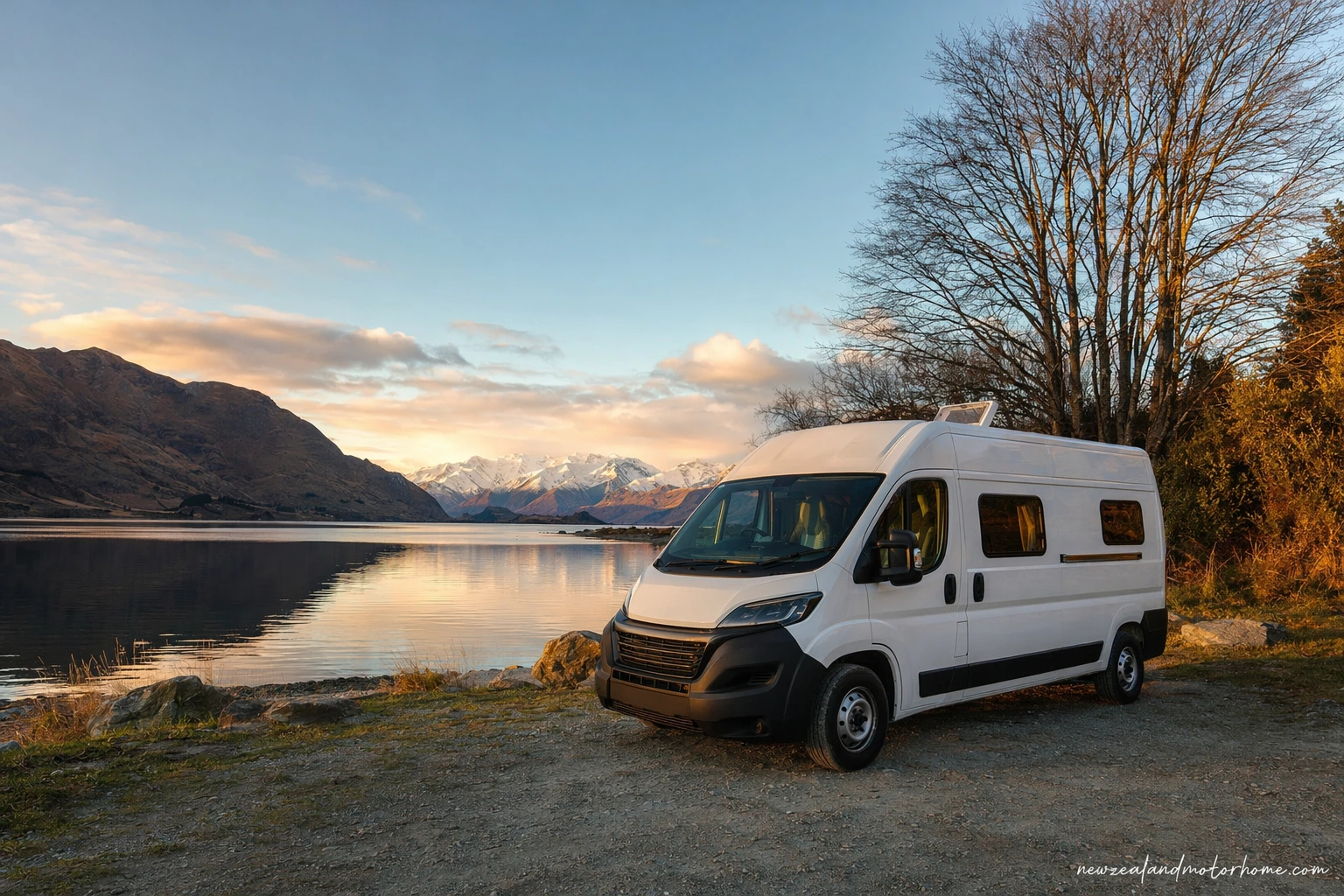
- Season: early winter
- Plan shorter driving days
- Powered sites strongly recommended
- Check alpine roads daily
- Certified self-contained only for freedom camping
Travelling by campervan New Zealand in June means proper winter touring: short days, quiet roads in many regions, snow on the high country, and a real reason to appreciate a powered site with a warm shower block. It can be a beautiful month to drive if you plan your distances gently and treat weather as part of the route, not an afterthought.
This guide is written for self-drive campervan and motorhome travellers sleeping in the van each night. You’ll find practical notes on June New Zealand campervan weather, where a powered site is worth booking, how to handle dump stations and LPG in winter, and which routes feel rewarding without pushing your van over icy roads at dusk.
June weather: cold nights, clear spells, and winter road sense
June is the start of winter in New Zealand. The North Island is usually milder but can be wet, especially around Auckland, Northland, Taranaki and the west of the island. The South Island brings colder nights, frosty mornings and snow risk on alpine roads, with Central Otago, Mackenzie Country, Queenstown Lakes and inland Canterbury often feeling crisp and dry between weather fronts.
For campervan travellers, the big difference is overnight comfort. A certified self-contained van with good insulation, working house battery, reliable LPG heating or diesel heating, and a way to manage condensation will make June much easier. If your hire van has only basic bedding, add proper winter layers before you leave the first city.
- Expect short driving days: plan to be parked by late afternoon, especially in rural areas where frost and black ice form after sunset.
- Use powered sites strategically: a 240V heater, battery top-up and drying room can be worth it after two or three cold nights.
- Check road updates daily: alpine passes, ski access roads and shaded inland highways can change quickly.
- Keep LPG topped up: heating, hot water and cooking all work harder in June, so do not run bottles close to empty before a remote stretch.
Where to take a campervan in June
The best campervan June New Zealand routes are not necessarily the longest ones. June suits slower loops with two-night stops, reliable holiday parks, and flexible side trips you can drop if the weather turns. You can still see a lot, but it pays to choose regions rather than trying to cross both islands in a rush.
In the North Island, Rotorua, Taupō, Hawke’s Bay and the Coromandel can work well in a campervan, with geothermal stops, lakefront holiday parks and enough services for fresh water and dump stations. In the South Island, Nelson Tasman can be a gentler winter choice, while Wānaka, Queenstown, Tekapo and Aoraki/Mount Cook are spectacular if you are comfortable with colder nights and winter driving.
- Good first-winter loop: Christchurch to Lake Tekapo, Aoraki/Mount Cook, Wānaka and back via the Waitaki Valley, allowing extra days for weather.
- Milder North Island option: Auckland to Rotorua, Taupō, Napier and back through the Waikato, using holiday parks with powered sites.
- Scenic but cautious: West Coast drives are dramatic in June, but heavy rain can affect slips, visibility and freedom camping comfort.
- Ski-town stays: Queenstown and Wānaka need earlier site planning once ski fields open, especially for powered bays and larger motorhomes.
Campsites, freedom camping and winter facilities
June is quieter than summer at many campsites, but winter changes what you need from an overnight stop. A lakeside unpowered site may look perfect at 2 pm and feel damp, dark and exposed by 6 pm. For a campervan new zealand in june itinerary, mix scenic unpowered nights with holiday parks where you can plug in, dry towels, refill water and use a proper kitchen if the van feels cramped.
Freedom camping rules still apply in winter. Your van must meet the current self-containment certification requirements, and local councils decide where certified self-contained vehicles may stay. Do not assume an empty car park is fine just because it is off-season; check local signage and council guidance before you settle in for the night.
- Powered sites: best after wet days, in ski towns, or when your batteries have been carrying heating and lighting for long evenings.
- Unpowered DOC-style sites: beautiful and quiet, but often basic; check whether toilets, water and access roads are open in winter.
- Dump stations: empty the toilet cassette and grey water before remote routes, not after the warning light comes on.
- Fresh water: fill earlier in the day where possible, as some taps and hoses can be icy in inland areas.
Driving conditions for motorhomes in June
New Zealand roads are often narrower and twistier than visitors expect, and June adds frost, glare, rain spray and occasional snow. In a high-sided campervan or larger motorhome, leave more space, brake gently before corners, and avoid late-day pushes over passes. If a road looks marginal, wait; you are carrying your bed, kitchen and holiday with you.
Common winter pinch points include the Lindis Pass, Crown Range Road, Arthur’s Pass, Lewis Pass, Desert Road and access roads to ski fields. Some hire agreements restrict where you can take a vehicle, especially on unsealed roads or ski-field roads, so read your rental conditions before you plan a snowy detour. Chains may be required on certain roads, but they are only useful if you are allowed to fit them and know how to use them safely.
- Vehicle size: allow more time for long or tall motorhomes on winding roads, and check car park height restrictions in town centres.
- Parking: use designated long-vehicle bays where available, especially in Queenstown, Wānaka, Rotorua and busy thermal areas.
- Fuel: top up before remote stretches; winter idling and detours can eat into your buffer.
- Daylight: plan your final 50 kilometres before dark, not after, so you arrive at camp calmly.
What to pack and when to book ahead
Pack as if you will have one wet laundry day and one frosty morning in the same week. Bring merino or thermal layers, a beanie for campsite chores, waterproof footwear, gloves for handling fresh-water hoses, and a small torch or headlamp for dump stations after dark. A microfibre towel dries faster in the van, and a couple of reusable bags help keep wet shoes and laundry away from bedding.
You usually do not need to book every night in June, but you should book powered sites in ski towns, over the Matariki public holiday period, and around school holiday crossovers when they fall near the end of the month. If your route includes Queenstown, Wānaka, Tekapo, Rotorua or popular hot-pool towns, lock in your first and last nights at least.
If you would like a human check on your June route, especially around alpine roads, van size and overnight stops, you can talk to us before you finalise the hire. A small route adjustment can make the difference between a relaxed winter loop and a cold, overlong driving day.
Keep planning
Campervan in winter new zealand
Read onCampervan new zealand in september
Read onCampervan new zealand in october
Read onCampervan new zealand in november
Read onCampervan new zealand in may
Read onCampervan new zealand in march
Read onCommon questions
Is June a good month to travel New Zealand by campervan?
Yes, if you are prepared for winter conditions and shorter days. June can be quiet, scenic and rewarding, but you should plan slower routes, use powered sites regularly, and keep an eye on road and weather updates.
Do I need a powered campsite every night in June?
Not necessarily, but powered sites are very useful in winter. They let you recharge batteries, run approved 240V appliances, dry gear and warm the van properly after cold or wet travel days.
Can I freedom camp in New Zealand in June?
You can freedom camp only where it is permitted and only if your campervan meets the required self-containment certification. Winter does not relax local rules, so check signs and council information before parking overnight.
Will I need snow chains for a campervan in June?
It depends on your route and hire conditions. Alpine passes and ski access roads may require chains at times, but some rental agreements restrict their use or prohibit certain roads, so confirm this before you leave the depot.
Which island is better for a June campervan trip?
The North Island is generally milder and easier for first-time winter campervan travellers. The South Island offers bigger alpine scenery, but you need more flexibility for frost, snow, road closures and colder overnight stops.
Have a planner shape this for your dates
Send a short outline — your dates, party size, and the kind of trip you want. A planner replies with a vehicle recommendation, a paced route, and the realistic budget.