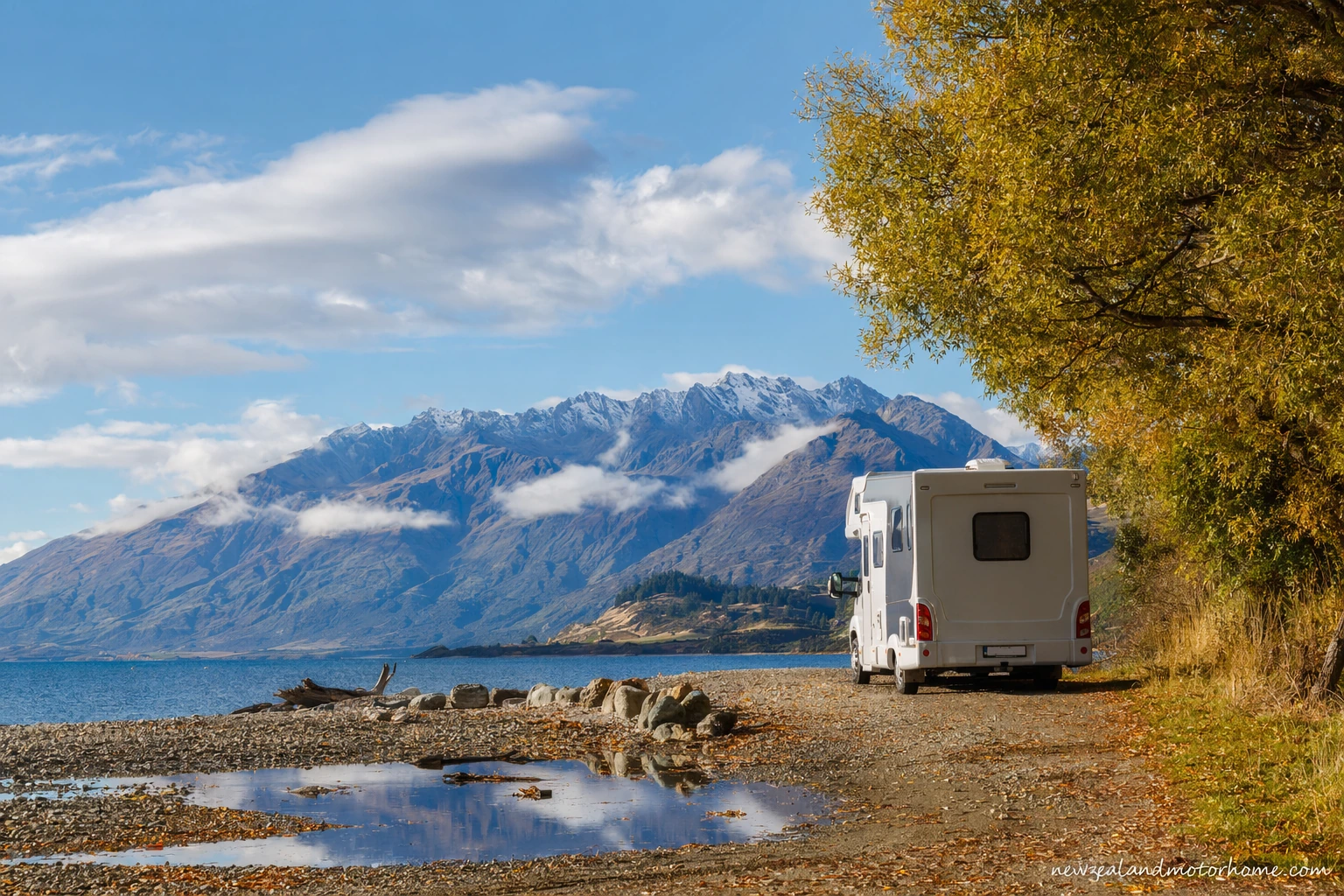
- Season: early autumn
- Best for: coast plus inland colours
- Book ahead: weekends and Easter overlap
- Van note: arrive before dark
- Site mix: powered resets plus scenic unpowered nights
March is one of the easier months to travel New Zealand by campervan: the school-holiday rush has eased, daylight is still generous, and the first autumn colours start showing in the South Island. You can often get a quieter pitch than in January, but you still need a proper plan for popular lakes, coastal towns and national park gateways.
This guide is written for travellers driving and sleeping in their own hired motorhome or campervan. We’ll cover March New Zealand campervan weather, where the driving feels best, how campsites behave after summer, and the practical bits that matter on the road: fresh-water fills, dump stations, LPG, powered sites, freedom camping rules and van-friendly parking.
March weather from a campervan driver’s seat
March sits at the start of autumn, so you usually get warm days without the peak-summer heat inside the van. Northland, Auckland, Coromandel, Bay of Plenty and Hawke’s Bay can still feel summery, while Central Otago, Mackenzie Country and the Southern Lakes begin to cool quickly after sunset.
The thing to plan around is range, not averages. A sunny afternoon at a beachside unpowered site can turn into a chilly night where you’ll be glad of a powered pitch, extra layers and a working house battery. On alpine roads, especially around Arthur’s Pass, Lindis Pass, Crown Range Road and the approaches to Aoraki/Mount Cook, check forecasts before committing to a long drive.
- Daytime: often mild to warm, especially in the north and east.
- Evenings: cooler inland; condensation is common if you cook and sleep with windows shut.
- Rain: the West Coast and Fiordland can be wet at any time, so allow flexible nights.
- Wind: exposed lakefront and coastal sites can be gusty; park nose-in or tail-in rather than broadside where possible.
Where March works especially well by campervan
For many travellers, the best campervan March New Zealand route is one that mixes coastline with inland autumn scenery, rather than trying to tick off both islands too quickly. March is a good month for longer driving days, but it is still worth building in two-night stops so you are not packing down the van every morning.
In the North Island, consider the east coast from the Coromandel through Tauranga, Whakatāne and Gisborne, then down into Hawke’s Bay for vineyards, beaches and food stops. Campervan parking is easier if you arrive in small towns before lunch, then use holiday parks or designated council areas overnight rather than trying to find a late freedom-camping spot.
In the South Island, March suits Nelson Tasman, Kaikōura, the Mackenzie Basin, Central Otago and the Southern Lakes. Lake Tekapo, Wānaka and Queenstown remain busy, so use booked holiday parks or DOC-style campgrounds nearby and day-park the van early for walks. If you are heading to Milford Sound, staying at Te Anau gives you a calmer base and better access to dump stations, groceries and fuel before the long return drive.
Campsites, freedom camping and booking ahead
March is quieter than peak summer, but it is not empty. Weekends, regional events, cruise-ship days in port towns and any Easter overlap can still fill powered sites in popular places. If your van is larger, or you need a powered site for heating, charging devices or running medical equipment, book the key nights rather than relying on walk-ins.
Freedom camping is possible in some districts, but only where local bylaws allow it and usually only in a certified self-contained vehicle. Do not assume a beach car park or lakefront reserve is legal just because other vans are there. Look for official signs, respect no-camping areas, and use public toilets and dump stations properly.
- Powered sites: useful in cooler inland areas and after several cloudy days on solar.
- Unpowered sites: good for settled coastal weather if your battery, fridge and water use are under control.
- DOC campgrounds: often scenic, but check access roads, maximum vehicle length and whether water is treated.
- Holiday parks: best for laundry, hot showers, dump stations, fresh water and a reset night.
Road and site conditions in early autumn
Roads are generally more relaxed in March than in midsummer, but New Zealand driving still asks for patience in a motorhome. Distances are slower than they look on a map, with winding highways, single-lane bridges, narrow shoulders and frequent pull-over temptations for photos.
Be honest about your van’s size. Longer motorhomes need more space on tight campground loops, ferry queues, supermarket car parks and scenic lookout bays. If you are driving a tall vehicle, watch for low tree branches at older holiday parks and choose pump lanes carefully at fuel stops.
Gravel access roads to some beaches, lakes and DOC sites can be corrugated after summer traffic or slippery after rain. Before committing, check whether turning around is possible; reversing a long van on a narrow track is a quick way to spoil a good day. Arrive at overnight stops with daylight left so you can level the van, find the facilities and park without rushing.
What’s on in March, and how it affects van travel
March is harvest season in several wine and fruit regions, which gives places like Hawke’s Bay, Marlborough, Nelson Tasman and Central Otago a lively but not frantic feel. Farmers markets, food events and regional shows can make small towns busier on Saturdays, so plan supermarket parking and overnight sites before you roll in.
Coastal areas still attract surfers, walkers and late-summer holidaymakers, especially on warm weekends. Around national park gateways, trailheads can fill by mid-morning; it is often easier to leave the motorhome at your campsite and use shuttles, bikes or local transport where available, rather than trying to squeeze into a small car park.
- Market mornings: park the van on the edge of town and walk in if central parking is tight.
- Event weekends: book a legal overnight site early, especially if you need power.
- Wine regions: avoid driving after tastings; choose a campsite close to town or use local transport.
Packing and practical van habits for March
Pack for warm days, cool nights and damp mornings. A small clothesline, quick-dry towels, a warm layer for each person and a torch for walking to facilities after dark will all earn their space. In sandfly areas such as the West Coast, Fiordland and parts of Nelson Tasman, keep insect repellent handy and close flyscreens before dusk.
On the practical side, make a rhythm of topping up fresh water, emptying grey and black water, and checking LPG before you head into quieter regions. Some scenic campgrounds have no dump station, no potable water and limited rubbish facilities, so use service towns as reset points rather than arriving empty and hoping.
If you want a route matched to your van length, travel pace and comfort with freedom camping, you can use the talk-to-us step and shape it before you lock in your hire dates. March rewards a flexible plan: book the pressure points, but leave room to stay an extra night when the weather and site are both working for you.
Keep planning
Campervan in winter new zealand
Read onCampervan new zealand in september
Read onCampervan new zealand in october
Read onCampervan new zealand in november
Read onCampervan new zealand in may
Read onCampervan new zealand in june
Read onCommon questions
Is March a good month to hire a campervan in New Zealand?
Yes. March is often one of the best shoulder-season months for a campervan trip, with milder weather, fewer peak-summer crowds and good daylight. You still need to book popular powered sites in places like Queenstown, Wānaka, Tekapo, Nelson and coastal holiday towns.
Do I need a powered campsite every night in March?
Not necessarily. If your hired campervan has a healthy house battery, solar support and efficient fridge use, unpowered nights can work well. Plan a powered site every few days for laundry, showers, charging and a warmer night if you are travelling inland or after cloudy weather.
Can I freedom camp in New Zealand in March?
You can freedom camp only where local rules allow it, and usually only in a certified self-contained vehicle. March does not change the rules: always check signs, use designated areas, and empty toilets and grey water at proper dump stations.
What should I watch for on South Island roads in March?
Expect cooler mornings, sudden weather changes and slower winding roads around passes, lakes and the West Coast. Check forecasts before alpine routes, allow extra time for photo stops, and avoid arriving at unfamiliar campgrounds after dark in a larger motorhome.
Is Easter a problem for March campervan travel?
Some years Easter falls in March, which can make holiday parks, ferry sailings and popular freedom-camping areas much busier. If your trip overlaps Easter, book your key overnight stops and crossings early, especially if you need a powered site.
Have a planner shape this for your dates
Send a short outline — your dates, party size, and the kind of trip you want. A planner replies with a vehicle recommendation, a paced route, and the realistic budget.