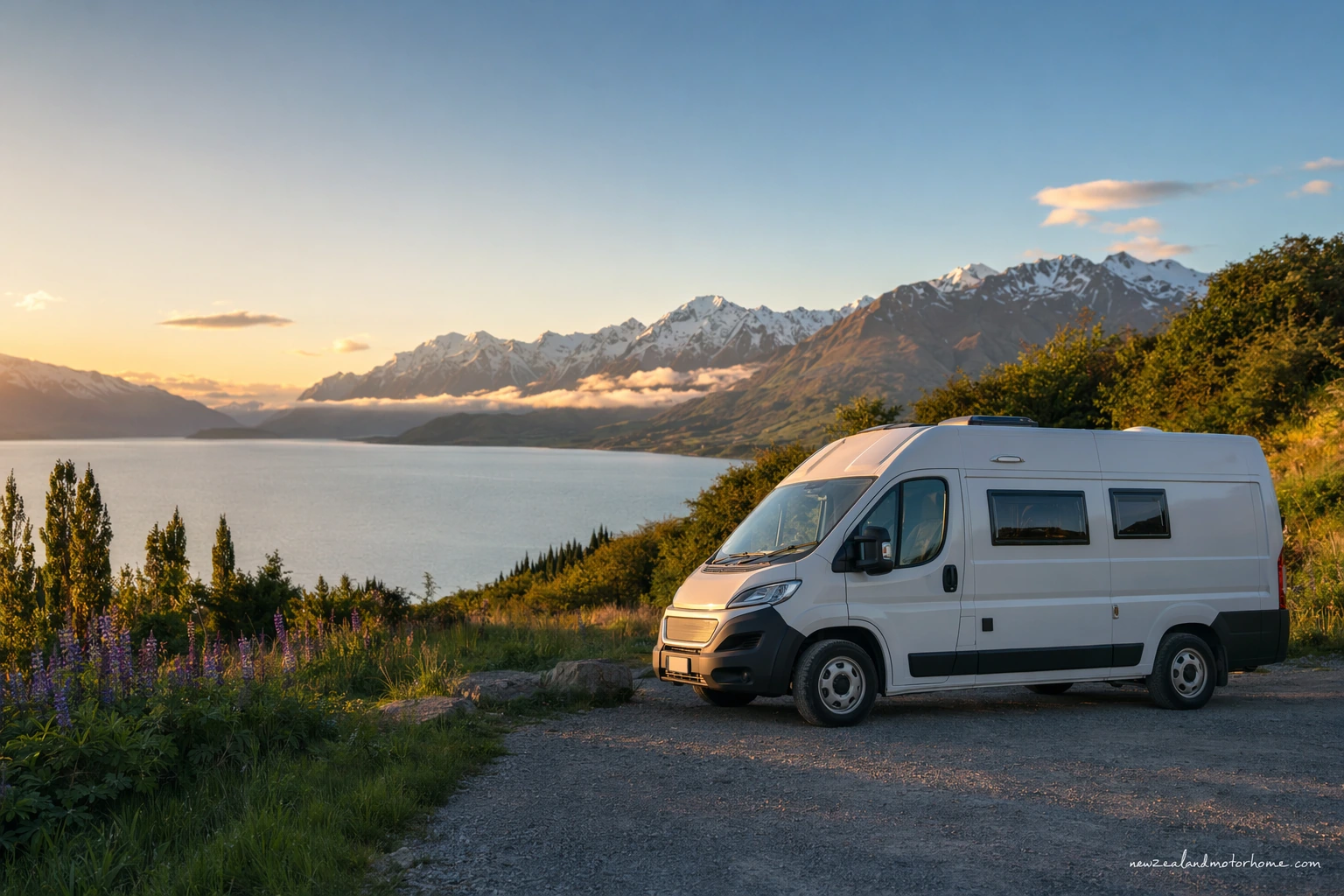
- Season: mid-spring
- Best pace: 10–21 days
- Book: school holidays and Labour Weekend
- Site mix: powered plus flexible unpowered
- Van note: watch wind and alpine roads
October is proper spring on the road in Aotearoa: longer daylight, fresh green hills, snow still sitting on the tops, and enough changeable weather to keep your wet-weather gear within reach. For a self-drive campervan traveller, it is a month of good shoulder-season value, but not a month to wing every overnight stop.
This guide looks at campervan New Zealand in October travel from the driver’s seat: what the weather does to your route, where powered sites make sense, how busy campsites get around school holidays and Labour Weekend, and what to check before you park the van for the night.
October weather from a campervan point of view
October New Zealand campervan weather is famously mixed. You can have calm, warm afternoons in Hawke’s Bay or Nelson, then a southerly front, frosty inland night or wet West Coast day straight after. The upside is daylight saving: you get longer evenings for driving into a holiday park, setting the van level, cooking properly and sorting your water before dark.
In the North Island, expect milder nights around Northland, Auckland, Coromandel, Bay of Plenty and Hawke’s Bay, with rain showers still common. Central areas such as Taupō, National Park and the Desert Road can feel much colder after sunset. In the South Island, coastal routes may be gentle, while inland Canterbury, Mackenzie Country, Central Otago and Fiordland can still serve up frost, snow flurries on high roads, and strong wind.
- Powered sites help: they let you run safe onboard heating, dry damp gear and keep batteries topped up after cloudy days.
- Watch wind more than temperature: high-sided motorhomes can feel exposed on open roads, bridges and lake edges.
- Keep the grey tank moving: use dump stations regularly rather than carrying extra weight on wet or hilly roads.
- Ventilate the van: spring nights create condensation, especially when cooking inside.
Where October works especially well by campervan
The best campervan October New Zealand routes are the ones that let you adjust with the forecast. A North Island loop through Rotorua, Taupō and Hawke’s Bay gives you geothermal stops, lakeside holiday parks, supermarket access and regular dump stations without committing to remote mountain driving every day. Add the Coromandel if the weather is settled, but allow slower travel on narrow, winding coastal roads.
In the South Island, October is lovely for a Christchurch to Kaikōura, Nelson Tasman and West Coast loop if you build in wet-weather time. The Mackenzie Basin around Tekapō and Twizel can be spectacular with snow on the ranges, but nights are cold and exposed campsites can be windy. Queenstown and Wānaka are quieter than peak summer, though you should still arrive early for popular holiday parks with longer vans.
- For gentler driving: Northland, Bay of Plenty, Hawke’s Bay, Nelson Tasman and Canterbury coast.
- For mountain scenery: Mackenzie Country, Arthur’s Pass, Haast Pass, Wānaka and Fiordland, with forecast checks.
- For easier van services: stay near larger towns every few days for LPG, fresh water, laundry and dump stations.
- For freedom camping: check local council bylaws and only use sites that match your certified self-contained status.
Road conditions, driving pace and spring hazards
October roads can be dry and easy one hour, then wet, shaded and slippery the next. Spring growth means more mowing, farm vehicles and stock movements on rural roads, particularly around lambing country. Give yourself shorter driving days than the map suggests, especially in a motorhome where stopping, turning and climbing all take more space.
High routes such as the Desert Road, Lindis Pass, Crown Range, Arthur’s Pass, Lewis Pass and the Milford Road deserve a proper forecast check before you commit. Snow and ice are less common than mid-winter, but not finished. If your hire agreement or road advisory requires chains in alpine areas, know whether your vehicle is allowed on that road and whether you are comfortable fitting them.
- Allow for van height: check low trees, motel-style carports, covered fuel canopies and older campground entrances.
- Mind vehicle length: use pull-outs to let faster traffic pass on winding roads.
- Fuel earlier in rural areas: do not assume every small settlement has suitable fuel, LPG or room to turn a large motorhome.
- Park on firm ground: grass pitches can be soft after rain; ask for a hardstand if your van is heavy.
Campsites, freedom camping and booking ahead
October sits between quiet winter touring and the busy summer run, but it has two important pressure points: New Zealand school holidays, often in the first half of the month, and Labour Weekend near the end. During those periods, book powered sites ahead in popular places such as Rotorua, Taupō, Queenstown, Wānaka, Nelson, Kaikōura and the Coromandel.
Outside those peaks, you can usually travel with more flexibility, but do not leave the day’s overnight stop too late in small towns. Holiday parks are useful in October because you get a powered hook-up, hot showers, laundry, potable water and a dump station or a nearby service point. DOC and council campgrounds can be beautiful and cheaper in feel, but many are unpowered and may have basic toilets only, so arrive with water, charged batteries and an empty grey tank.
- Choose powered sites after wet days: they are worth it when you need heat, charging and drying space.
- Use unpowered sites on settled nights: best when your house battery, solar and gas supply are healthy.
- Freedom camp carefully: rules vary by district, and certified self-containment does not mean you can stay anywhere.
- Plan service stops: match overnight choices with dump stations, fresh-water fills and LPG top-ups every few days.
What to pack and set up in the van
Pack for four seasons without overloading the lockers. October rewards layers: a warm fleece or merino, waterproof jacket, beanie for inland nights, quick-dry walking shoes, and a spare towel that can live near the door. Keep a separate wet bag or tub for muddy footwear so the living space does not become damp by day three.
Inside the campervan, bring or hire bedding that is warm enough for single-digit nights, especially in the South Island. Check how the heater works before you leave the depot, whether it can run off mains power, diesel or LPG, and what is allowed while you are parked. If you are planning longer gaps between holiday parks, keep an eye on LPG levels because cooking, hot water and heating all draw from the same supply in many vans.
- Useful van kit: torch, charging cables, pegs or chocks, microfibre cloths for condensation and a small umbrella.
- Kitchen habits: crack a vent when cooking, even when it is raining, to reduce moisture.
- Water routine: refill fresh water before remote areas and dump grey water at marked stations only.
- Paperwork: know where your self-containment certificate details are displayed and what your hire agreement says about gravel or alpine roads.
If you want help turning a loose October idea into a realistic van route, you can talk to us and we will shape it around your travel pace, vehicle size and the season rather than just the shortest line on the map.
Keep planning
Campervan in winter new zealand
Read onCampervan new zealand in september
Read onCampervan new zealand in november
Read onCampervan new zealand in may
Read onCampervan new zealand in march
Read onCampervan new zealand in june
Read onCommon questions
Is October a good month to travel New Zealand by campervan?
Yes, October can be excellent for a self-drive campervan trip if you are comfortable with changeable spring weather. You get longer daylight and fewer crowds than mid-summer, but you still need warm bedding, wet-weather gear and a flexible route.
Do I need to book campsites in October?
Book ahead during school holidays and Labour Weekend, especially for powered sites in popular towns. Outside those dates, you can often stay flexible, but it is still wise to choose your overnight stop by mid-afternoon rather than arriving after dark.
Can I freedom camp in October?
You can only freedom camp where local rules allow it, and most legal sites require a certified self-contained campervan or motorhome. Always check the district bylaw, signage at the parking area, and whether there are time limits or vehicle restrictions.
Will my campervan be warm enough at night?
Most modern hire campervans are fine if you understand the heating system and choose powered sites when nights are cold or damp. Inland North Island and much of the South Island can still have frosty nights in October, so do not rely on summer bedding.
Are South Island mountain roads safe in October?
They can be, but conditions change quickly. Check road advisories before routes such as Lindis Pass, Arthur’s Pass, Crown Range and the Milford Road, and make sure your hire agreement permits the road you plan to drive.
Have a planner shape this for your dates
Send a short outline — your dates, party size, and the kind of trip you want. A planner replies with a vehicle recommendation, a paced route, and the realistic budget.