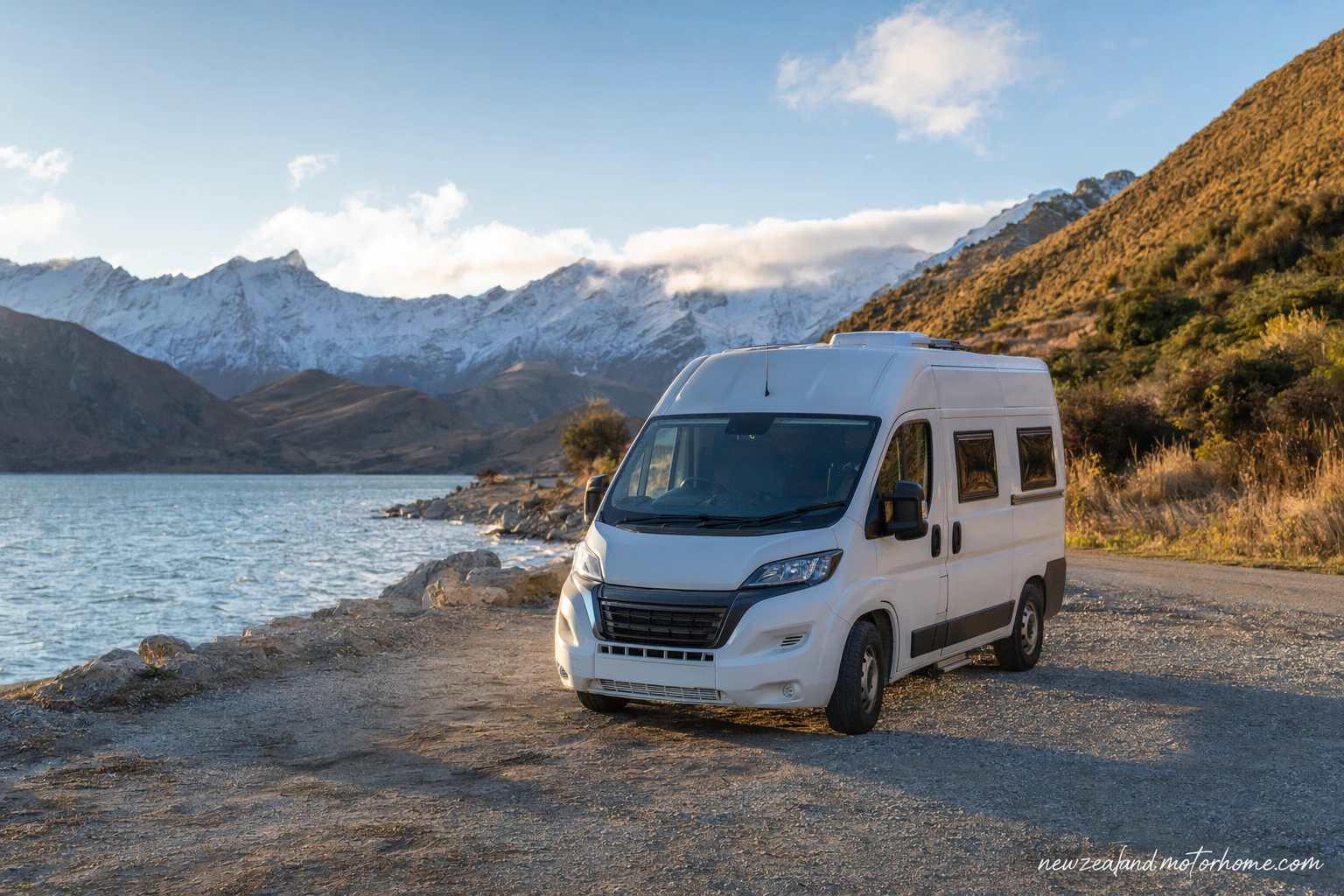
- Season: late winter
- Best pace: short daylight drives
- Site type: powered sites recommended
- Van note: check chains and road permissions
- Must-do: plan dump, LPG and water stops
August is still proper winter in Aotearoa: frosty mornings, short days, snowy alpine ranges and quiet campsites away from the ski towns. Travelling by hired campervan or motorhome is very doable, but it asks for a slower rhythm — plug in when you can, keep an eye on road conditions, and treat daylight like a limited resource.
This guide is written for self-drive travellers sleeping in the van, not passing through in a car. You’ll find practical notes on August New Zealand campervan weather, where the best campervan August New Zealand routes tend to sit, how to handle powered sites, dump stations, LPG and water, and what to book before you point the van at the mountains.
What August feels like from inside the van
August can be a beautiful month for a motorhome trip because the landscapes are sharp and uncrowded: snow on the Southern Alps, steam rising around Rotorua, and clear cold evenings beside lakes. It is also the month when you notice every little gap around the cab doors if you have not parked smartly or plugged into power.
Expect colder conditions in the South Island and central North Island, with frosts common in places like Tekapō, Wānaka, Queenstown, Hanmer Springs, Tongariro and the Mackenzie Country. Coastal Northland, Auckland, the Bay of Plenty and parts of Nelson/Tasman are milder, though rain and damp gear are still part of the deal.
- Daylight: plan to be parked up before dark, especially on rural roads without much shoulder.
- Heating: a powered site lets you use mains heating and charge devices without leaning on the house battery.
- Moisture: crack a roof vent when cooking or sleeping; condensation builds quickly in August.
- Water: top up fresh water in towns during the day, and drain hoses after use in frosty inland areas.
Best regions for an August campervan loop
The best route depends on whether you want snow or would rather skirt around it. If you are new to driving a larger van on New Zealand roads, a gentler North Island loop can be more relaxing: Auckland or Wellington through Rotorua, Taupō, Hawke’s Bay and the west coast beaches gives you hot pools, lake views and plenty of holiday parks with powered sites.
If winter scenery is the point of the trip, the South Island is hard to beat. Christchurch to Tekapō, Aoraki/Mount Cook, Wānaka, Queenstown and the West Coast is a classic, but build in weather days and avoid squeezing alpine passes into late afternoons. Nelson, Kaiteriteri and Golden Bay can also work well if you want coast and national-park edges without committing every day to snow-country driving.
- Snow-seeker route: Christchurch, Tekapō, Aoraki/Mount Cook, Wānaka, Queenstown, Te Anau.
- Milder winter route: Auckland, Coromandel or Bay of Plenty, Rotorua, Taupō, Napier.
- Quiet coastal route: Nelson, Tasman, Kaikōura, Marlborough Sounds, with powered stops between longer drives.
For a tailored pace based on your van size and comfort with winter roads, you can talk to us before you lock in the overnight stops.
Road conditions, chains and driving a larger vehicle
August roads can be dry at sea level and icy ten minutes later on a shaded inland stretch. In a campervan or motorhome, take the slower option: leave more stopping distance, avoid dawn starts after a hard frost, and do not let a queue behind you pressure you through bends. Use slow-vehicle bays where provided, especially on State Highway 6, the Crown Range, Lewis Pass, Arthur’s Pass and the roads into ski towns.
Some alpine roads require snow chains at times, and many ski-field access roads are steep, narrow and unsealed. Check whether your hire agreement allows the van on those roads before you go. Often the easier plan is to park the motorhome in town at a legal day-parking area or holiday park, then use local ski transport or a smaller approved vehicle arrangement if available.
- Van length: allow extra room when pulling into scenic lay-bys; winter shoulders can be soft.
- Van height: watch for low branches in small campgrounds and covered service-station areas.
- Black ice: most likely in shaded valleys, bridge decks and early morning approaches to lakes.
- Weather checks: look at road warnings before crossing alpine passes, not after you have started.
Where to stay: powered sites, freedom camping and winter facilities
In August, powered sites are worth budgeting for more often than you might in summer. They give you heat, battery recovery, easier drying of wet jackets, and access to campground kitchens and lounges when the inside of the van starts feeling small. Around Queenstown, Wānaka, Tekapō, Methven, Ohakune and Taupō, book ahead for weekends and school-holiday spillover because ski traffic fills the warmest, most convenient sites first.
Freedom camping can be peaceful in winter, but it is not a fallback for every night. You still need a certified self-contained vehicle where rules require it, and some toilets, taps or low-cost camps close or reduce services outside peak season. Always check local council signs on arrival; rules can change from one district to the next.
- Powered holiday parks: best for cold nights, showers, laundry and reliable fresh-water fills.
- Unpowered sites: fine for one night if your house battery is healthy and you are not running heavy heating.
- DOC-style camps: check winter access, road surface and whether water is treated or available at all.
- Town overnights: choose marked motorhome areas only; do not assume a quiet car park permits sleeping.
Dump stations, LPG and keeping the van comfortable
Cold-weather campervanning is easier when you treat services as part of the route, not an afterthought. Dump the toilet before it is urgent, refill fresh water before you drive into a remote valley, and keep an eye on LPG if your van uses it for cooking, hot water or heating. In August, a small delay caused by snow, wind or a closed road can turn a half-full tank into a nuisance.
Most larger towns on common touring routes have public dump stations or holiday-park facilities, but spacing gets wider in places like the Mackenzie Basin, the West Coast and Fiordland. Use the campground dump point when you stay there, and ask staff about the next reliable fresh-water fill if you are heading inland.
- LPG: refill before long alpine loops rather than assuming the next village has a bottle swap or fill.
- Fresh water: carry enough for cooking, handwashing and an unexpected extra night.
- Grey water: empty only at approved dump stations, never roadside drains or gravel pull-offs.
- Drying gear: use campground laundries when you can; wet snow gear makes a van damp fast.
What to pack and what to book ahead
Pack like you will be getting in and out of the van in rain, frost and darkness. A head torch, warm hat, gloves, thermals, waterproof jacket and easy-off shoes make the nightly routine much more pleasant. Keep a separate dry bag for wet layers so your bedding does not absorb the day’s weather.
Book your first night, key ski-town weekends, and any Cook Strait crossing if your route includes both islands. You do not need to schedule every hour, but in August it helps to know where the next powered site, dump station and supermarket stop sit on the map before you leave each morning.
- Carry: torch, power-bank, warm sleepwear, quick-dry towels, extra socks and a simple ice scraper.
- Check: tyre condition, wiper blades, demister, heater instructions and how the house battery display works.
- Plan: shorter drive days in alpine areas, with a second-night option if weather closes in.
- Book: powered sites in busy winter towns rather than arriving after dark hoping for space.
Keep planning
Campervan in winter new zealand
Read onCampervan new zealand in september
Read onCampervan new zealand in october
Read onCampervan new zealand in november
Read onCampervan new zealand in may
Read onCampervan new zealand in march
Read onCommon questions
Is August a good time to travel New Zealand by campervan?
Yes, if you are comfortable with winter driving and a slower pace. August gives you snowy scenery, quieter roads outside ski hubs, and good availability in many campgrounds, but you should favour powered sites and build in weather flexibility.
Do I need snow chains for a campervan in August?
You may need chains on some alpine roads or passes, depending on conditions and your hire agreement. Check road updates before driving, and do not take a motorhome onto ski-field access roads unless it is permitted and you are confident with the conditions.
Can I freedom camp in New Zealand in August?
Sometimes, but only where local rules allow it and usually only in a certified self-contained vehicle. Winter closures and reduced facilities are common, so always check signs on site and have a powered campground backup.
Should I choose powered sites every night in winter?
Not every night, but powered sites make August travel much more comfortable. They help with heating, battery charging, showers, laundry and drying wet gear, especially after cold inland drives.
Which island is better for an August campervan trip?
The North Island is generally easier and milder, especially around geothermal and coastal routes. The South Island has the biggest winter scenery, but it asks for more care with frosts, alpine passes and booking ahead near ski towns.
Have a planner shape this for your dates
Send a short outline — your dates, party size, and the kind of trip you want. A planner replies with a vehicle recommendation, a paced route, and the realistic budget.