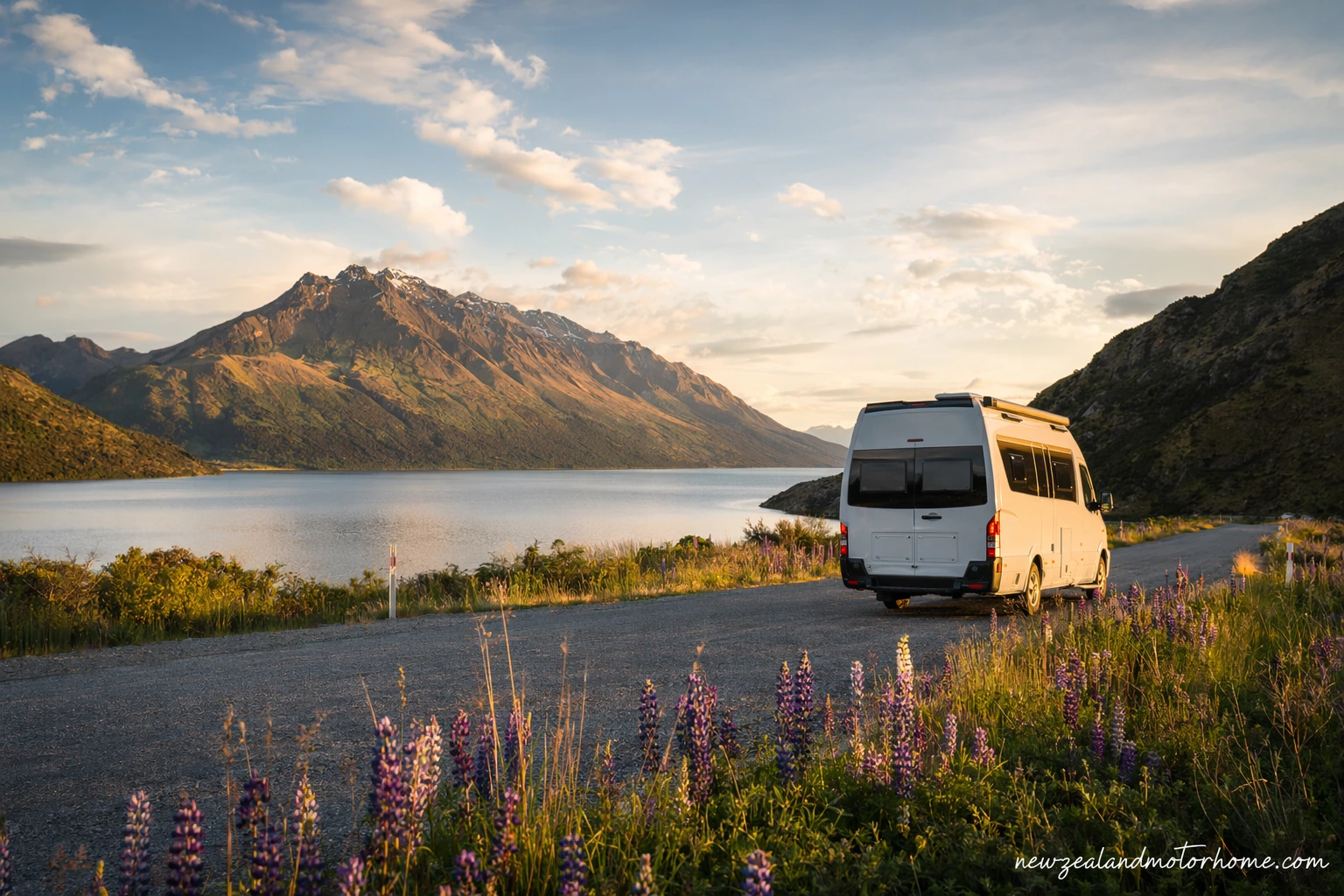
- Season: early summer
- Book ahead: Christmas and New Year
- Best fit: self-contained campervan
- Site mix: powered plus unpowered
- Road note: busy coastal routes
December is the month New Zealand shifts into summer mode: long evenings, pohutukawa starting to flower, school holidays beginning, and campervan parks filling beside beaches, lakes and walking tracks. If you are travelling by hired van, it is a brilliant time to be here, but it rewards a bit more planning than the quieter shoulder months.
This guide is written for self-drive motorhome and campervan travellers, so it focuses on where you can sensibly park the van, when to book powered sites, what December New Zealand campervan weather feels like on the road, and how to keep on top of fresh water, LPG, rubbish and dump stations during the busy summer build-up.
December weather from behind the wheel
December is early summer, not full-blast summer everywhere. You can have warm dry days in Central Otago, sea breezes around the Bay of Islands, rain on the West Coast, and cool evenings around alpine lakes, sometimes all in the same week. In a campervan, that means packing for outdoor meals and swims, but still keeping a fleece and rain shell handy rather than buried under the bed.
Daylight is generous, especially in the South Island, which helps with unhurried driving and late arrivals. Even so, avoid using the long light as an excuse to push on tired; many scenic roads are narrow, winding and slower than the map suggests, particularly if you are in a larger motorhome.
- Ventilation matters: choose shaded powered sites when you can, open roof vents when parked, and use flyscreens in sandfly country.
- Sun is strong: keep sunscreen in the cab, not just in a locker, and use the windscreen shade when the van is parked.
- Rain can still affect plans: gravel access roads to some freedom camping areas may be muddy after heavy weather.
- Evenings can cool quickly beside lakes and rivers, so do not rely on shorts-and-jandals packing only.
Where December works best for a campervan route
The best campervan December New Zealand itinerary is usually one that gives you space, avoids daily one-night dashes, and leaves room for weather. Northland and Coromandel are classic beach choices, but they get busy from late December. Nelson Tasman, the Mackenzie Basin, Otago and parts of Southland can be excellent if you balance coastal nights with inland campsites.
If you want beaches, book a few fixed nights and build your freedom camping around them only where local bylaws allow it. If you prefer walking, lakes and mountain views, the South Island gives rewarding December daylight, but you need to treat alpine passes with respect and check road conditions before moving on.
- Northland: good for warm coastal touring, but pre-book holiday park nights near popular bays.
- Coromandel: beautiful for van travel, yet roads are winding and parking is tight in peak beach towns.
- Nelson Tasman: a strong mix of beach, food stops and serviced campgrounds with dump stations nearby.
- Mackenzie and Central Otago: big skies and clear nights, but exposed campsites can be windy and cool.
- West Coast: dramatic and quieter in places, with sandflies and rain part of the bargain.
Booking campsites before Christmas and after
Early December is comparatively relaxed, especially outside the main resort towns. From the week before Christmas through New Year, demand changes sharply. Powered sites for larger motorhomes, beachfront holiday parks, and Department of Conservation campgrounds near well-known walks can book out or operate with tighter limits.
For a self-contained campervan, it is tempting to wing it, but December is not the month to assume every car park or reserve is available overnight. Freedom camping rules are set locally, signage changes, and some councils increase monitoring over summer. If your van is not certified self-contained, your overnight options are much narrower and you should plan around campgrounds with toilets.
- Book powered sites ahead for Christmas, New Year, lake towns and popular beach settlements.
- Keep a few unpowered nights in the plan if your battery, fridge and water capacity suit it.
- Arrive earlier in the afternoon at first-come campgrounds, especially on Fridays and holiday weeks.
- Check whether your site fits your van length, awning space and access needs before you confirm.
- Use serviced stops every few days for showers, laundry, charging, rubbish and a proper fresh-water reset.
If you are unsure how tight to make the route, the /talk-to-us/ planning step is a useful way to sanity-check driving distances, campsite spacing and peak-date bookings before you lock everything in.
Roads, parking and driving rhythm in December
December roads bring a mix of campervans, locals heading to the beach, boat trailers, cyclists and overseas drivers. Build shorter driving days than you might at home. A 200 kilometre day can still feel full when it includes fuel, groceries, a dump station, a swim, photo stops and a winding coastal road with few easy pull-offs.
In towns, think about where you will park before you arrive. A high-roof campervan may not fit under supermarket car park height barriers, and a long motorhome can be awkward in angled street parks. Edge-of-town parking, i-SITE areas where permitted, large supermarket lots without barriers, and dedicated motorhome parking bays are often calmer than squeezing into the busiest waterfront strip.
- Let faster traffic pass where safe; use slow vehicle bays and pull-offs rather than holding a queue.
- Check vehicle height before entering covered car parks, petrol station canopies and tree-lined campsite lanes.
- Allow extra time on SH25 around the Coromandel, SH6 on the West Coast and routes into Queenstown or Wanaka.
- Refuel before remote stretches, especially if your route includes early starts or public holidays.
- Do not park on dry grass if the exhaust or underbody is hot; summer fire risk is real in some regions.
Water, waste, LPG and keeping the van comfortable
Summer campervanning is easier when you stay ahead of the practical jobs. In December, dump stations can be busy in the morning as vans leave campgrounds, and fresh-water taps at small settlements may not be suitable for filling unless clearly marked. Make a habit of resetting the van before you are down to the last few litres.
A comfortable rhythm is to combine chores with town stops: empty grey and black water at an approved dump station, fill fresh water, top up groceries, dispose of rubbish properly, then head to your overnight stop. If your van uses LPG for cooking, hot water or heating, check the bottle level before heading into quieter areas or over public holidays.
- Carry a dedicated drinking-water hose and never use the dump station rinse hose for filling the fresh tank.
- Use campground laundries mid-route rather than trying to dry heavy towels inside the van every night.
- Keep insect repellent handy for West Coast, lake-edge and bush campsites.
- Choose powered sites every few nights if you rely on device charging, camera batteries or a CPAP machine.
- Store rubbish securely overnight; gulls, weka and wind can make a mess fast.
What to pack for a December campervan trip
Pack for a summer road trip that still crosses mountains, forests and wet coasts. The van gives you room for layers, but space disappears quickly once bedding, groceries and outdoor gear are onboard. Soft bags are easier to stow than hard suitcases, especially in compact campervans.
Think about campsite living as much as sightseeing. A small daypack, quick-dry towel, slip-on shoes for campground showers, reusable containers, a head torch and a warm layer for late-night stargazing all earn their place. If you are travelling with children, keep swimwear and a dry change of clothes accessible rather than buried in the rear locker.
- Light layers, rain jacket, fleece, sunhat and sunglasses.
- Swimwear, quick-dry towel and reef-safe sunscreen where appropriate.
- Reusable water bottles and food containers for picnic stops.
- Power bank or 12V charging leads for days away from powered sites.
- Printed or offline campsite notes for areas with patchy mobile coverage.
Keep planning
Campervan in winter new zealand
Read onCampervan new zealand in september
Read onCampervan new zealand in october
Read onCampervan new zealand in november
Read onCampervan new zealand in may
Read onCampervan new zealand in march
Read onCommon questions
Is December a good time to travel New Zealand by campervan?
Yes, December is one of the most enjoyable months for a campervan trip if you plan around the summer rush. Early December is usually easier for campsite availability, while late December needs firm bookings in popular beach and lake areas.
Do I need to book every campsite in December?
You do not need to book every single night, but you should book key powered sites, Christmas and New Year dates, and any must-stay locations. Leave flexibility in quieter regions, but always have a legal overnight option lined up before late afternoon.
Can I freedom camp in New Zealand in December?
You can freedom camp only where local rules allow it, and usually only in a certified self-contained vehicle. December brings more enforcement in busy holiday areas, so read signs carefully, use official camping apps or council information, and avoid assuming a scenic car park permits overnight stays.
What is the weather like for campervanning in December?
December New Zealand campervan weather is generally mild to warm, with long daylight hours and strong sun. Rain is still possible, especially on the West Coast and in mountain areas, so pack layers and keep your route flexible.
Are dump stations and water fills easy to find in December?
They are common on main touring routes, but they can be busy near holiday hotspots. Plan dump station and fresh-water stops every few days, and use only approved drinking-water taps for filling your tank.
Is a large motorhome difficult to drive in December?
A larger motorhome is manageable on main roads, but December traffic, tight beach-town parking and winding coastal routes make slower days sensible. Check your vehicle height and length, use designated motorhome parking where available, and let faster traffic pass safely.
Have a planner shape this for your dates
Send a short outline — your dates, party size, and the kind of trip you want. A planner replies with a vehicle recommendation, a paced route, and the realistic budget.