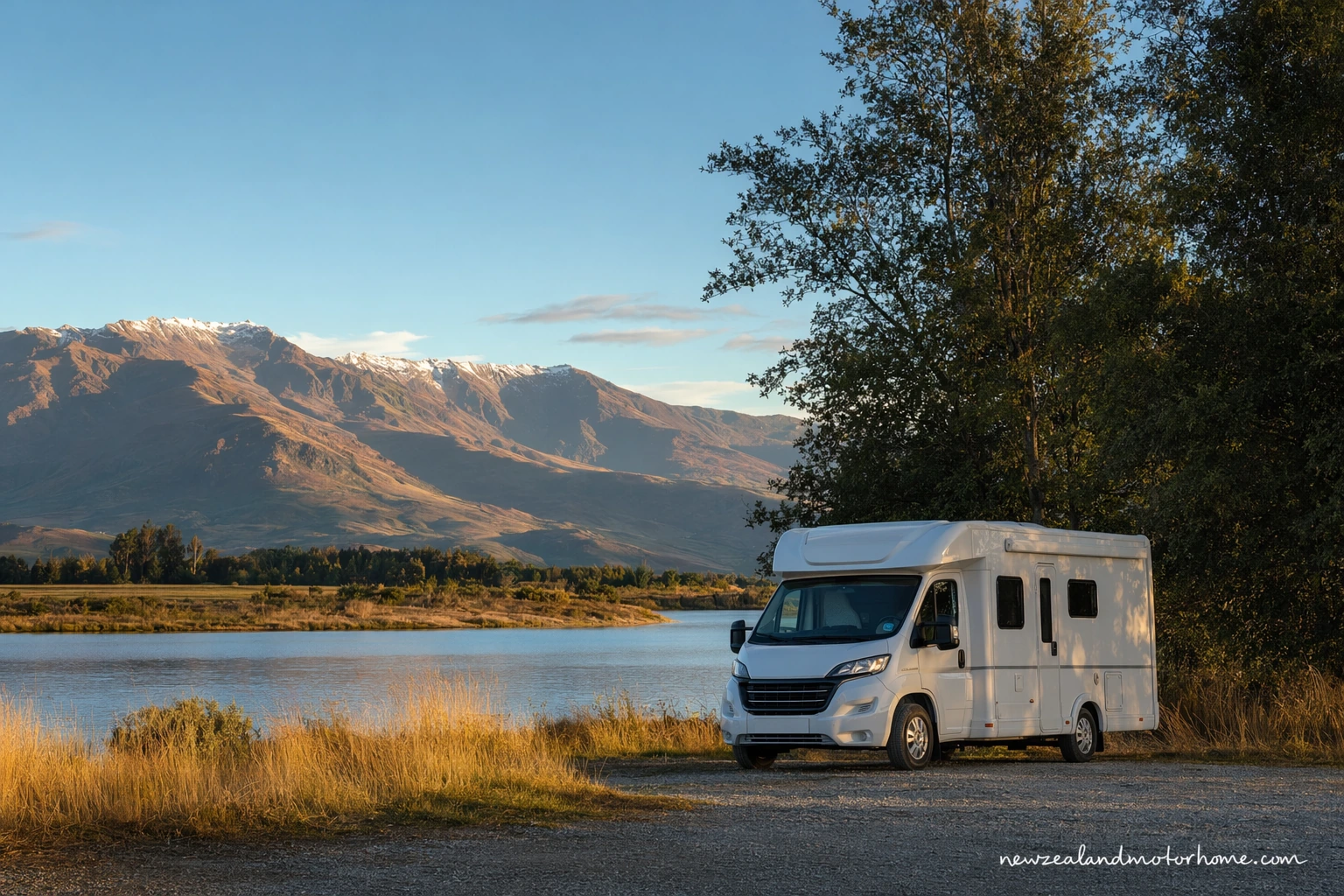
Your campervan New Zealand in February trip, planned for late summer
- Season: late summer
- Book ahead: beaches and lake towns
- Site mix: powered plus unpowered
- Van note: watch heat and battery use
- Public holiday: Waitangi Day
February is proper late summer in Aotearoa: long evenings, warm sea temperatures, dry grass beside rural roads, and the odd heavy shower that can roll in fast over the hills. It is a brilliant month for a self-drive campervan trip, provided you treat campsites and water stops as part of the route rather than an afterthought.
This guide is written for travellers driving and sleeping in their hired van. You will find practical notes on February New Zealand campervan weather, where the touring feels easiest, how far ahead to book powered and unpowered sites, and the small van-life details that make hot days, busy towns and winding roads easier to manage.
What February weather means when you are living in the van
February is usually one of New Zealand’s warmest, most settled months, but the weather still changes sharply by region. Northland, Auckland and the Coromandel can feel humid, with warm nights inside the van unless you have good airflow. Central Otago, Mackenzie Country and inland Canterbury can be hot and dry by day, then cool enough for a fleece once the sun drops behind the hills.
For campervan travel, the important detail is not just the forecast temperature. It is where you will park, whether you can open windows safely at night, and how often you need to refill fresh water after swimming, rinsing sand off gear, or running the sink more than usual.
- Choose shaded campsites where possible, but avoid parking directly under brittle trees in windy weather.
- Use powered sites if you want reliable fridge cooling, device charging and a fan on sticky nights.
- Top up fresh water earlier in the day; popular dump station and water points can queue in beach towns.
- Keep a light rain shell handy even on blue-sky mornings, especially on the West Coast and around Fiordland.
Where February campervan routes work best
The best campervan February New Zealand routes are usually the ones that balance coast, lake and higher-country nights. Beaches are at their warmest, but a few inland stops give you cooler evenings, roomier holiday parks and easier parking for longer motorhomes.
In the North Island, the Bay of Islands, Coromandel, East Cape, Taupō, Rotorua and Taranaki all suit a February loop if you plan overnight stops before arriving in town. In the South Island, Abel Tasman, Kaikōura, the West Coast, Wānaka, Queenstown Lakes, Mackenzie Country and the Catlins are strong choices, though popular lakefront and coastal campsites need forward planning.
- For beaches: aim to arrive before mid-afternoon so you can park the van without squeezing into the last awkward corner.
- For mountains: check that access roads suit your vehicle length, especially on narrow lake and valley roads.
- For quieter nights: look one town back from the famous stop, then drive in early for walks or swims.
- For longer vans: prioritise campsites with marked large-vehicle bays rather than informal grass parking.
If you want help shaping a route around van size, ferry timing, site availability and realistic driving days, you can talk to us before you lock in the trip.
Campsites, freedom camping and booking ahead in February
February is busy, but it is not quite the same as the Christmas-New Year peak. Families have often returned to school, while international visitors, couples and locals taking late-summer leave are still on the road. Beachfront holiday parks, DOC conservation campsites near water, and small-town freedom camping areas can fill quickly on weekends and around Waitangi Day on 6 February.
If you need a powered site, book the key nights in advance, especially near Queenstown, Wānaka, Nelson, Coromandel, Rotorua, Taupō and coastal Northland. If you are happy on unpowered sites, you gain flexibility, but you still need to manage house battery use, fridge load and phone charging during hot spells.
- Book first and last nights near your depot so you are not hunting for a site after pick-up or before return.
- Check whether your van is certified self-contained before relying on freedom camping areas.
- Read local council signs on arrival; rules can change between one bay, reserve or street and the next.
- Use dump stations before they are urgent, particularly before heading into remote coastal roads or DOC sites.
- Carry enough food for a simple dinner in case the town is busy and the campsite kitchen is full.
Road conditions, driving rhythm and van practicalities
February roads are generally clear of winter hazards, but summer brings its own campervan issues: roadworks, tar bleed on very hot days, busy one-lane bridges, cyclists, boat trailers, and impatient traffic behind slower vans on winding state highways. Build your day around shorter drives and longer stops rather than trying to cover rental-car distances.
New Zealand roads often look short on the map and feel longer through the steering wheel of a motorhome. A 7-metre van takes more attention on hill roads, tight supermarket car parks and beach access tracks. If a road is unsealed, check your hire agreement and turn around early if corrugations, soft shoulders or low branches look wrong for your vehicle.
- Pull over in safe bays to let traffic pass; it makes the drive calmer for everyone.
- Watch height signs at covered car parks, service stations, tree-lined entrances and campsite barriers.
- Refuel before remote stretches, and check LPG bottle levels before several nights of cooking.
- Use lower gears on long descents rather than riding the brakes.
- Expect ferry, city and airport approach roads to be busier around long weekends and event days.
What to pack and prep for a February van trip
Packing for February is about sun, swim stops and ventilation, with enough layers for alpine evenings and sudden southerlies. A hired campervan usually covers the big gear, but the right small items make day-to-day living easier when the van is hot, dusty or full of damp towels.
Think in terms of where things will dry, where sand will go, and how you will keep the inside comfortable without draining the house battery. Campsites with laundry, dump stations and fresh-water taps are worth noting on your route, not just the pretty overnight stops.
- Bring reef-safe sunscreen, insect repellent, sun hats and a lightweight long-sleeve layer.
- Pack quick-dry towels, a laundry bag and jandals for campground showers.
- Use a small headtorch for late returns from unpowered campsites.
- Carry a refillable water bottle for each person so the van tank is not your only drinking supply.
- Keep swimwear and rain layers accessible, not buried under bedding or food boxes.
Before each driving day, do the simple campervan loop: water in, grey water out, toilet cassette checked, LPG considered, windows latched, cupboards closed and power lead packed away. It sounds basic, but February’s relaxed beach rhythm is exactly when people forget the small things.
Keep planning
Campervan in winter new zealand
Read onCampervan new zealand in september
Read onCampervan new zealand in october
Read onCampervan new zealand in november
Read onCampervan new zealand in may
Read onCampervan new zealand in march
Read onCommon questions
Is February a good month for a first New Zealand campervan trip?
Yes. February gives you long daylight, warm water and generally settled driving conditions, which suits first-time campervan travellers. The main challenge is availability at popular campsites, so book key overnight stops rather than relying on turning up late.
Do I need powered sites every night in February?
Not necessarily, but powered sites are useful in hot or humid regions because your fridge, charging and any fan use are less stressful. A mix works well: powered nights every few days, with unpowered or DOC-style stops in between if your battery use is modest.
Can I freedom camp in February with a hired campervan?
Only where it is allowed, and usually only if your van is certified self-contained. Always check local signs and council rules on the day, because one reserve may allow overnight stays while the next beach car park does not.
How far should I drive each day in a motorhome in February?
A comfortable target is often 150 to 250 kilometres, depending on the road. Winding coastal or alpine routes take longer in a campervan, and February is best enjoyed with time for swims, food stops, dump stations and early campsite arrivals.
Are sandflies a problem for campervans in February?
They can be, especially on the West Coast, in Fiordland and around still, bushy water edges. Park where there is a little breeze, use insect screens if fitted, and keep repellent handy for dusk when you are cooking or sitting outside the van.
Have a planner shape this for your dates
Send a short outline — your dates, party size, and the kind of trip you want. A planner replies with a vehicle recommendation, a paced route, and the realistic budget.