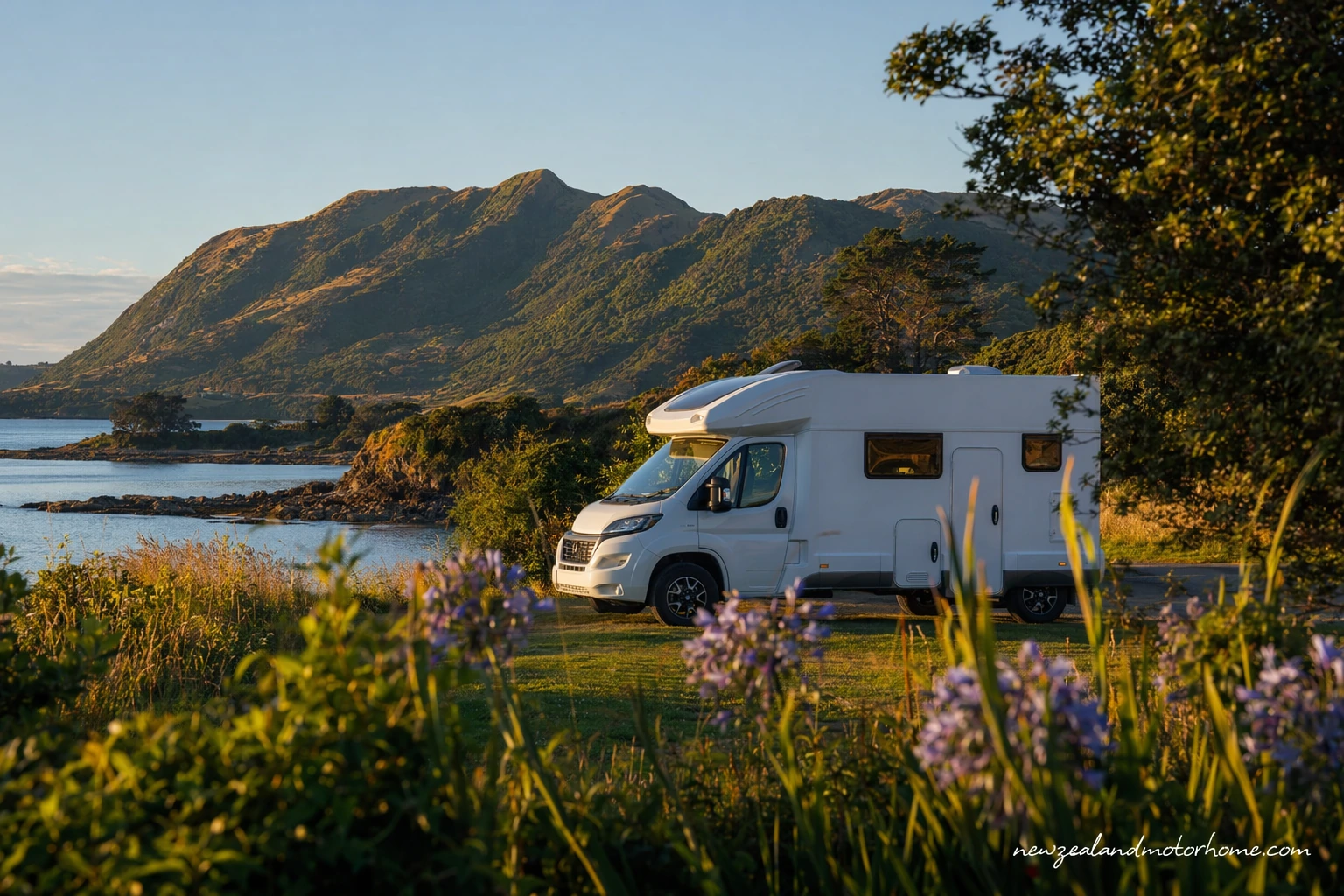
- Season: peak summer
- Book powered sites early
- Best pace: slower loops
- Self-contained rules vary
- Watch wind in high-sided vans
January is high summer on the road: long evenings, lake swims after a driving day, salty towels hanging in the van, and campgrounds at their busiest. Travelling by campervan New Zealand in January gives you huge flexibility, but it also rewards a bit of forward planning around holiday traffic, booked-out powered sites, and where you can legally stay overnight.
This guide is written for self-drive campervan and motorhome travellers sleeping in their own hired van. You will find practical notes on January New Zealand campervan weather, where to aim your route, how to handle water, LPG and dump stations, and when to book campsites so the trip stays easy rather than frantic.
January weather from the driver’s seat
January is usually one of the warmest, brightest months to tour Aotearoa, but the weather still changes quickly between coast, ranges and alpine passes. Northland, Auckland, Coromandel and Bay of Plenty can feel humid, especially overnight in a packed freedom camping area with the windows cracked open. The South Island often brings drier heat inland, cooler evenings near lakes, and strong winds through exposed valleys.
Plan your driving days around the sun and wind rather than only the kilometres. A sea breeze can make a coastal campsite perfect by late afternoon, while a nor’wester can turn a tall motorhome into hard work on open Canterbury or Otago roads. If you are crossing places like the Desert Road, Lewis Pass, Arthur’s Pass or Lindis Pass, check conditions before you leave and keep loose gear secure inside the van.
- Use window shades and roof vents early; vans heat up fast in supermarket and beach car parks.
- Carry insect repellent for West Coast, Fiordland and lake-edge evenings where sandflies gather.
- Refill fresh water before remote coastal or high-country sections, not when the tank is already low.
- Watch wind warnings if your hired campervan is high-sided or over six metres long.
Where January works best in a campervan
The best campervan January New Zealand route is not the one that covers the most ground. In peak summer, a slower loop with two-night stops will usually feel better than chasing every famous photo point. Beach regions are lovely but busy; inland lakes, riverside reserves and smaller rural towns often give you more breathing room for parking the van and finding an unpowered site.
Good January patterns include a North Island coastal loop with early campsite bookings, a Nelson Tasman and Marlborough Sounds route with short driving days, or a South Island lakes and high-country loop where you can mix holiday parks with simpler council or conservation-style campgrounds. If you want a hand choosing a route that suits your van size, sleeping setup and preferred site style, you can talk to us before locking dates in.
- Northland and Coromandel: book well ahead, arrive early for day parking, and expect narrow coastal roads.
- Nelson Tasman: great for swimming and cycling, but popular campgrounds fill quickly near the beaches.
- Canterbury and Otago lakes: excellent for unpowered camping if your batteries and water use are well managed.
- West Coast: lush, flexible and scenic, with rain possible even in summer and sandflies at still-water sites.
Campsites, freedom camping and booking ahead
January is school-holiday season, so do not assume you can roll into a powered site at 5 pm in a busy beach town. Holiday parks near the coast, lakes and ferry routes can be full for several nights in a row. If you need power for medical gear, reliable charging, air movement or a fridge reset, book those nights before the rest of the itinerary.
Freedom camping rules vary by council, and a valid self-containment certificate is only the starting point. Some places allow certified self-contained campervans in marked bays only; others prohibit overnight stays near beaches, reserves or town centres. Read signs at the actual parking area, not just a mapping app, and never set up chairs, awnings or cooking gear where only parking is allowed.
- Book peak coastal powered sites first, then fill gaps with unpowered or more rural stops.
- Arrive at first-come campgrounds by early afternoon where possible.
- Keep a backup overnight stop within easy driving distance, especially on Fridays and public-holiday weeks.
- Do dump station, rubbish and fresh-water jobs before entering a remote scenic road.
Road conditions, parking and van size in summer traffic
January traffic is different from shoulder-season touring. Expect slower roads around boat ramps, beaches, one-lane bridges, small town main streets and ferry connections. A motorhome that feels easy on a highway can suddenly feel large when you are passing parked cars near a surf beach or reversing out of a crowded scenic lookout.
Check your hired van’s length and height before choosing side trips. Some gravel access roads, tight coastal lanes and low-branch car parks are fine for a compact campervan but awkward in a longer motorhome. When in doubt, park outside the tightest area and walk in with swim gear, rather than nudging the van into a place you cannot easily turn around.
- Use designated long-vehicle parks in towns; do not straddle small car spaces.
- Let faster traffic pass at safe pull-outs on winding roads.
- Avoid driving tired after a hot beach day; glare and heat make late-afternoon touring harder.
- Keep extra following distance on chipseal and loose gravel, especially after roadworks.
Water, waste, LPG and power management
Summer campervanning is simple when the van’s daily systems are under control. In January you will shower more, rinse sand off feet, run the fridge harder and charge devices often. That means fresh water, grey-water capacity, toilet cassette space, LPG and battery charge should be part of the route plan, not an afterthought.
Use dump stations whenever they appear conveniently, even if the cassette is not full. Popular dump points can have queues in the morning, so a mid-afternoon stop in a service town is often easier. If you are mixing freedom camping with unpowered sites, schedule a powered night every few days if your van, fridge use or weather makes battery management tight.
- Top up drinking water in towns before beach roads or lakefront reserves.
- Empty grey water and toilet waste only at approved dump stations.
- Check LPG levels before long public-holiday weekends or remote cooking stretches.
- Use campground laundry days to reset towels, bedding and swim gear before the van gets damp.
What to pack for a January motorhome trip
Pack for heat, strong UV, cool alpine nights and the occasional wet day. January can feel easy at sea level but chilly after sunset beside Tekapo, Wanaka, Taupō or a high-country river. A few simple items make the van more comfortable and reduce the need to hunt through busy summer towns.
Think in terms of van living, not suitcase living. You want gear that dries quickly, stores small and does not make the living area sandy or damp. A soft day bag for beach stops is useful when you leave the campervan in a legal parking area and walk to the water.
- Sunhat, sunglasses, high-SPF sunscreen and light long sleeves for UV protection.
- Warm layer for alpine evenings and windy ferry decks.
- Quick-dry towels, jandals or sandals, and a small mat for the van doorway.
- Reusable water bottles, head torch, insect repellent and a basic first-aid kit.
- Offline maps or saved campground details for areas with patchy mobile coverage.
Keep planning
Campervan in winter new zealand
Read onCampervan new zealand in september
Read onCampervan new zealand in october
Read onCampervan new zealand in november
Read onCampervan new zealand in may
Read onCampervan new zealand in march
Read onCommon questions
Is January a good month to hire a campervan in New Zealand?
Yes, January is excellent for swimming, long daylight hours and outdoor living, but it is also peak season. Book key campsites early, especially powered sites near beaches, lakes and ferry routes.
Do I need to book every night in January?
You do not always need every night locked in, but you should book the popular places and any nights where you need power. Keep flexibility for weather, but have backup overnight options that are legal for your self-contained van.
Can I freedom camp in January with a certified self-contained campervan?
Sometimes, but only where local rules allow it. Your self-containment certification does not override council restrictions, so check signs at the parking area and stay only in permitted spaces.
What is January New Zealand campervan weather like?
Generally warm and bright, with humid northern conditions, dry inland heat in places, and cooler evenings around alpine lakes and passes. Rain and wind can still arrive quickly, so check forecasts before long drives or remote overnight stops.
Should I choose powered or unpowered campsites in January?
A mix works well. Unpowered sites suit relaxed lake and coastal stays if your battery and water use are under control, while powered nights help reset the fridge, devices, fans and laundry during hot weather.
Are roads harder for motorhomes in January?
The roads are not necessarily harder, but they are busier. Allow extra time around beach towns, boat ramps, narrow coastal roads and scenic car parks, and be realistic about your campervan’s length and height.
Have a planner shape this for your dates
Send a short outline — your dates, party size, and the kind of trip you want. A planner replies with a vehicle recommendation, a paced route, and the realistic budget.