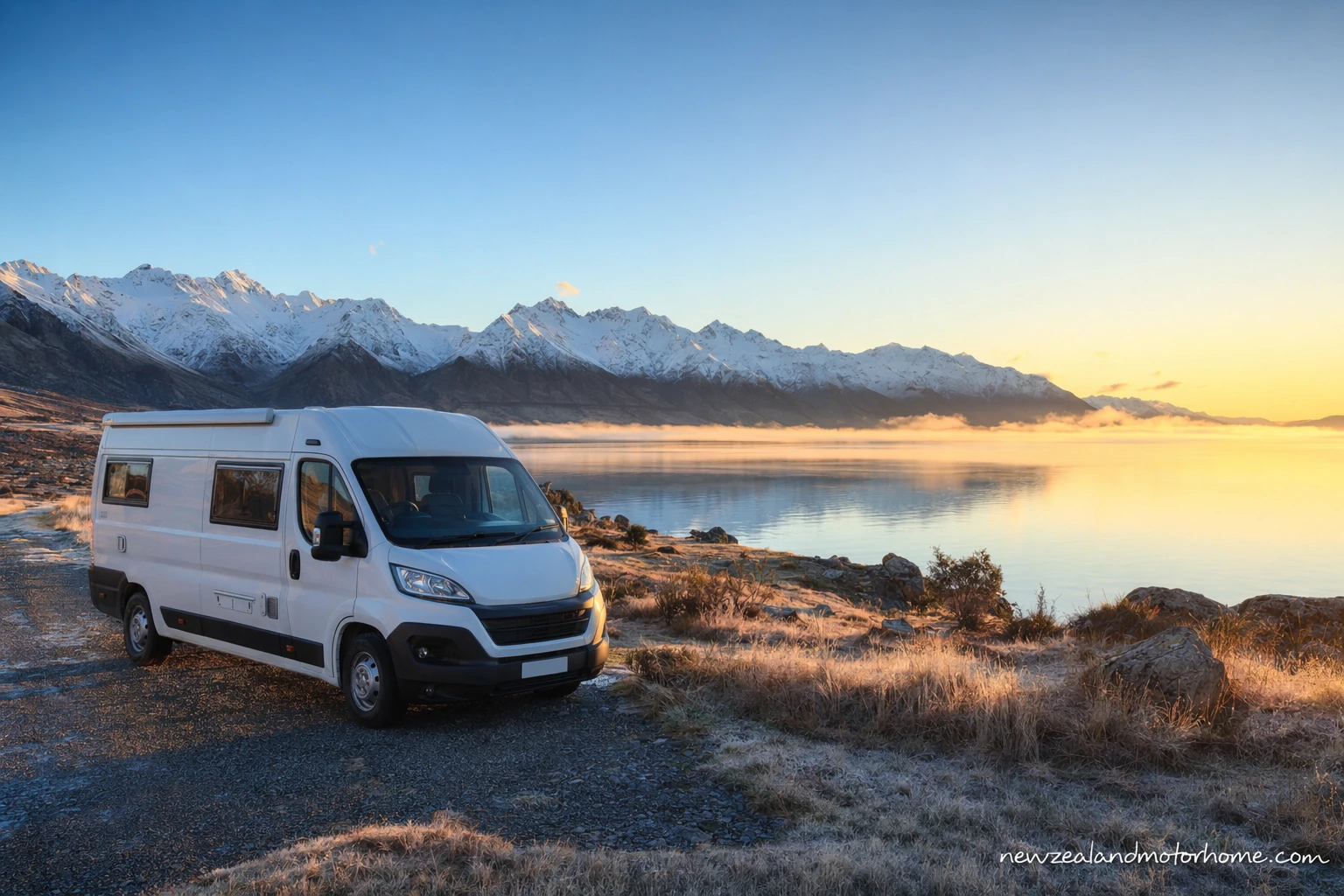
- Season: mid-winter
- Best pace: shorter drive days
- Site type: powered often worthwhile
- Van note: check chains and heating
- Facilities: plan LPG, water and dump stops
July is deep winter in Aotearoa New Zealand: short days, sharp frosts, ski traffic in the alpine towns, and quiet coastal roads where your campervan may be the only one in the beach car park at dusk. It can be a brilliant month for a self-drive motorhome trip, but it rewards slower planning, warmer overnight stops, and a realistic view of mountain passes.
This guide is for travellers driving and sleeping in their hired van. You will find practical notes on July New Zealand campervan weather, where a powered site is worth paying for, how to handle water and LPG in winter, and which regions usually make the best campervan July New Zealand routes when daylight and road conditions matter.
If you have a rough route and want it checked for winter distances, overnight stops and van-friendly roads, our talk-to-us step is a gentle way to shape it before you lock in campsite bookings.
July weather from the driver’s seat
July is not one single weather pattern. Northland and the Bay of Islands can be mild, wet and green, while Central Otago, the Mackenzie Country and the alpine passes may be below freezing before breakfast. In a campervan, that difference shows up as condensation on the windscreen, damp towels that will not dry unless you plug in, and water hoses that feel very cold during a morning fill.
Expect shorter driving windows. It gets dark early, and shaded roads can hold ice long after the sun has reached the valley floor. Try to be parked for the night before dusk, especially if you are arriving at a campground with tight manoeuvring, trees, or a gravel access lane.
- North Island: wetter, milder, with good winter touring around Northland, Coromandel edges, Rotorua, Taupō and Hawke’s Bay when storms are not moving through.
- South Island: colder and drier inland, with snow possible on alpine roads and frosty mornings around Tekapō, Wānaka, Queenstown and Central Otago.
- Coasts: generally less icy than inland basins, though wind can make exposed freedom camping spots uncomfortable overnight.
Where July works well in a campervan
For many travellers, the best campervan July New Zealand plan is not to race from Cape Rēinga to Milford Sound. Choose one island, or one clear loop, and give yourself spare nights for weather. Winter rewards places where you can park the van close to hot pools, walking tracks, town groceries, laundries and powered sites.
Good July regions include Rotorua and Taupō for geothermal warmth and easy dump station access, Hawke’s Bay for winter sun between fronts, Northland for gentler temperatures, and the upper South Island if you want coast, vineyards and sheltered town campgrounds. If snow scenery is the point, the Mackenzie Country, Wānaka and Queenstown can be superb, but plan as if one pass may close or slow you down.
- Rotorua–Taupō: practical winter loop with holiday parks, LPG swaps, fresh-water fills and dump stations in the main towns.
- Nelson–Marlborough: good for shorter drives, cellar-door country roads with care, and coastal overnight stops when the weather is settled.
- Mackenzie–Central Otago: dramatic winter light, but colder nights; powered sites are strongly recommended for heat and battery management.
- West Coast: moody and beautiful, with heavy rain possible; check road updates and avoid arriving late at remote campgrounds.
Road conditions, passes and winter driving notes
New Zealand winter roads can change within a single drive. A clear morning beside Lake Tekapō can become sleet over Lindis Pass, and a damp highway near Arthur’s Pass can become icy in shaded corners. Before moving the van each morning, check the official road status, local weather warnings and whether chains are required on your intended route.
Campervans are taller and heavier than cars, so braking distances are longer and wind gusts matter more. Do not let a queue of local traffic push you into driving faster than feels safe; use slow-vehicle bays when you can, and leave extra space on frosty descents. If your hire agreement restricts certain roads or snow-chain use, follow that before making any alpine plan.
- Keep diesel topped up before crossing remote passes; detours can add hours in winter.
- Carry a scraper or cloth for icy windows, and clear mirrors, roof hatches and reversing cameras before departure.
- Avoid gravel shortcuts after heavy rain or snow unless you know the road is suitable for your van length and clearance.
- Arrive at ski-town campgrounds early on weekends, when day traffic and overnight vans can make parking tighter.
Powered sites, freedom camping and winter facilities
In July, a powered site is not just a comfort upgrade. It lets you run safe heating, charge devices without flattening the house battery, dry wet jackets, and keep the fridge and lights happier during long, cold nights. Unpowered sites can still work for a night or two in a well-set-up certified self-contained van, but you will need to watch battery level, ventilation and water use.
Freedom camping rules are local, and they are enforced in winter as well as summer. Only stay where your vehicle is allowed, display the correct self-containment certification, and do not rely on a scenic car park having toilets, rubbish bins or level ground. In cold weather, a slightly less scenic legal site with a dump station nearby often makes for a much better morning.
- Use holiday parks or serviced campgrounds every few nights for laundry, showers, fresh water and a full battery reset.
- Plan dump stations before remote stretches; do not wait until the grey-water tank is nearly full on a freezing evening.
- Top up LPG in larger towns before heading inland, especially if you use gas for cooking, hot water or heating.
- Choose a level bay where you can safely step out without ice, puddles or soft grass under the door.
What to pack for a warm, tidy van
Winter campervanning is easier when the van stays dry. Bring layers that can be peeled off before you climb into bed, and keep wet boots, raincoats and towels away from bedding. A microfibre towel, beanie, gloves and a warm mid-layer are more useful in July than extra summer clothes you will never wear.
Condensation is normal when people sleep in a small space in cold weather. Crack a vent when cooking and overnight if conditions allow, wipe windows in the morning, and use campground drying rooms when available. If you are hiring a van, check what bedding is included and whether extra blankets can be arranged before pick-up rather than discovering the issue after your first frost.
- Pack warm socks or indoor slippers for cold van floors.
- Use a small head torch for dump station visits, late arrivals and checking power leads safely.
- Bring reusable bags for wet gear so the living area does not become a drying rack.
- Keep a simple food backup in the pantry in case snow, rain or road closures delay your supermarket stop.
Booking ahead without over-locking the route
July is quieter than summer on many touring routes, but ski areas, school holidays, long weekends and event nights can still fill powered sites. Queenstown, Wānaka, Methven, Tekapō and Taupō are the places where it pays to book early if you need power, laundry and a guaranteed hardstanding bay.
At the same time, winter needs flexibility. Build in buffer nights and avoid booking every single stop tightly across alpine passes. If a storm is forecast, it is better to stay an extra night on power, fill water in daylight, empty the waste tank, and move when the road is open and visible.
- Book powered sites in ski towns and thermal resort towns ahead of arrival.
- Keep one or two nights flexible on longer South Island loops.
- Check campground winter opening status; some smaller sites reduce facilities or close seasonally.
- Ask about hardstanding if the forecast is wet, especially for heavier motorhomes on grass sites.
Keep planning
Campervan in winter new zealand
Read onCampervan new zealand in september
Read onCampervan new zealand in october
Read onCampervan new zealand in november
Read onCampervan new zealand in may
Read onCampervan new zealand in march
Read onCommon questions
Is July too cold for a campervan trip in New Zealand?
No, but it is a winter trip and should be planned that way. Choose a well-insulated van, use powered sites regularly, allow shorter driving days, and avoid treating alpine roads as guaranteed in bad weather.
Do I need a powered campsite every night in July?
Not every night, but powered sites make July much more comfortable. They help with heating, battery charge, drying clothes and managing long dark evenings, especially in the South Island or any frosty inland area.
Can I freedom camp in July?
Yes, where it is legal and your vehicle meets the required self-containment rules. Winter freedom camping can be beautiful, but check local bylaws, avoid exposed windy spots, and make sure you have enough fresh water, battery and LPG before settling in.
Which island is better for a first campervan trip in July?
The North Island is generally milder and can be easier for a first winter campervan holiday. The South Island offers bigger snow scenery, but you need more flexibility around passes, frosts and powered overnight stops.
Should I carry snow chains in a hired campervan?
Ask your hire operator what is supplied and what your rental agreement allows. On some winter routes chains may be required, but you should only use equipment approved for your vehicle and avoid roads beyond your confidence or the van’s conditions of hire.
Have a planner shape this for your dates
Send a short outline — your dates, party size, and the kind of trip you want. A planner replies with a vehicle recommendation, a paced route, and the realistic budget.